JCPenney Dinnerware Review: Worth Buying? Complete Material & Reputation Analysis
Market Background and Core Conflict
In North America’s mid-tier home goods market, JCPenney dinnerware always played the role of “better-looking than supermarkets, cheaper than big brands”:
- Pricing generally below Macy’s, Pottery Barn department store system brands
- Design clearly pursues pattern and style unity more than Walmart and Target traditional options
But recent years saw JCPenney’s main business under pressure, SKU constantly adjusting. Dinnerware lines show clear differentiation:
- One end: Linden Street and other house brand stoneware daily dinnerware sets, emphasizing warm glazes and handcrafted feel
- Other end: White porcelain, hotel-style minimalist options, prioritizing durability and easy pairing
Mainstream media focuses more on JCPenney’s corporate operations, rarely examining dinnerware products themselves. Users’ real concerns center on three points:
- Durability: Does stoneware chip easily? Does glaze develop knife marks easily?
- Design and practicality balance: Good-looking is one thing—how about usability, capacity, stackability?
- Long-term sustainability: Many JCPenney patterns change annually. Will future restocking/matching be difficult?
This piece comprehensively evaluates JCPenney dinnerware’s true capabilities from real user reviews, material craftsmanship, and cost perspectives. Offers purchase recommendations for different groups.
Where Praise Concentrates, Where Problems Emerge
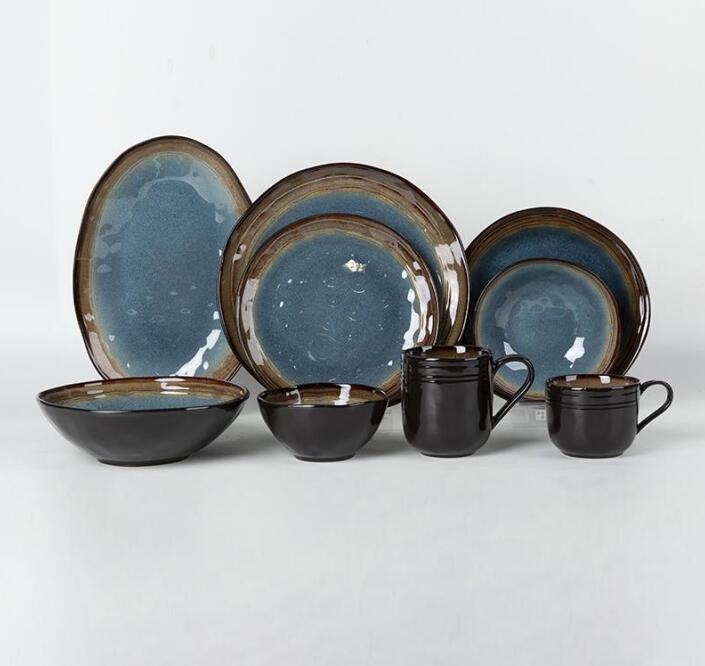
Using officially sold Linden Street Amberly 16-piece stoneware dinnerware set as representative example (4-person service: dinner plates, salad plates, bowls, mugs). Combined with JCPenney website user reviews and home forum feedback, we can sketch current JCPenney dinnerware reputation profile.
Overall Rating Trends
- JCPenney website Amberly set overall scores run high. Users consistently mention: beautiful patterns, convenient daily use, strong value.
- On forums like Houzz, users who purchased JCPenney porcelain dinnerware commonly rate it:
- Lightweight, easy to handle
- Durability basically passes under daily intensity
- But compared to premium bone china or professional food service porcelain, texture and refinement still show gaps
In other words, closer to “lifestyle department store” than “professional dinnerware brand.”
✅ Highlight Reel: Top 2–3 User-Loved Details
- Design and coloring daily timeless
- Using Linden Street Amberly as example, reviews repeatedly mention: pattern “beautiful design,” “guests always compliment.” Overall style has more texture than imagined—not cheap-feeling spray flowers.
- Many users say using these for daily table settings or small gatherings photographs well. Doesn’t lose to common “Instagram light Americana” style on social platforms.
- Price-to-quality value ratio
- Similar-positioned 16-piece sets cost significantly more at many department stores or specialty brands. JCPenney house brands frequently offer discounts.
- Users commonly rate “at this price point, getting this thickness and aesthetics in stoneware already very satisfying.” Especially suitable as first dinnerware set or rental/vacation home use.
- Daily practicality acceptable: capacity, microwave/dishwasher compatibility
- User reviews repeatedly affirm plate and bowl size design:
- Dinner plate size adequately holds American-style main course serving
- Bowl capacity suits breakfast cereal, noodles, or rice dishes—neither decorative mini-bowls nor clumsy large bowls
- Most sets labeled microwave and dishwasher safe. Actual usage feedback matches labeling—no widespread cracking or glaze bubbling complaints.
- User reviews repeatedly affirm plate and bowl size design:
❌ Deal-Breaker Warnings: Overlooked Fatal Flaws
- Stoneware weight runs heavy, feel not “lightweight”
- Some users on home forums state directly preferring JCPenney’s former porcelain dinnerware because “porcelain lighter, easier to carry; earthenware/stoneware too heavy.”
- Amberly-type stoneware sets have thick plate-bowl walls. Substantial and textured, yes. But carrying plates and washing dishes strains wrists—especially for elderly users or children.
- Long-term restocking and continuity is a problem
- Platforms like Replacements already archive some JCPenney old pattern colors. This indirectly indicates:
- Many JCPenney patterns are periodic releases—restocking difficult after discontinuation
- Users wanting multi-year unified patterns with anytime plate-bowl restocking may only find options through secondhand or replacement platforms
- For users wanting “complete unified style lasting many years,” this is a hidden cost requiring advance consideration.
- Platforms like Replacements already archive some JCPenney old pattern colors. This indirectly indicates:
- Individual batch glaze and minor flaw issues
- Though no large-scale quality disasters publicly documented, scattered reviews occasionally mention: some plates have slight color differences on backs or edges, small spot flaws.
- At this price band, JCPenney dinnerware quality control roughly matches same-priced bulk brands—can’t call it refined perfection, more like “daily acceptable level.”
Materials, Craftsmanship & Cost Logic
JCPenney dinnerware core centers on three keywords: stoneware, porcelain, pattern continuity.
1. Stoneware: Linden Street Series Workhorse
- Features
- Compared to fine porcelain, heavier and more substantial. Clear “warm, rustic” style feel.
- Glaze colors mostly matte or semi-matte with strong hand-brushed glaze feel. Visually suits country, Nordic, modern eclectic styles.
- Durability and usage scenarios
- Normal home use, dishwasher cleaning pressure—structural cracking uncommon.
- But due to thicker material, impact from drops hits harder. Chipping when it occurs usually quite obvious.
- Cost logic
- Unlike expensive bone china, stoneware offers more controllable material and process costs—suits large-batch patterned products.
- JCPenney leverages this to achieve quite design-forward pattern combinations at mid-low price points—major advantage over big-box plain solid-color bowls and plates.
2. Porcelain: Lightweight and Easy-Care Advantages
- On forums like Houzz, users who purchased JCPenney porcelain dinnerware commonly report: “porcelain lighter, easier to carry and clean up—less tiring than earthenware/stoneware.”
- Porcelain brings several practical benefits:
- Weight reduction: Suits families with frequent serving and washing, especially friendlier for users with wrist issues.
- Finer glaze surface: Under metal utensil use, knife marks relatively less obvious.
- Closer to hotel dining experience: Pairs with simple Western or Chinese meals without discord.
- Shortcomings mainly:
- Compared to heavy stoneware, drops more likely cause direct shattering.
- At equal design complexity, porcelain costs slightly more. So JCPenney more often uses it for solid colors or simple bordered styles rather than complex prints.
3. Design and Series Continuity: Why Old Styles Appear on Replacements?
- Replacements platform already archives multiple JCPenney pattern plates and bowls, indicating:
- These products have fixed followings over time—users willing to pay extra search costs to complete sets and replace broken pieces.
- Also exposes one point: JCPenney’s pattern life cycles run short, update speed fast.
- For consumers means:
- Short-term: Can buy stylistically distinct current designs at moderate prices—makes table settings stand out.
- Long-term: If you have strong needs for “maintaining same pattern unchanged for ten years,” JCPenney-type department store house brands may not be optimal solution. May need to consider professional dinnerware brands or classic series.
Suitable Groups, Purchase Recommendations & Avoidance Points
1. Who Should Buy JCPenney Dinnerware?
Recommended groups:
- First “entry-level respectable dinnerware” set
- Newly independent, budget-limited users not wanting supermarket most basic bowls and plates
- Want “looks designed” without researching professional brands
- Families needing “one set solves everything”
- Need 4-person service, 16-piece set box handles daily meals and simple guest entertaining
- Pursue: microwave/dishwasher safe, practical plate-bowl sizes—no strong demands for premium texture and brand premiums
- Rental property, vacation home, Airbnb furnishers
- Need visually decent set, price-controlled, won’t hurt too much if broken
- JCPenney stoneware/porcelain sets offer extremely high value in these scenarios
2. Who Shouldn’t Buy or Should Exercise Caution?
- People with rigid lightweight dinnerware demands
- Home has many elderly, children, or your own wrist isn’t strong—sensitive to plate-bowl weight
- Recommend prioritizing JCPenney porcelain series, or simply choosing thinner, lighter professional daily porcelain brands over heavy stoneware sets
- Users extremely concerned about series continuity and long-term restocking
- You hope to buy same pattern for next ten years to complete plate-bowl sets
- Better suited to classic white porcelain or professional brand long-line series. JCPenney seasonal patterns may not satisfy this long-term consistency requirement.
- People extremely sensitive to quality control details
- If you can’t tolerate any slight color differences, bubble spots, uneven glaze, JCPenney’s mass-production-level quality control may not meet your expectations
- Such users better suited to same price range Japanese niche kiln, European brand sale items, etc.
3. Specific Purchase Recommendations
- Priority selection:
- If pursuing timeless practicality: prioritize pure white or low-saturation solid colors / simple bordered porcelain series—lightweight, easy pairing, won’t look dated years later
- If pursuing style atmosphere: Linden Street stoneware series works as “style pieces”—note buying sufficient quantities at once
- Pre-order suggestions to confirm:
- Whether microwave/dishwasher safe (most are, but must check product page description)
- Size: Compare via product details against home cabinet height and dishwasher basket dimensions—avoid bowls too deep or plates too wide causing storage inconvenience
- Whether pattern is seasonal/limited edition: If yes, follow “buy enough at once” principle to avoid future unavailability
4. Avoidance & Care Essentials
- Avoidance:
- Don’t just look at main images—carefully review user real photos and comments, noting any feedback about color differences or glaze issues
- Have expectations about stoneware weight. When necessary, experience similar products in stores for feel
- Care:
- Stoneware types: Try avoiding sudden cold-hot transitions (fridge directly into high-temp oven)—prevents thermal expansion causing hidden cracks
- Porcelain types: Stack with soft pad paper between plate bottoms and surfaces—reduces fine lines and metal friction marks
- Daily washing use soft sponges. Stubborn knife marks can use dinnerware-specific polishing powder for light buffing

Trend Forecast
Combining recent years’ product line changes and retail trends, we can predict:
- Stoneware remains workhorse: Suits creating lifestyle feel, easy to make “looks valuable at first glance” sets
- Solid porcelain gradually returns: Against backdrop of consumers trending rational, minimalist style continuing popularity, more neutral, pure white porcelain options may gradually increase
- Pattern turnover continues accelerating: Both e-commerce driving “fast fashion dinnerware” and JCPenney pulling repeat purchases—good for style chasers, risk for long-term unity seekers
If you view dinnerware as “consumable home good,” JCPenney dinnerware offers relatively balanced aesthetics and pricing. If you treat dinnerware as “long-term collectible, inheritable life objects,” need to view it as transition or sampling option, paired with higher-grade main dinnerware set.
If you have any questions or need to custom dinnerware service, please contact our Email:info@gcporcelain.com for the most thoughtful support!