Jono Pandolfi Plates Review: Is Professional-Grade Dinnerware Worth It at Home?
Why Does a Single Plate Cost $50?
Jono Pandolfi is essentially a handmade ceramic brand that moved from restaurant kitchens to home markets. Early years focused on Michelin restaurants, hotels, chef customization. Post-pandemic shifted to systematic retail for regular households. The brand’s signature? The Coupe series plates (10.5″ Entree plate as hero product).
The core contradiction stays crystal clear:
On one side:
- Single dinner plate runs ~$50 (10.5″ coupe entree plate lists at $52 on official site). Add shipping and duties. Far above IKEA or premium bone china per-piece costs for most families.
On the other side:
- These are truly commercial kitchen-designed heavy stoneware. Used by numerous Michelin restaurants and shows like The Bear.
- Handcrafted, small team (New Jersey studio has ~10 artisans). Made in America. Emphasizes durability—commercial dishwasher safe, microwave safe, home dishwasher safe.

Mainstream reports and bloggers stop at “gorgeous, elevated” and “same as fine dining restaurants” narratives. They underestimate key questions:
- Long-term cost vs. home depreciation: Does commercial durability truly “amortize costs” at home?
- Weight and volume: Professional heavy plates create “usage friction” in home cabinets and dishwashers—most reviews skip this.
- Style compatibility: Exposed brown clay body plus interior glaze design—does it work with Chinese home cooking, dark sauces, oil-heavy stir-fries?
I’ll break this down across three dimensions: real user reviews, materials and craftsmanship, usage scenarios.
Lovers Love Hard, Haters Stuck on Price and “Heaviness”
Reviews from Jono Pandolfi’s official site, design retailers (like DWR), and independent blogs create consistent portraits: extremely high satisfaction, but very niche audience.
Overall Review Trends
- Design/aesthetics:
- Users commonly describe Coupe series as “sleek and classic” or “elegant yet striking”
- Many mention interior light glaze + exterior deep brown clay body contrast makes food “look premium,” photo-friendly. One user specifically said “saw these at a restaurant, ordered same set when I got home”
- Build quality and texture:
- Blogger Tangle Up In Food, after self-purchasing a set (10.5″ entree, 8.5″ salad, 5.75″ bread plates, bowls), emphasizes plates have “noticeable weight”—holding them “makes even eating a bowl of cereal feel taken seriously
- Durability:
- Many reviews come from “saw these in restaurants/have food service background” users, repeatedly mentioning “these are plates used in high-intensity commercial kitchens”
- Users report accidentally dropping several times with no damage. Combined with thick body firing process, clearly exceeds ordinary home porcelain impact resistance
- Usage convenience:
- Blogs and retailer reviews emphasize: dishwasher and microwave safe. Stable under high-temp commercial washing. Home environment has lower intensity, theoretically longer lifespan.
- Coupe series has low profile—stacks at lower height. Users specifically praise “easier to fit more into cabinets and dishwashers”
✅ Highlight Reel: Top 2–3 User-Loved Details
- “Restaurant-grade” substantial feel and handcrafted touch
- Many treat these as their “first restaurant-quality plate set.” One DWR review: “This is my first set of dinnerware that’s truly mine—not inherited from someone, not secondhand.” This feedback centers on “finally owning a set with weight and design language”—high psychological value.
- Jono’s own copy confirms: all products hand-formed from Northeast local clay, fired above 2000°F. Body deliberately made slightly thicker than retail market standard plates to handle commercial kitchen impacts, stacking, frequent handling.
- Extremely high durability and peace of mind
- Multiple users repeatedly mention “these are for high-turnover restaurants”—home use is basically “downgraded application”
- Field-tested users report: minor kitchen counter drops cause no chipping or cracking. Long-term dishwasher use shows no obvious glaze dulling. Critical for people not wanting to “replace dinnerware every two years”
- Table presentation: extremely food-friendly background
- Official and users both emphasize “simple neutral glaze makes dishes stand out more”
- Official 10.5″ Coupe description: slight curve, natural stoneware base color with interior soft glaze—handles daily leftovers without looking “cheap” at formal dinner parties
❌ Deal-Breaker Warnings: Overlooked Fatal Flaws
- Price isn’t just the plate—shipping and full replacement costs add up
- Independent blogger calculated: entree plate $52, salad plate $44, bread plate $27, bowl $34, plus shipping (brand almost never offers free shipping). A full 6-person set easily breaks $1,000.
- High shipping cost reason explained: stoneware is heavy and fragile. Lots of packaging material, high per-piece weight. For users outside the US, add cross-border logistics and duties. “Full dinnerware replacement” becomes significant expense.
- Weight and feel unfriendly to some users
- Brand itself writes candidly: designed for commercial kitchens, so thicker than most retail market combination dinnerware
- For users accustomed to lightweight bone china/reinforced porcelain, this “professional-grade thickness” creates reverse experience. Carrying plates, washing dishes, storage all slightly laborious. For homes with young kids, elderly, or needing single-hand multi-plate carrying, usage friction runs high.
- Color compatibility with Chinese cuisine controversial (speculation + reviews combined)
- While many Western dishes and desserts photograph beautifully on these plates, design-wise:
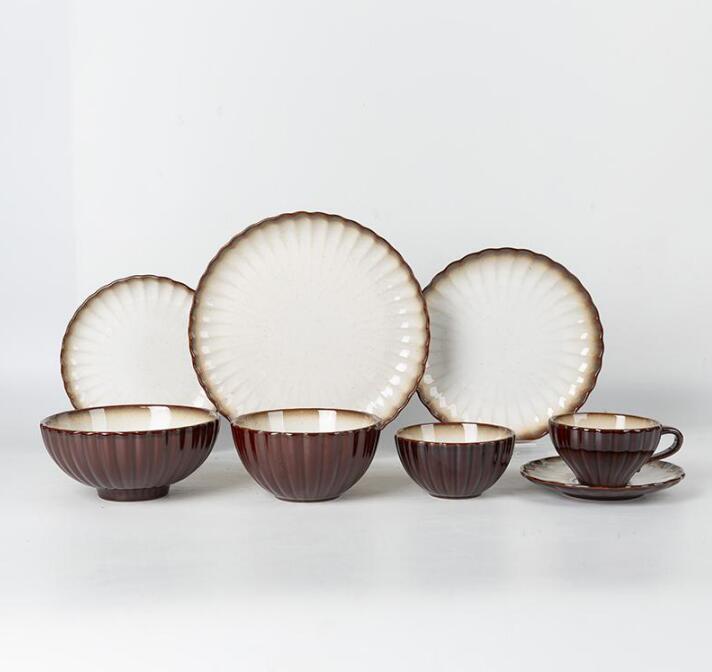
- Exposed deep brown clay + interior pale gray/white glaze, occasional hand-painted color bands—for oily, dark-sauce Chinese stir-fries, visually may appear more “rustic,” less clean and sharp than high-whiteness bone china
- Some users mention in other color reviews that dark glazes with certain dishes amplify scratch and water spot appearance—potential minefield for neat freaks
- While many Western dishes and desserts photograph beautifully on these plates, design-wise:
Materials, Craftsmanship & Cost Structure
1. Material: High-Fire Ceramic Stoneware
- Material positioning:
- Not bone china, not cheap earthenware. High-fire stoneware.
- Body uses Northeast US clay. Clay color runs deep. When exposed, shows grainy texture and “earthy” quality—part of brand’s visual identity.
- Process and characteristics:
- Hand-formed body fired above 2000°F. Higher density. Better impact resistance and penetration resistance than most low-fire pottery.
- High-density thick body plus interior glaze layer effectively prevents sauce penetration and pore color absorption.
Common home material comparison:
| Material Type | Jono Pandolfi Stoneware | Standard Bone China/Reinforced Porcelain |
|---|---|---|
| Body Thickness | Noticeably thicker | Thin to medium |
| Weight | Heavy | Light to medium |
| Impact Resistance | Excellent (commercial-grade) | Varies by brand, mostly average |
| Appearance | Handcrafted, rustic, restaurant vibe | Lightweight, bright, home/banquet feel |
| Price | High | Low-mid to mid-high |
2. Craftsmanship: Small Team Handwork, Batch-Controlled “Semi-Custom Restaurant Goods”
- Production method:
- Union City, New Jersey studio. About 10 artisans collaborate on forming, glazing, firing.
- Each plate bottom bears brand mark. Hand-painted band versions (like some Toasted clay + white glaze + green band) show slight circle line variations—natural traces from hand-spinning application.
- Plate design:
- Coupe plate design core:
- 10.5″ entree, 8.5″ side/salad, 7″ share plate, etc. Slightly raised edge, light curve at base prevents sauce overflow while improving stackability.
- Thickness deliberately “a touch thicker than most plates on the retail market”—classic trade-off: durability over lightness.
- Coupe plate design core:
3. Cost Structure: Expensive for Good Reason, But Not for “Bargain Hunters”
- Direct costs:
- US domestic handwork + small team + high-fire process. Labor and energy costs inherently high.
- Limited capacity prevents cost amortization in management and marketing. Brand relies basically on word-of-mouth and restaurant diffusion.
- Hidden costs:
- Shipping and breakage risk: High unit weight, fragile. Requires thick packaging plus high logistics fees. Brand doesn’t subsidize “free shipping over X amount.”
- Conversion perspective:
- If you typically replace dinnerware every 3–5 years, and plan to use this set 10+ years, then from cost-per-usage-year view, it may not cost much more than mid-to-high-end brands.
- But this assumes: you’ll actually commit long-term and won’t easily change styles.
Who Should Buy, Who Should Avoid Impulse Purchases
1. Who Should Buy?
Recommended for these user types (especially Coupe entree plates):
- People valuing table “atmosphere” and texture, willing to pay for design and handcraft
- If you’re tired of IKEA/major brand bone china aesthetics and want a set of plates that “scream your home at first glance,” JP is excellent choice.
- People with food service/culinary background, or frequent home entertainers
- These users better understand plates’ impact on food presentation, photography, service rhythm. For them, “restaurant same model” isn’t just hype—it’s combined practicality and presentation power.
- People not wanting frequent dinnerware changes, willing to invest once for long-term peace of mind
- If you embrace “use 10+ years” logic, this commercial-grade stoneware durability can amortize upfront investment.
2. Who Should Avoid or Exercise Caution?
Not recommended for:
- Budget-limited users just starting to furnish new homes
- If you’re still allocating budget for cookware, appliances, $50-per-plate is genuinely extravagant. Totally fine to transition with cheaper reinforced porcelain/glass dinnerware.
- People preferring ultra-lightweight bone china feel
- If holding heavy plates instinctively feels “clumsy,” JP will almost certainly disappoint—not a design flaw, completely different product philosophy.
- Homes with limited counter/cabinet space, or elderly/children needing frequent access
- Heavy plates easier to bump in tight spaces. Not particularly friendly to kids and elderly either.
3. Avoidance Tips & Usage/Care Advice
- Color choice: home use prioritizes neutral light glazes
- Light gray, white glaze versions more accommodating of various dishes, more timeless. Bold color band versions (yellow, green) work as accent plates—don’t recommend full dining set in high-saturation colors.
- Buy in batches, test with 2–4 entree plates first
- Don’t recommend full 6–8 person set impulse purchase. Start with 2–4 of the 10.5″ Coupe entree plates. Actually use for a while. Assess weight, storage, family feedback. Then decide whether to expand to full set.
- Daily cleaning watch for metal friction marks
- Though stoneware is sturdy, metal utensils may leave “gray lines” on light glaze. Periodically use specialized scratch-removal cream for light buffing.
- Stacking storage: keep dry between plate bottom and surface
- High-density glaze doesn’t easily absorb water. But humid environment plus long-term stacking may form water stains or mold spots on exposed clay body—especially in southern or humid kitchens. Occasionally unstack for ventilation.
Trend Forecast
Recent year trends show:
- High-end handcrafted dinnerware brands increasingly shift from B2B (restaurants) to B2C (homes). Jono Pandolfi just one typical representative.
- Domestic users now willing to invest separately in “table experience” and “photo appeal,” not just “easy cleaning.”
- Coming years, combinations like “commercial-grade durability + handcrafted feel + small studio brand story” become standard for hardcore table enthusiasts, not mass necessity.
One-sentence decision reference: If you treat “dining table” as your home’s most important social space and budget allows, Jono Pandolfi Coupe plates become that “can’t live without the longer you use them” tool-type product. If you just want convenient, washable, don’t-worry-about-breaking plates, these are too expensive and too “serious”—not dinnerware prepared for you.
If you have any questions or need to custom dinnerware service, please contact our Email:info@gcporcelain.com for the most thoughtful support!