The Ultimate Guide to Personalized Glass Plate
Personalize Your Dining Experience with DIY Custom Glass Plates
Custom glass plates are unique glass plates that add a modern touch to your space. These are single-paneled glasses, with clear and smooth surfaces. You have likely seen them at the shopping mall, upscale restaurants, and several other display locations.
A custom glass plate is the perfect blend of beauty and practicality. These plates elevate your space, refine your decor and maintain its simplicity.
Material and Manufacturing
Glass plates are the final products of sodium carbonate, calcium oxide and silica. It is usually manufactured through the Float glass method. As its name implies, the molten glass is placed on a flat surface and floated over red-hot metal.
After the floating period, it goes through cooling and comes out as clear, rectangular sheets. These plates are also called flat glass or sheet glass because of their flatness and production process.
The float glass method produces the best glass plates that you can easily customize without requiring additional work.
Key Features
There are some specific characteristics that differentiate custom glass plates from the regular tempered glass. Let’s look at these features.
- Custom cutting to any size and shape
These plates are designed for different purposes. So, there are several shapes and sizes that will suit individual needs.
- Frosting or Etching
Beyond the regular sheets, custom glass plates can be etched with acid to increase its aesthetic value.
- Thickness
They also come with different widths ranging from 0.1 inch to 1+ inches.
- Mold and mildew resistance
These plates are coated with several substances that cause liquids to roll off them. This restricts the growth of microbes, mold or mildew
- 100% recyclable material
The glass plates can be recycled to make other beautiful glass works like jars, bottles or fiberglass.
Customization Method
Each glass plate is given surface treatment and finishing touches.
Surface Treatment
There are four major methods used in this process. Decoupage, Silkscreening, Laser engraving and Sand Carving. The design of your choice determines the type of technique you will use.
Decoupage
This treatment is mostly used for glasses that are used in the home setting. Cut out prints are glued to the glass sheets using a strong adhesive. Floral jars, vases and other home glass works are made by decoupage.
Silkscreening
Glass plates exposed to silk screening is used in the home and office setting. A screen, ink and a stencil pen are used to draw images or write on the glass.
Laser Engraving
A laser is used to create custom designs like logos, exotic animals, or any other design of choice. It is also the method used for jewelry engraving.
Sand Carving
You can opt for this treatment if you want some textures in your design. The glass sheet is exposed to compressed air which uses tiny sand, glass or beads to etch designs and texts on it.
Finishing Options
After the treatments, there are other effects that the glass will need. Glass plates can be finished with:
- Flat polish
- Pencil edge
- Seamed edge
- Beveled edge
Applications and Uses
Custom glass plates are ideal for intimate and public spaces.
Public Spaces:
- Restaurant tableware
You have likely seen custom glass plates in some restaurants. They are used for their aesthetic value and to improve your dining experience.
- Display cases
They are also used to present artworks, products and add visual effects.
- Custom serving pieces
Dining areas like bars, restaurants and cafe use custom glass plates displaying their logo or theme. They give a sense of exclusivity to the brand’s clients.
- Decorative installations
They are used to create visual effects in malls, hotels and airports. They add colour, and trigger interest in these spaces.
Residential Uses
In homes, custom glass plates are popular for:
- Dining settings
- Decorative wall pieces
- Special occasion tableware
- Family heirloom displays
Design Considerations
Every custom glass plate is designed to meet a specific need. Some of them were built to be practical while others were designed for exclusivity.
Practical Use
Modern custom glass plates are:
- Microwave-safe. So, you can reheat your food with ease.
- Dishwasher-safe, making cleaning and maintenance very convenient.
- Exposed to multiple edge treatments like polished, beveled or rounded edges for safety and style.
Personal Aesthetic Value
Plates can be personalized with:
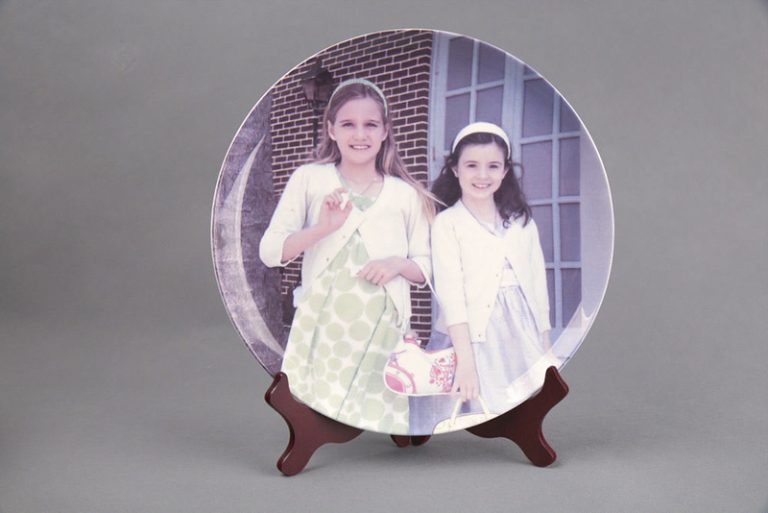
- Family names
- Special dates
- Custom patterns
- Unique designs
Care and Maintenance
A custom glass plate is built for everyday use.
- It cleans easily with the average cleaning requirements. simple cleaning requirements
- It is resistant to odors
- It can withstand regular use
Uses of Custom Glass Plates
Custom glass plates are very versatile. From the corporate scene to the intimacy of your home, there are several options that are suitable for your needs.
Design Elements
Every custom glass plate is an artwork which requires different techniques to get your desired results. Let’s look at these techniques.
Decoration Methods
There are several methods you can use to give unique designs, patterns and images to your glass plates. Let’s go through them.
- Inglaze decoration
Ceramic ink or pigment is applied to the glass plate and exposed to high heat (about 1,250°C). This method locks in the image or design to the plate so its quality is preserved. Inglazed glass plates are ideal for everyday use and maintain their vibrant designs after 2000+ dishwasher cycles.
- Frosted engraving
It is another top choice for elegant designs. A laser or a sandblasting technique is used to create a beautiful white engraving on the glass plate. It’s your best choice for elegant results.
- UV color printing
Intricate designs and vibrant creations are done with this method. The primary tool for this method is UV ink. It is used to work on the glass plates.
- Decoupage
This is the first decoration choice for artistic designs. It is also your first option if you want a DIY custom glass plate. Although there are more durable and beautiful choices at the stores, you can make your own decoupage design. You just need an image, adhesive, and a glass plate.
Design Features
Recently, custom works have been used for:
- Corporate logos and branding elements
- Full-surface patterns and graphic designs
- Vignettes and line decorations
- Personalized messages and names
Commercial Applications
Custom glass plates are statement choices in the hospitality and corporate spaces. They are used for branding and many other things. Let’s get to it!
Restaurant and Hospitality
Custom glass plates serves several functions in the food service industry:
- Creating memorable dining experiences
Many restaurants use their unique designs to catch the attention of their patrons. The designs leave a strong impression on their minds which improves the dining experience.
- Reflecting establishment personality
The designs tell a story about the organization. The personality, style and theme of the restaurant are captured in the designs.
- Building brand recognition
The use of custom glass plates at hotels and restaurants, puts the brand on the customers’ mind. It is a branding strategy that generates a strong impression on clients.
- Generating additional revenue
Most custom glass plates in foreign hotels and restaurants are bought by patrons as souvenirs. This creates extra revenue for the organization.
Corporate Use
Businesses use custom glass plates for several reasons:
- Professional office displays
- Executive gifts and awards
- Team recognition items
- Brand promotion materials
Personal Applications
Custom glass plates are perfect gifts for special occasions. They also elevate your home decor with beautiful designs.
Special Occasions
A thoughtful gift or presentation will always warm people’s hearts and a special occasion is the best time for warm feelings.
- Weddings
Wedding gifts with personalized designs like couples name, wedding date or special messages will impress the couple. These are gifts that can’t be forgotten in a jiffy.
- Anniversary commemorations
Beautiful designs that tell the story of the couple, their memories and milestones. These gifts are ideal for top anniversary milestones( like a decade, 2 decades, 25 years etc).
- Holiday celebrations
Most holiday celebrations might seem boring and routine without a personal touch. Adding custom glass plates with festive designs and messages, add a personal effect to the festivities, making them more memorable.
- Family gatherings
Home Decor
Customized plates serve decorative purposes through the following ways.
- Unique wall displays
Eye catching displays that adds style to your space can be achieved with custom glass plates on your wall.
- Table centerpieces
You can also elevate your center tables by adding custom glass plates as centerpieces. You could go from good to chic with these pieces.
- Collectible items
- Personalized serving pieces
Durability Features
Custom glass plates are more than just pretty things. They are designed for everyday use, so durability and safety tops the producer’s check list.
Some of the features are:
- Dishwasher-safe designs surviving 3,000+ cycles
- Scratch-resistant surfaces
- Hygienic and safe materials for edibles
- Indoor-use specifications
Custom glass plates have a wide range of purposes. From practical to decorative use; public spaces to intimate settings, there’s always a plate that will remain memorable to you.
The Custom Glass Plate Creation Process
The production of custom glass plates is a blend of technology, creativity and traditional craftsmanship. It requires diligence, precision and a strong artistic mind. In this article, we will explore the production process from the ideation stage to the final products.
Design Phase
The first step in creating a mind-blowing custom glass plate is the design phase. This is where the ideas, visions and expectations of the client are put on paper. The appropriate resources are chosen and a guiding sample or illustration is generated.
- Initial Consultation
Here, the artist and client meet to discuss the project. The client provides necessary information like their ideas about the project, preferred materials and design style. During this discussion, the artist gives the client several options and a potential design style that may match the clients’ needs.
The consultation is where the plans, strategy and potential result of the project are discussed.
- Design Concepts
After the consultation, the artist brings the clients ideas to reality. They might opt for the traditional paper sketches, provide 3D images or design a mock-up of the clients desire. This stage gives the client a visual representation of the project and its potential result. Key elements like colours, patterns, and design style will be added to the images and mockups used at this stage.
- Proofing Process
This is the stage of potential results and refinement. There is a constant flow of communication between the client and artist at this stage. The mockups, images and sketches are sent to the client, and the artist waits for the necessary feedback.The feedback may be a request to change a key element or fine-tune the design.
The artist also informs the client that the 3D renditions and mockups will be similar to the final product but will not have the same quality.
- Design Approval
This is the last stage of the design phase where agreements are finalized. After all necessary adjustments have been made, the client approves the design which will act as a template during the production process.
Manufacturing Process
This is the creation stage where the result of the design phase is executed. Here, craftsmanship and skill are in high demand.
- Material Selection
The primary resource for production is the glass. The type of glass you use, strongly influences the design. Specially manufactured fusible glass is ideal for a fused glass work.
- Design Transfer
After all materials have been chosen, the design is imprinted on the glass. The design may be engraved, sandblasted or even lasered on the glass plate. Tiny coloured glass, sand or other abrasives might be used to create the desired design.
Customization Technique
There are different customization methods in the glass making industry. Each method gives a different result. We’ll explore the common customization methods in this section.
- Fusing
Arranged glass pieces are placed in a kiln which is a heated chamber or oven used to dry or burn anything. The glass in the kiln is subjected to high temperatures about 1475°F or 801°C. The high temperature causes the glass to melt and fuse together.
- Slumping
After fusing, the melted glass is placed in a mold and exposed to more heat. The heat and mold gives the glass its new form.
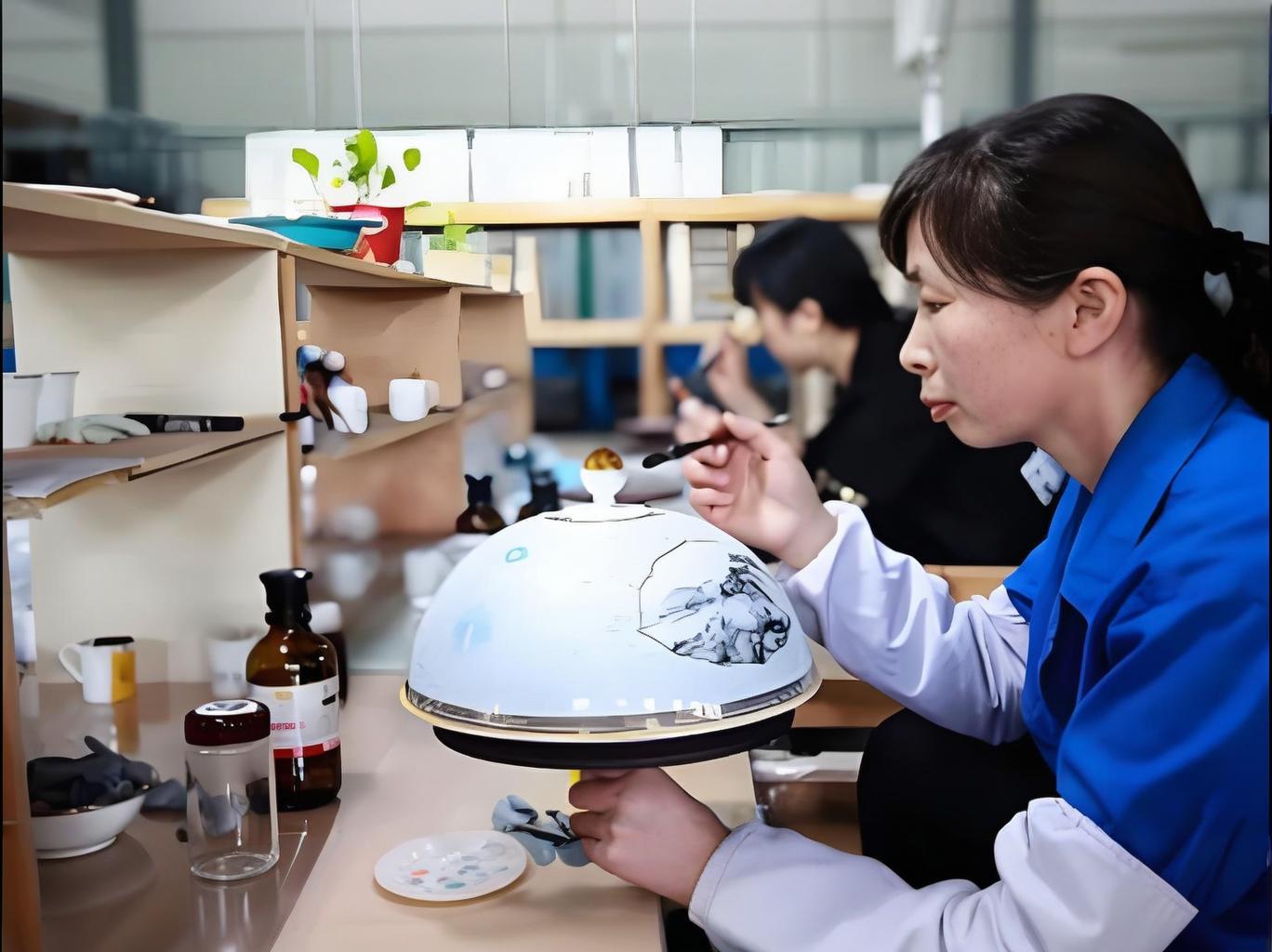
- Painting
Some glass works will require special glass painting before they are exposed to fire.
- Cold working
This might include cutting the piece on a tile saw, evening out edges using a wet belt sander, or sandblasting to create texture or remove blemishes.
- Quality Control
All through the manufacturing process, quality control is important. The glass is carefully cleaned before firing to prevent any imperfections or blemishes in the final product. After each firing, the piece is inspected for any flaws or small crystals stuck in the glass.
Finishing Touches
After the final firing and molding, polishing and safety checks are done by cold working. Safety checks like edges polishing, necessary coatings or holes will be added to the glass work. Additional edible-friendly materials and techniques will be used to make the glass plate suitable for eating, storing or microwaving.
After every process has been duly followed, the artist finishes by signing the piece; making it a unique artwork.
The custom glass plate creation process is very delicate and technical. Each step is carefully executed to produce a unique, high-quality piece of functional art that meets the client’s specifications and exceeds their expectations.
The Cost and Benefits of Investing in Custom Glass Plates
Custom glass plates are an excellent investment for businesses and individuals looking for high-quality, personalized tableware. Their prices depend on the complexity of the plate design, quality of material, order quantity and customization methods. You’ll notice that the initial price of the plate may seem a bit overboard but the long term benefits will cover every feeling of dissatisfaction you may have.
Pricing Factors
When pricing for glass plates, these are some of the things you need to look into to make sure you don’t waste money.
Design Complexity: Complexity of a glass plate’s design is a major factor affecting its cost. Simple, single color designs are usually cheaper, usually ranging from $1 – $5 per plate. In these types of plates, you’ll see basic patterns or logos that usually don’t take up a lot of time to create. If you’re aiming to get something more complex though, you need to budget about $5 – $15 for each plate. For this price though, you’ll get highly detailed designs. If you want to get intricate designs, detailed artwork or engravings for your home or business plates, additional design fees may apply. These prices are usually around $20 to $100, depending on how complex your request is.
Material Quality: Another factor that affects price of glass plates is the quality of the glass used. Custom shaped plates usually require special production processes, this will automatically raise the price. Ordering for rounded, beveled or polished edges add refinement to your plate but of course it’ll be more expensive. Improving the durability by further tempering the plate will also make the price to be higher. If you choose to get high quality plates, they’ll definitely last longer for you but you have to pay higher for them.
Order Quantity: The number of orders you place will increase the total price of your plates. Usually, manufacturers will give you a discount if you want to buy a large number of plates. This usually makes people place bulk orders rather than single unit ones. Small orders of 1 – 50 pieces will cost you $5 to $15 per unit. Medium sized orders of 50 – 200 pieces costs about $3 to $10 per unit. Large orders of 200+ pieces on the other hand will cost $1 to $5 per unit.
Customization Method: Different customization techniques will also raise the price of a glass plate. Some of the best customization methods are laser engraving and screen printing. Their prices usually range from $2 – $20 depending on how intricate the customization will be. These methods have advantages over each other, when selecting, make your choice depending on your budget and what you need.
Investment Benefits
Buying and keeping custom glass plates for a long time will serve as a very nice investment for you.
Long-term Value: Although the initial price may be higher, high quality custom glass plates can be used over a long period of time. Their durability will ensure that you do not have to waste money in buying plates frequently. Other cheaper alternatives might break as time passes, leading you to have to replace them. Glass plates on the other hand will remain the same for years unless you expose them to extreme conditions.
Quality Advantages: Purchasing high quality glass plates will give you tempered glass more resistant to breakage than normal ones. You’ll also get plates that have high resistance to extreme temperature changes, both cold and hot. With this you can use these plates to serve both hot and cold dishes. High quality glass usually appears more elegant than the common glass plates. This helps businesses and restaurants to appear professional and refined and also helps to boost their brand.
Brand Enhancement: Custom glass plates can help in promoting your business by holding your brand or logo as their design. With a good design on a high quality glass plate, you’ll be able to escape the competition that your business might be facing. These plates are also beautiful and will serve to boost your business reputation.
Customer Satisfaction: High quality glass plates also improve customer satisfaction. Your guests are exposed to a more refined dining experience and foods that appear to be more luxurious because of what it’s served on. After experiencing such an event, many people would definitely like to come back to relive it. People are even willing to pay more to be treated more elegantly so this is still another plus for your business.
Recently the demand for high quality glassware is on the rise, it’s estimated that there should be a 3.40% compound annual growth rate in the market from 2024 – 2031. This growth rate indicates that more people are interested in using premium glassware to improve their dining experience.
How To Choose The Right Custom Glass Plate
Custom glass plates are a creative addition to your collection. There are different types of custom glass plates with several designs. Still, you can’t pick a plate based on its design, there are certain factors you should look out for. Today, we’ll explore these factors and give an in depth guide on choosing the right custom glass plate.
Key Factors to Consider
Before choosing a glass plate, there are certain things to consider. From its use to the production process, these factors determine the durability and value of your custom glass plates.
Purpose and Usage
The usefulness of your glass plates significantly impacts the selection process. For food service, you might want to ensure the techniques and materials used are food-safe. Consider factors like ability to handle heat changes, and durability before getting them.
Budget Considerations
Custom glass plates have different price ranges. So, it’s best to determine your budget before the process begins. Quality custom glass plates can seem pricey at the time of purchase but their durability and long lifespan makes their purchase worthwhile.
Quality Requirements
The quality of glass plates depends on several factors:
- Safety features and impact resistance
Glass is naturally sharp-edged and breaks easily. So, a glass plate should be beautiful, and safe. Practices like tempering or laminating, impact resistance and edge finishing, should be considered before getting a custom glass plate.
- Maintenance requirements and ease of cleaning
Every glass plate you get should be easy to clean. So, look out for smooth surfaces that can’t hold dirt, absence of small crystals and designs that are slightly resistant to everyday use and scratches.
- Thermal performance and durability
Your ideal custom glass plate should be able to manage sudden temperature changes and chemical corrosion without breaking. This glass should have longevity and even outlive its owners without breaking down.
Timeline Needs
Custom glass production requires careful planning and execution. The artist and client should consider:
- Design approval process
- Material procurement
- Manufacturing and customization
- Quality control inspections
Common Customization Mistakes to Avoid
A well designed custom glass plate can elevate every space. Yet, a poor design is very disappointing. By avoiding these mistakes, you’ll get eye-catching pieces that meet your needs and modernize your space.
Design Pitfalls
When personalizing glass plates, it’s easy to overlook some practices. Unfortunately, these elements will affect the quality of your glass plate. Knowing these mistakes can help you get the best results.
When customizing glass plates, avoid:
- Uneven etched areas
When engraving or etching on the glass ware, avoid large areas. Etching can be difficult if done on a large surface. It will make your work uneven; ultimately losing its beauty
- Overlooking pattern connectivity in designs
In the production of custom glass plates, haste will not favour you. It’s important that all patterns are connected and flow smoothly. Disconnected patterns can give your glass work a very unbalanced appearance.
- Using inappropriate decorative techniques for food-contact surfaces
The wrong decorative techniques for glasses used to serve food will affect the safety measures used. It is important you use only food-friendly techniques during the “finishing” stage of your production.
Material Selection Errors
Choose materials carefully to prevent:
- Incompatibility issues between different types of glass
- Poor ability to manage sudden heat changes
- Poor strength for the intended purpose
Size Miscalculations
Consider these aspects when determining size:
- Proper proportions for intended use
What is the value of a beautiful plate if it can’t serve its primary purpose. So, it’s best you take the measurements of the edible it will hold before you begin the design work.
- Storage space requirements
Get the right storage space and how it will be stored. Safe storage will reduce cracking and maintain the longevity of the glass plate.
- Similarity or Compatibility with existing tableware
Budget Oversights
Avoid common budget-related mistakes by:
- Deliberately keeping maintenance costs
- Compare durability to the initial costs
- Including costs for any additional service or storage.
Your custom glass plate project largely depends on careful planning and attention to detail. So, every ‘t’ must be crossed and your ‘i’ should be well dotted. This will help you achieve your goal or even exceed your expectations. Your budget should focus on quality and safety, not cost and design alone.
The Process Of Ordering Custom Glass Plates
Custom glass plates can be mass produced or handcrafted. Mass production reduces your cost but you may not get the uniqueness of a handcrafted work. Fortunately, the ordering process remains the same for both choices. An artistic mind and glass work skills will make your ordering process very easy. So, we crafted a piece that will explain the main areas of custom glass ordering.
The Ordering Process
A successful order promises great results. So, let’s get into the fine details of ordering custom glass plates.
Initial Inquiry
To kick start the process, contact a glass manufacturer and give them important details of your project. The size, shape, and purpose for the plate will be asked by the manufacturer. As a result, it’s best you get specific details and measurements before meeting them.
Fortunately, most manufacturers have online customisation templates which allow you to create your plate. Various edge styles, thickness options and special features are also programmed into the template.
Design Consultation
Now that you have created your plate, it’s time to have a consultation session with the manufacturer. Based on your creation, they will recommend the right design methods for you. You will likely be given any of these design styles to make your choice:
- Laser engraving for precise, icy designs that give stylish products.
- Sand carving for intricate and more detailed designs.
Pricing and Quotes
Custom glass plates have price ranges, and these are due to several factors.
Before ordering a custom glass plate, it’s important to know these factors. So you can have a budget that covers them. Let’s look at some factors that affect the prices.
Custom glass plate pricing includes;
- Base cost of the glass plate
Since the type of glass plate you use can affect the quality of your design, the cost of the plate will also affect the quote and pricing.
- Customization fees
Most designs have a price range which will affect your budget. For instance, engraving has a range of $25-35 per plate.
- Shipping and handling costs
Order Placement
Once design and pricing are concluded, place your order with:
- Complete specifications
- Approved design files
- Payment (typically requires 75% deposit to begin production).
Production Timeline
Most manufacturers complete custom orders within:
- 5-7 business days for standard custom cuts
- 1-2 days for simple custom glass projects
- Additional time may be needed for complex designs or special finishes
Bulk Orders and Wholesale
There are discounts and price cuts for bulk orders. It has its perks and slight challenges but it’s a good choice to any wholesaler or retailer.
Minimum Order Requirements
Many manufacturers offer flexibility in order quantities but there are certain rules that are already in place. Some of them are:
- No minimum order requirements for individual custom pieces
- Bulk discounts are available for larger orders
- Some suppliers require 200+ pieces for new custom designs
Bulk Pricing Benefits
Ordering a custom glass plate may be costly but bulk ordering helps you beat the cost. It has several advantages which makes it the first choice for most people. Let’s get into the advantages.
- Reduced price per-unit costs
Bulk ordering custom glass plates reduces the cost per unit. When you order large quantities, the manufacturer spreads their fixed costs over a greater number of units, resulting in a lower cost per plate. This reduction helps your budget and savings, making it an attractive option for businesses, events, or individuals with high demand.
- Lower packaging expenses
Packaging also affects your pricing. Bulk ordering leads to lower packaging expenses. Each plate requires individual packaging when you have a small order but bulk orders means multiple plates can be packaged together, reducing the overall packaging cost.
- Decreased shipping costs per item
Shipping costs can add up quickly, especially when ordering a small quantity of custom glass plates. Bulk orders help you reduce the cost by spreading the shipping cost across the large order. As a result, the shipping cost per item decreases, which reduces cost and increases your bank roll.
Wholesale Opportunities
Wholesale partnerships offer additional benefits:
- They prioritize your project and schedule it quickly.
- More customization options for branding.
Business Partnerships
Having a business partnership with a glass manufacturer has many perks. Some of them are:
- Support for ongoing orders
- Top-notch assistance during the design and production stages.
- Additional services can be done to improve your product’s quality at no extra charge.
How to Care for Your Custom Glass Plate
Custom glass plates come in different sizes, shapes and designs. They are a great addition to any space but bad handling can cause them to break, crack or chip. In this article, we will discuss maintenance and care tips for your custom glass plates collection.
Proper Handling
There is a good and bad way of handling your glassware. Proper handling can increase the lifespan of a glassware while mishandling will bring early damage and even breakage. From the everyday usage to the storage practices, we need to be careful, and ensure we get value for our money. Let’s see the best handling methods for custom glassware.
Daily Use Guidelines
Everyday we use our glassware, we risk damage through our usage. How should you handle your cutlery? Let’s get some tips below.
- Use clean, dry hands with well-trimmed nails to hold your glassware. This prevents accidental scratches that will reduce its beauty.
- Always hold plates from the bottom rather than the edges. The bottom gives you a stronger and wider holding space than the edges. The edges can be slippery, making the glass prone to easy breakage.
- Remove jewelry that might scratch the surfaces during handling.
- Use each glassware for the right purpose. Using glassware for activities it wasn’t made for, will increase its risk of damage.
- Inspect each glassware before and after each use. This will help you notice every little change.
Storage Recommendations
Another area that might affect your glassware is the storage methods you use. Some people prefer to keep their glass on a shelf while others have other storage methods. Your best storage location depends on your glassware and the space available. Additional storage tips to use will be discussed below.
- Store plates in a dry, cool place
Glass plates should not be exposed to direct sunlight to prevent damage. Too much sunlight may cause the colours on the plate to fade, some antique plates may have a purple or brown tint and also reduce the glass’ ability to manage sudden heat changes.
- Use purpose-made storage boxes
Wrapping each plate in packing paper and using tape at the corners will prevent scratching. Each glass box was designed to protect the glassware. So, you can enjoy easy storage.
- When stacking, place soft cloth or paper towels between plates to prevent scratching.
Cleaning Instructions
If your handling and storage practices are good, but you lack the right cleaning materials and instructions, your glass is at risk of damage. Some cleaning tips for glassware include:
- Use soft materials to clean your glassware.
Warm soapy water and a soft sponge is enough. It’s best to avoid rough or hard sponges that may scratch or chip the glass.
- Rinse and dry thoroughly
Using running water to clean your glassware removes any dirt and film from forming. Drying it in open air or using lint-free cloths reduces materials sticking to the glass.
Longevity Tips
Custom Glass plates can outlive its owners if used properly. They can be antique designs or family heirlooms. So, it’s in our best interest to maintain its lifespan.
Protecting the Design
The design of a glass plate makes it stand out. Unfortunately, it is likely the first thing to get damaged or fade. So, let’s get tips to protect your beautiful designs.
- Regular inspection helps you to note early signs of wear or damage.
- Keep your glass shelf in medium temperature levels. Room temperature is great for glass plates and it will prevent cracking.
- Additionally, use mild cleaning materials to protect any decorations.
Preventing Damage
Glass is very brittle and damage can happen at any time. So, place protective pads or coasters under plates when in use. Don’t expose them to extreme temperature changes that could cause thermal shock. This might lead to cracks.
Furthermore, store glass away. Leaving plates in areas where they might get knocked or bumped will cause scratching, cracking or chipping.
Maintaining Appearance
Other additional care tips for your glass health are discussed in this section.
- Clean regularly to prevent gathering of dust and dirt.
- Work on any chips or scratches immediately to prevent further damage.
- For plates used with food, ensure all cleaning materials are food-safe and well-rinsed.
- Use a glass polish to clean stains or scratches.
- Always follow the manufacturers’ instructions.
- Get quality products. Using substandard glassware will bring additional costs because they aren’t long-lasting.
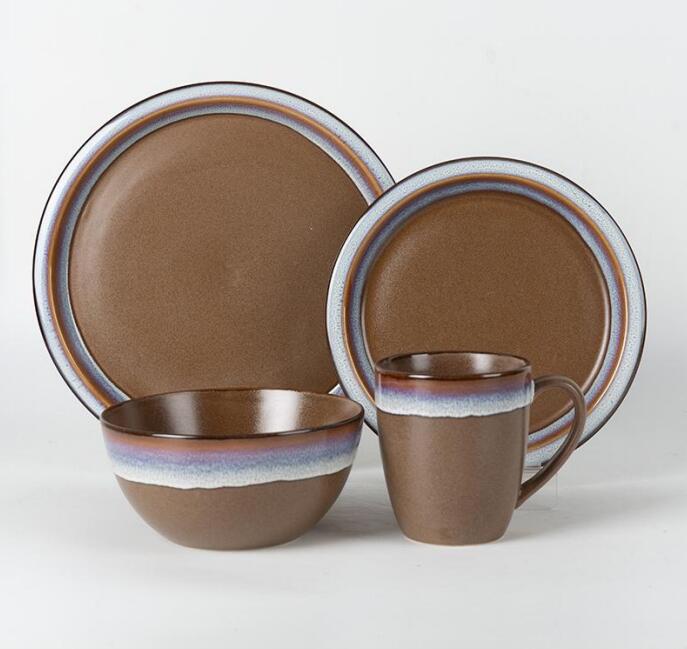
Following these care tips will help maintain your custom glass plates’ beauty and usefulness. These tips prevent common issues that could shorten their lifespan.
If you have any questions or need to Customized tableware service from GC Porcelain, please contact our Email:info@gcporcelain.com for the most thoughtful support!