China vs Vietnam Ceramic Tableware Manufacturers: Cost, MOQ & Quality Compared
Vietnam has emerged as a viable alternative sourcing destination for ceramic tableware over the past decade, with lower labor costs and a growing number of export-capable factories. China remains the dominant global supplier by a significant margin—producing over 60% of the world’s ceramic tableware exports and maintaining structural advantages in raw material access, certification infrastructure, and OEM customization depth. For B2B buyers evaluating where to source, the right answer depends on order size, customization requirements, and the certification standards your market demands.
This guide compares both countries across the criteria that determine total sourcing cost and supply chain reliability for B2B hotel, restaurant, and brand buyers.
Disclosure: This guide is written by GC Porcelain, a Chinese manufacturer. We have made every effort to represent Vietnam’s ceramic manufacturing sector accurately using publicly available trade data. Buyers should request quotes from both countries to validate the comparisons below.

Key Takeaways
- China produces 60%+ of global ceramic tableware exports; Vietnam accounts for under 3%—supply chain depth and supplier choice are not equivalent.
- Vietnamese ceramic tableware is typically 15–30% cheaper per unit than comparable Chinese product at equivalent MOQ. This gap narrows significantly at volume above 5,000 pieces.
- China’s certification infrastructure (FDA, LFGB, ISO 6486-1) is deeply established; Vietnam’s is developing—fewer Vietnamese factories hold verifiable international food-safety certifications.
- For OEM custom shapes, China has a structural advantage: more mold makers, deeper tooling capability, faster sample turnaround. Vietnam handles standard ODM well but OEM development capability is more limited.
- Lead times are broadly comparable for standard orders; China has a slight advantage for complex or urgent projects due to supply chain density.
- Vietnam sourcing makes most commercial sense for: high-volume standard items, price-sensitive buyers, and buyers whose certification requirements can be met by the available Vietnamese factory pool.
Production Scale and Supply Chain Depth
China
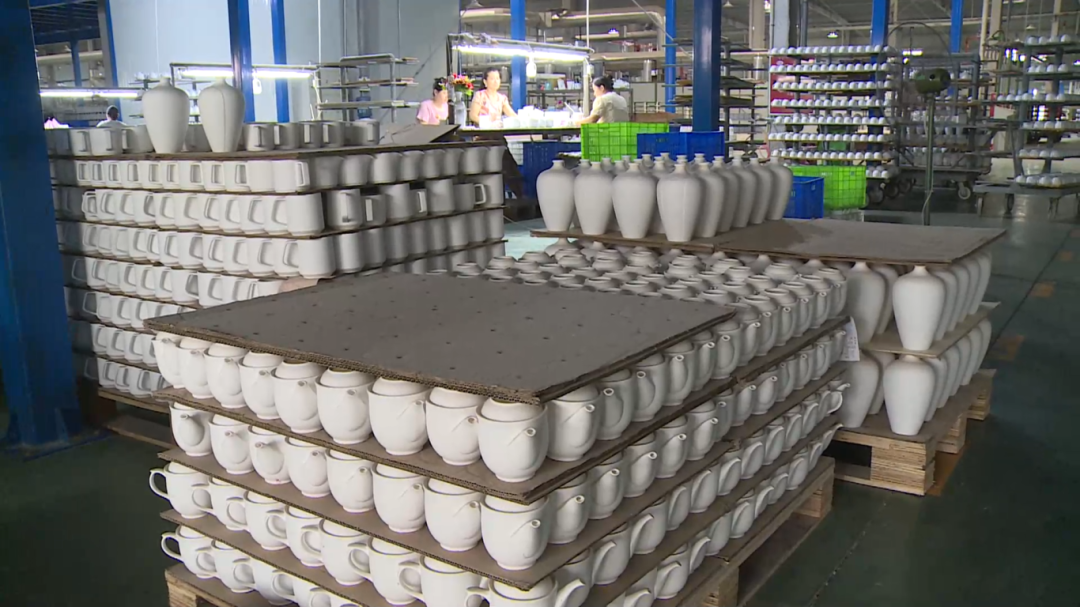
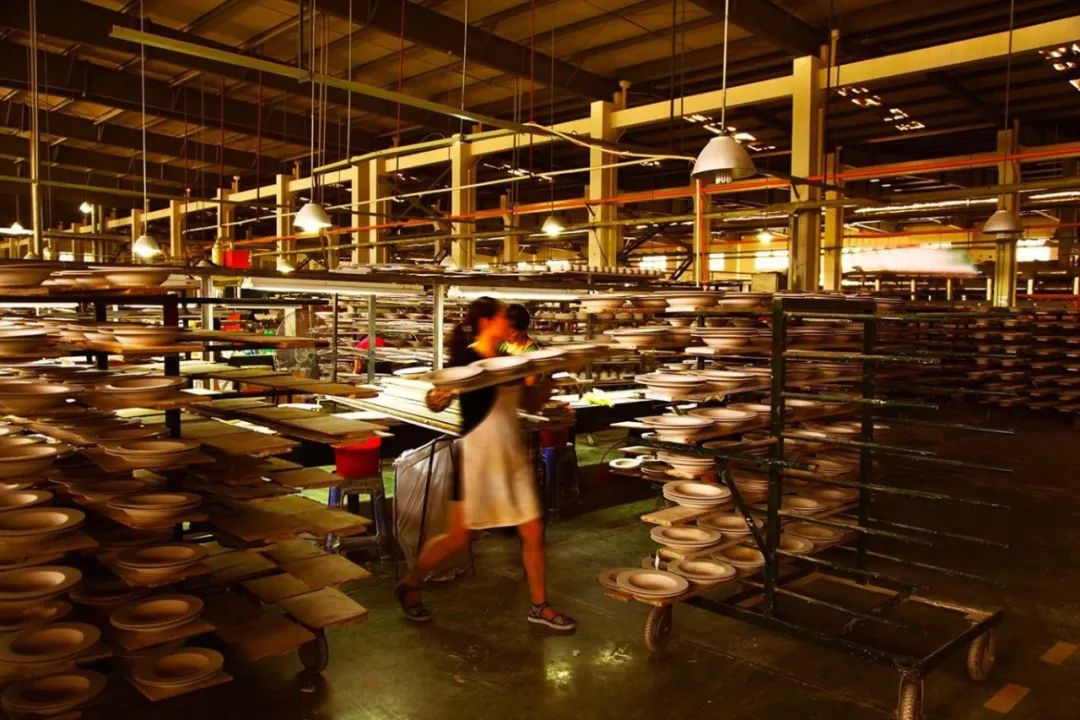
China’s ceramic tableware industry is concentrated in four major manufacturing hubs—Jingdezhen (Jiangxi), Tangshan (Hebei), Nanjing (Jiangsu), and Chaozhou (Guangdong)—each with complete local supply chains: kaolin mining, clay processing, glaze production, mold making, kiln equipment manufacturing, printing ink suppliers, and packaging producers all within proximity.
This supply chain density means a Chinese factory can:
- Source raw materials locally, often within the same city
- Turn around specialty glaze colors within 1–2 weeks
- Access mold makers for OEM tooling without long-distance logistics
- Scale production rapidly by drawing on a dense sub-supplier network
The result: faster response times for non-standard orders, more competitive pricing on complex specifications, and deeper technical capability for custom development.
Vietnam
Vietnam’s ceramic manufacturing is concentrated primarily in Bát Tràng (Hanoi region) and Biên Hòa (Ho Chi Minh City region). Bát Tràng has a centuries-old pottery tradition but is known primarily for decorative and artisan ware. Industrial-scale export tableware production has grown more recently, with factories in the south supplying European and US markets.
Vietnam’s supply chain is less vertically integrated than China’s. Key inputs—certain clays, specialty glazes, and printing materials—are often imported from China, which introduces a dependency that affects lead times and price competitiveness on complex specifications.
Cost Comparison
Unit price benchmark (28cm dinner plate, logo print, 1,000 pieces, FOB):
|
Specification |
China |
Vietnam |
Difference |
|---|---|---|---|
|
Standard vitrified porcelain |
$4.00–$6.00 |
$3.00–$5.00 |
Vietnam 15–25% cheaper |
|
Fine vitrified porcelain |
$6.00–$9.00 |
$5.00–$8.00 |
Vietnam 10–20% cheaper |
|
Bone china |
$12.00–$20.00 |
Limited availability |
China only for most specs |
|
Custom OEM (new mold) |
$7.00–$12.00 |
$6.00–$10.00 + longer timeline |
Vietnam nominally cheaper; timeline cost often offsets |
Where the cost gap closes:
At 5,000+ pieces, Chinese factory volume discounts compress the gap to 5–15%. China’s denser competition also means buyers who RFQ 5 factories receive more competitive quotes than in Vietnam where the qualified supplier pool is smaller.
Where Vietnam holds the cost advantage:
For standard vitrified porcelain in designs that require no OEM tooling and no complex certifications, Vietnamese factories maintain a real 15–25% cost advantage—driven by lower labor costs (Vietnam average manufacturing wage ~$220/month vs China ~$520/month as of 2024).
Total cost of ownership caveat: Certification costs, longer development cycles for custom work, and smaller supplier pool (meaning less competitive bidding) partially offset Vietnam’s unit price advantage in full project economics.
MOQ and Lead Time
|
Dimension |
China |
Vietnam |
|---|---|---|
|
Standard ODM MOQ |
500 pcs |
500–1,000 pcs |
|
OEM (new mold) MOQ |
1,000 pcs |
1,000–2,000 pcs |
|
Sample lead time (existing shape) |
7–14 days |
10–21 days |
|
Bulk production (logo print) |
21–30 days |
25–40 days |
|
Bulk production (new mold OEM) |
60–90 days |
75–120 days |
|
Restock flexibility |
High (500 pcs) |
Moderate (500–1,000 pcs) |
Lead time driver: Vietnam’s longer lead time for OEM work reflects the smaller local tooling ecosystem—mold makers are fewer and often serve both ceramic and other industries, creating scheduling competition. For standard ODM orders, the gap is minimal (3–10 days).
Certification and Food Safety Standards
This is the most significant operational difference for buyers serving regulated markets.
|
Certification |
China |
Vietnam |
|---|---|---|
|
FDA 21 CFR |
Widely available; standard for export factories |
Available at some factories; verify directly |
|
LFGB |
Widely available |
Available at select factories |
|
ISO 6486-1 |
Available at established exporters |
Limited |
|
ISO 9001 |
Standard |
Available at larger factories |
|
BSCI / SA8000 |
Available |
Available at some factories |
|
On-site laboratory |
Available at premium manufacturers |
Rare |
Practical implication for buyers: If your procurement requires FDA + LFGB + ISO 6486-1 documentation with verifiable lab report numbers, China has a significantly larger qualified supplier pool than Vietnam. The 2–3 Vietnamese factories that hold all three certifications typically operate with longer lead times and less competitive pricing than comparable Chinese alternatives—reducing Vietnam’s cost advantage.
For buyers with minimal certification requirements (e.g., non-food-contact decorative ware, or markets where LFGB is not required), Vietnam’s certification gap is irrelevant.
OEM Customization Capability
|
OEM Dimension |
China |
Vietnam |
|---|---|---|
|
Custom shape development |
Extensive; major hubs have specialist mold makers |
Limited; adequate for simple shapes |
|
Mold complexity |
High (teapots, multi-piece assemblies) |
Moderate (plates, bowls, mugs) |
|
Surface finish options |
Full range (matte, satin, gloss, reactive glazes) |
Standard range |
|
Gold/platinum banding |
Widely available |
Limited availability |
|
Hand-painted decoration |
Available (especially Jingdezhen) |
Available (Bát Tràng specialty) |
|
Sample revision speed |
Fast (1–2 weeks per round) |
Slower (2–3 weeks per round) |
Where Vietnam has an OEM advantage: Artisan hand-painted decorative ware from Bát Tràng is a genuine Vietnamese specialty, with craft techniques and design aesthetics that differ from Chinese factory production. For brands seeking a “handmade Vietnam” provenance story, this is authentic.
Where China has an OEM advantage: Any technical shape development—rim profiles, handle ergonomics, lid-fitting tolerances, bone china thin-wall production—benefits from China’s denser tooling and kiln expertise ecosystem.
Quality Consistency and Defect Rates
Both countries produce ceramics ranging from budget to premium quality. Factory selection, not country of origin, is the primary determinant of output quality.
That said, systematic differences exist:
Chinese factories serving export markets at scale have typically operated for 15–30+ years and have worked through the quality learning curve. A Chaozhou factory producing 5 million pieces annually for US hotel chains has refined its defect management processes through millions of production cycles.
Vietnam’s export tableware sector is newer. Factories have fewer production cycles behind them and, in some cases, less developed QC documentation systems. This does not mean lower quality—it means buyers should weight factory audit and reference verification more heavily when evaluating Vietnamese suppliers, relative to the established track record signals available for Chinese manufacturers.
Independent pre-shipment inspection is especially recommended for first orders from Vietnamese factories—the same advice applies to first orders from any new factory, in any country.
Logistics and Shipping
|
Logistics Factor |
China |
Vietnam |
|---|---|---|
|
Ocean freight (to US East Coast) |
20–30 days |
18–28 days |
|
Freight cost difference |
Baseline |
5–15% cheaper (shorter route) |
|
Port infrastructure |
Major ports (Shanghai, Guangzhou, Tianjin) |
Ho Chi Minh City, Haiphong |
|
Consolidation options |
Excellent (dense freight forwarder network) |
Good |
|
US import duties (ceramic tableware) |
3–7% (HTS dependent) |
0–3% (CPTPP/USMCA adjacent benefits vary) |
Tariff consideration: Post-2018 US-China trade tensions resulted in Section 301 tariffs on some ceramic categories. Check current HTS code tariff rates for your specific product before finalizing sourcing decisions—the tariff differential between China and Vietnam on your specific product category may be a meaningful cost factor.
Decision Framework: Which Country for Your Project?
|
Buyer Profile |
Recommended Country |
Reason |
|---|---|---|
|
Hotel opening, premium certifications required |
China |
Wider FDA/LFGB/ISO 6486-1 supplier pool |
|
Restaurant chain, high volume, standard white |
Vietnam or China |
Request parallel quotes; compare landed cost |
|
OEM custom shape, complex development |
China |
Superior tooling ecosystem and speed |
|
Artisan/handmade brand positioning |
Vietnam (Bát Tràng) |
Genuine craft heritage and aesthetic |
|
Price-sensitive, standard ODM, basic certs |
Vietnam |
15–25% unit cost advantage |
|
Bone china required |
China |
Vietnam has minimal bone china capability |
|
Tight timeline, sample revisions expected |
China |
Faster sample turnaround |
|
Section 301 tariff avoidance |
Vietnam |
Lower or zero tariff on many categories |
|
First custom order, limited sourcing experience |
China |
Larger qualified supplier pool; easier to vet |
For buyers who have never sourced from either country before, China provides a larger qualified supplier pool, more competition (keeping prices honest), and a more established evaluation framework. Vietnam becomes a rational primary or secondary source once you have developed sourcing experience and identified specific factories that meet your certification requirements.
For the full supplier evaluation process applicable in both countries, see our guide to vetting Chinese tableware manufacturers—the same framework applies to Vietnamese factories.
FAQ
Is Vietnam cheaper than China for ceramic tableware?
At comparable quality and specification, Vietnamese ceramic tableware is typically 15–25% cheaper per unit than Chinese product at 1,000-piece orders. This gap narrows to 5–15% at 5,000+ pieces as Chinese volume discounts become more aggressive. The cost advantage is most pronounced for standard vitrified porcelain with no OEM customization and minimal certification requirements. For bone china, complex OEM shapes, or orders requiring full FDA + LFGB + ISO 6486-1 documentation, China is typically more competitive on total cost.
Do Vietnamese ceramic manufacturers hold FDA and LFGB certification?
Some do, but the qualified pool is smaller than China’s. A subset of larger Vietnamese export factories hold FDA 21 CFR and LFGB certifications with verifiable lab reports. ISO 6486-1 is less commonly held. Buyers with strict certification requirements should verify directly with any Vietnamese factory rather than assuming certification availability, and should apply the same report number verification process used for Chinese suppliers.
What is Vietnam better at than China for ceramic tableware?
Vietnam’s Bát Tràng region has a genuine artisan pottery tradition—hand-painted and handmade-style decoration from this region is authentic craft production, not Chinese factory production resold through Vietnamese intermediaries. For brands that want a “handmade Vietnam” provenance story with authentic craft heritage, Bát Tràng is a legitimate source. Vietnam also offers a potential tariff advantage over China for US buyers affected by Section 301 duties on Chinese ceramics.
How do lead times compare between China and Vietnam?
For standard ODM orders (logo printing on existing shapes), lead times are comparable: 21–30 days in China versus 25–40 days in Vietnam. For OEM orders requiring new mold development, China is significantly faster—60–90 days versus 75–120 days—because China’s tooling ecosystem is denser and sample revision cycles are faster. For time-sensitive projects or those requiring multiple sample revision rounds, China’s supply chain density is a practical advantage.
Custom Solutions Available
Our technical experts are always ready to assist you in finding the perfect customized solution for your dinnerware needs.