Porcelain vs Bone China vs Stoneware: Which Should Your B2B Brand Choose
Porcelain, bone china, and stoneware are three distinct ceramic materials with different raw material compositions, firing temperatures, and physical properties—and each sends a different signal to the buyer who receives the final product. Choosing the wrong material for your brand tier costs you either in unnecessary premium spending or in a product that undersells your positioning. This guide compares all three across the criteria that matter for B2B buyers: cost, durability, brand signal, MOQ, lead time, and supplier availability.
This guide is written for hotel procurement managers, restaurant group buyers, tableware brand founders, and corporate gifting buyers making a material specification decision for their first or next custom ceramic order.
Key Takeaways
- Stoneware is the most chip-resistant and lowest-cost material—right for casual dining, outdoor service, and fashion-forward brands where the earthy texture is the point.
- Vitrified porcelain is the commercial workhorse: bright white, food-safe, dishwasher-durable, and available at every price tier from budget to premium. The correct default choice for most B2B applications.
- Bone china contains 30–50% bone ash, producing translucency and an ivory tone that no other ceramic material replicates. The correct choice when thinness, lightness, and luxury signal are the product’s reason for being.
- Material choice is irreversible at scale: once you’ve ordered 5,000 pieces and photographed them for your marketing materials, switching materials means reshooting, re-tooling, and re-qualifying suppliers.
- New bone china (bone ash-free) delivers similar appearance to genuine bone china at 20–40% lower cost—the right choice when aesthetic is the goal but animal-derived content conflicts with brand values.
- Bone china commands an 80–150% price premium over vitrified porcelain. That premium is justified when the material’s properties are genuinely delivering brand value; it is waste when the product is back-of-house or low-visibility service.
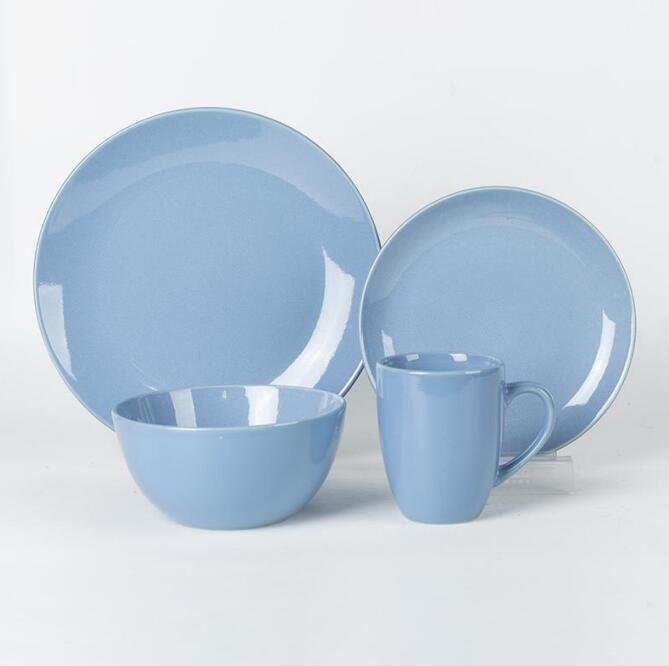
Material Overview: What Each Actually Is
Porcelain
Porcelain (including vitrified porcelain and fine porcelain) is a white clay body—primarily kaolin, feldspar, and quartz—fired at high temperature (1,200–1,400°C) until the clay body vitrifies. The result is a dense, non-porous material with water absorption below 0.5%.
Standard vitrified porcelain is the most widely produced ceramic tableware material globally. China’s Tangshan and Chaozhou regions produce the majority of the world’s commercial porcelain tableware supply.
Fine porcelain uses higher-grade kaolin with tighter particle sizing, fired with more precise kiln control, achieving higher whiteness (WI 83–88) and thinner wall profiles than standard porcelain.
Bone China
Bone china is a porcelain variant where 30–50% of the clay body composition is replaced with bone ash—calcined animal bone (typically cattle). The bone ash flux allows firing at a lower temperature (approximately 1,260°C) while achieving higher translucency and whiteness than standard porcelain. Genuine bone china typically achieves whiteness index 78–85 with a distinctive ivory tone.
The material’s defining properties—translucency (visible when held to light), low density (lighter per unit volume than standard porcelain), and smooth tactile finish—are all direct results of the bone ash content. Lower bone ash percentages produce proportionally fewer of these properties.
Bone china is primarily manufactured in the UK (Wedgwood, Royal Doulton legacy) and in China (Tangshan is the world’s largest bone china production center).
Stoneware
Stoneware is a coarser-grained clay body fired at 1,180–1,300°C. Unlike porcelain, stoneware clays contain higher iron and mineral content, which produces natural color variation from buff to grey to brown-red. Modern commercial stoneware is typically vitrified (water absorption < 0.5%), though artisan stoneware may be non-vitrified.
Stoneware’s defining characteristic is its mass and opacity—it feels substantial, reads as handmade (even when factory-produced), and its natural color variation can be a design asset for the right brand positioning.
Physical Properties Comparison
|
Property |
Standard Porcelain |
Fine Porcelain |
Bone China |
Stoneware |
|---|---|---|---|---|
|
Whiteness Index |
75–82 |
83–88 |
78–85 (ivory) |
45–65 (warm) |
|
Translucency |
None |
Slight |
High |
None |
|
Water absorption |
< 0.5% |
< 0.3% |
< 0.2% |
< 0.5% (vitrified) |
|
Wall thickness (28cm plate) |
4–6mm |
3–5mm |
2–3mm |
5–8mm |
|
Weight (28cm plate) |
380–480g |
300–420g |
220–320g |
420–580g |
|
Chip resistance |
High |
Medium-High |
Medium |
Highest |
|
Thermal shock resistance |
Good |
Good |
Good |
Very Good |
|
Microwave safe |
Yes |
Yes |
Yes |
Yes |
|
Dishwasher safe |
Yes |
Yes |
Yes |
Yes (vitrified) |
The weight paradox: Bone china is both the most premium and the lightest material. Stoneware is both the most casual and the heaviest. In the dining context, weight does not reliably signal quality to the end guest—but bone china’s thinness and translucency do. B2B buyers for high-volume operations should note that stoneware’s weight compounds over a full service shift.
Brand Signal: What Each Material Communicates
This is the most important criterion for brand founders and hotel procurement teams making a positioning decision.
Standard Vitrified Porcelain → Professional, Reliable, Neutral
White vitrified porcelain is the globally understood visual language of “proper restaurant tableware.” It reads as professional without being pretentious. It does not make a statement—it provides a clean stage for food presentation. For operations where the food is the brand, this neutrality is a feature.
Brand fit: Mid-range restaurants, hotel all-day dining, corporate dining, institutional food service, brand-forward operations where the tableware is subordinate to other brand elements.
Fine Porcelain → Elevated, Clean, Contemporary
Fine porcelain’s higher whiteness and thinner profile signals investment and attention to detail without the specific luxury associations of bone china. It is the right choice for brands that want “premium” without the heritage associations of traditional bone china.
Brand fit: Contemporary fine dining, lifestyle hotel F&B, premium casual, design-forward hospitality brands.
Bone China → Heritage, Luxury, Refinement
Bone china carries 200+ years of association with formal European fine dining, royal service, and luxury gifting. A guest who holds a bone china cup and sees light through the walls is experiencing a physical property that cannot be faked or replicated by any other material. For brands where that experience is the point, bone china’s premium is justified.
Brand fit: Five-star hotel fine dining, luxury gifting and corporate presents, afternoon tea service, prestige tableware brands, any context where the material’s story can be communicated to the end recipient.
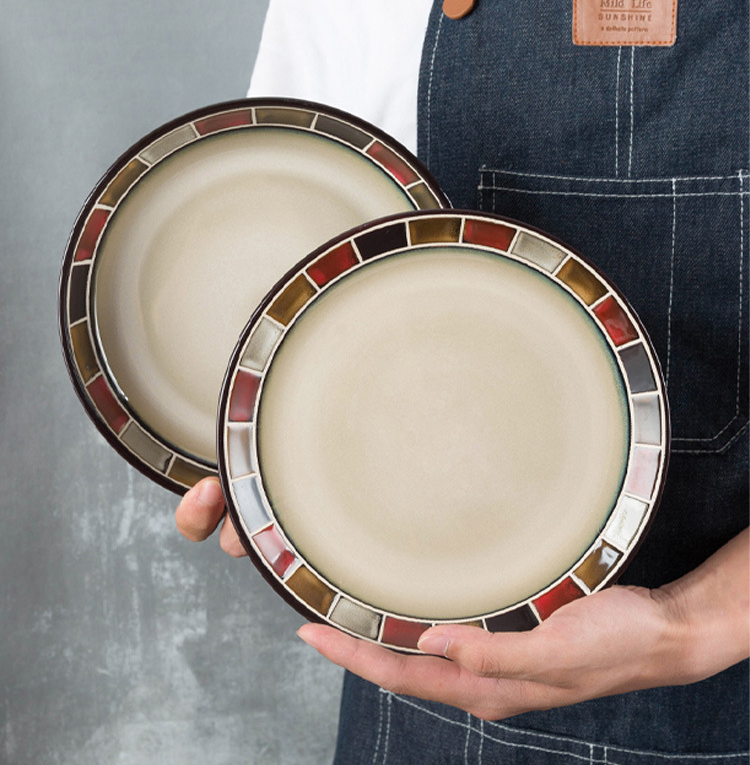
Stoneware → Artisan, Rustic, Farm-to-Table
Stoneware’s natural color variation, weight, and texture signals “handmade” and “provenance” even when factory-produced. This is a design asset for certain brand identities and a liability for others. The material cannot convincingly simulate fine dining—but it does not try to.
Brand fit: Farm-to-table and sustainable dining concepts, casual hospitality with artisan positioning, lifestyle brands emphasizing natural materials, outdoor and terrace service.
Cost Comparison Across Volume Tiers
Dinner plate (28cm), plain white, no decoration — FOB China 2026:
|
Volume |
Standard Porcelain |
Fine Porcelain |
Bone China |
Stoneware |
|---|---|---|---|---|
|
500 pcs |
$3.50–$5.50 |
$5.50–$9.00 |
$11.00–$20.00 |
$3.00–$5.00 |
|
1,000 pcs |
$3.00–$4.80 |
$4.80–$7.80 |
$9.50–$17.00 |
$2.60–$4.50 |
|
5,000 pcs |
$2.20–$3.80 |
$3.60–$6.00 |
$7.50–$13.00 |
$2.00–$3.50 |
|
10,000 pcs |
$1.80–$3.20 |
$3.00–$5.00 |
$6.00–$11.00 |
$1.60–$3.00 |
Add 15–25% for logo printing. Add 35–60% for total landed cost in US/EU.
New bone china sits between fine porcelain and genuine bone china:
- 500 pcs: $7.00–$13.00 per plate
- 1,000 pcs: $6.00–$11.00 per plate
- Delivers 70–80% of genuine bone china’s visual properties at 60–70% of the price
Cost decision rule: If your brand genuinely uses and communicates bone china’s specific properties (translucency, thinness, ivory tone), the premium is a material investment. If you would simply call it “premium ceramic” and no guest would know the difference, use fine porcelain—you are paying the bone china premium for properties your brand is not exploiting.
Durability in Commercial Use
|
Test |
Standard Porcelain |
Fine Porcelain |
Bone China |
Stoneware |
|---|---|---|---|---|
|
Commercial wash cycles (1,000) |
Pass |
Pass |
Pass |
Pass |
|
Chip resistance (EN 12875-1) |
High |
Medium-High |
Medium |
Highest |
|
Drop test (200g ball, 40cm) |
Pass |
Marginal |
Borderline |
Pass |
|
Thermal shock (150°C delta) |
Pass |
Pass |
Pass |
Pass |
|
Scratch resistance (glaze) |
Good |
Good |
Good |
Good |
Bone china chip resistance caveat: Bone china’s lower chip resistance is the material’s most significant commercial limitation. In fine dining with trained service staff and controlled handling protocols, it is manageable. In casual dining, outdoor service, or any high-turnover operation, the replacement cost of bone china makes it economically impractical—not because the material is poor quality, but because the service environment exceeds what the material’s properties support.
Stoneware durability advantage: Stoneware’s mass and crystal structure give it the highest chip resistance of any ceramic tableware material. For outdoor service, terrace dining, and any application where rough handling is a realistic expectation, stoneware outperforms porcelain and bone china on practical durability.
MOQ and Supplier Availability
|
Material |
Typical MOQ (logo print) |
Supplier Availability |
Lead Time (existing shape) | |
|---|---|---|---|---|
|
Standard porcelain |
500 pcs |
Widest — most factories |
21–30 days | |
|
Fine porcelain |
500 pcs |
Wide |
25–35 days | |
|
Bone china |
500–1,000 pcs |
Moderate (specialist factories) |
30–45 days | |
|
New bone china |
500 pcs |
Moderate |
25–35 days | |
|
Stoneware |
500 pcs |
Wide |
21–35 days |
Bone china supplier note: Genuine bone china is produced by a smaller number of specialist factories than standard porcelain. The primary production center in China is Tangshan (Hebei Province). Sourcing bone china from a factory without documented bone ash percentage is a risk—some factories represent new bone china or high-whiteness porcelain as “bone china” without meeting the material definition.
Verification: Request the clay body formulation sheet or a bone ash certificate from your supplier. A legitimate bone china factory can confirm bone ash percentage (typically 30–50%) in writing. GC Porcelain can provide material composition documentation for all bone china orders on request.
For the complete sourcing and evaluation process applicable to all material types, see our guide on top tableware manufacturers in China.
Decision Matrix
|
Your Situation |
Recommended Material |
Reason | ||
|---|---|---|---|---|
|
Five-star hotel fine dining |
Bone china |
Luxury signal, thinness, translucency | ||
|
Five-star hotel all-day dining |
Fine vitrified porcelain |
Durability + elevated appearance | ||
|
Mid-range restaurant |
Standard vitrified porcelain |
Best TCO, commercial durability | ||
|
Fast-casual / high breakage environment |
Standard porcelain or stoneware |
Chip resistance, cost | ||
|
Farm-to-table / artisan concept |
Stoneware |
Material aligns with brand story | ||
|
Premium gifting / corporate presents |
Bone china or new bone china |
Heritage associations, perceived value | ||
|
Sustainability-focused brand |
New bone china or stoneware |
Animal-free / natural material narrative | ||
|
Design-forward lifestyle hotel |
Fine porcelain or stoneware |
Contemporary without heritage constraint | ||
|
First custom order, testing market |
Standard vitrified porcelain |
Lowest risk, widest supplier base | ||
|
Outdoor or terrace service |
Stoneware |
Highest chip resistance |
The simplest rule: Match material to service environment and breakage risk first, then to brand positioning. A premium material in a high-breakage environment produces premium replacement costs, not premium guest experience.
To start a conversation about material selection for your specific project, visit our custom dinnerware page.
FAQ
What is the difference between porcelain and bone china?
Porcelain is made from kaolin clay, feldspar, and quartz, fired at high temperature to achieve a dense, bright white, non-porous body. Bone china contains 30–50% bone ash (calcined animal bone) in addition to the clay body, which produces the material’s defining properties: ivory-white tone, translucency when held to light, and lower density (lighter weight) than standard porcelain. Bone china commands an 80–150% price premium over vitrified porcelain due to the raw material cost and more complex production process.
Is bone china stronger than porcelain?
No — stoneware is the most chip-resistant ceramic tableware material, followed by standard vitrified porcelain. Bone china has the lowest chip resistance of the three, primarily because the bone ash content changes the clay body’s fracture mechanics. Bone china’s advantage is its thinness, lightness, and translucency — not its impact resistance. For commercial applications with rough handling, standard porcelain or stoneware outperforms bone china on practical durability.
What is new bone china and is it as good as genuine bone china?
New bone china replaces the bone ash content with alternative whitening agents — typically dolomite and alumina — to replicate bone china’s appearance without animal-derived raw materials. The result is visually similar: bright white, thin walls, higher translucency than standard porcelain. Genuine bone china has higher translucency and a distinctive ivory tone that new bone china approximates but does not fully match. New bone china costs 20–40% less than genuine bone china and is the right choice when sustainability commitments or vegan brand positioning make animal-derived ingredients commercially or ethically unacceptable.
Which ceramic material is best for restaurant use?
Vitrified porcelain is the commercial standard for restaurant use — it combines dishwasher durability, chip resistance, food-safe non-porosity, and bright white presentation at a cost that makes commercial replacement economics rational. Bone china is appropriate for fine dining in controlled service environments; it is not practical for casual dining or high-turnover operations where breakage rates make the premium cost unsustainable. Stoneware is the right choice when brand positioning specifically calls for a rustic or artisan aesthetic.
Can I mix materials across my restaurant or hotel tableware program?
Yes, and most multi-outlet operations do. The standard approach: use bone china for fine dining and executive service; vitrified porcelain for all-day dining, room service, and banqueting; stoneware for casual outlets, terraces, and bars. The key is to maintain visual consistency within each outlet — mixing materials within a service setting creates an incoherent presentation. Define material zones by outlet, not by budget.
Custom Solutions Available
Our technical experts are always ready to assist you in finding the perfect customized solution for your dinnerware needs.