Plating techniques for grilled Japanese fish
Ingredients: Fresh fish, sea urchin sauce, seasoning powder, etc.
Method: Cut the fresh fish into several pieces and grill until cooked, without any seasoning. Simply drizzle with sea urchin sauce and sprinkle with seasoning powder.
Scene 1: Bring out the colors of the dishware, enhance the visual appeal with the sauce
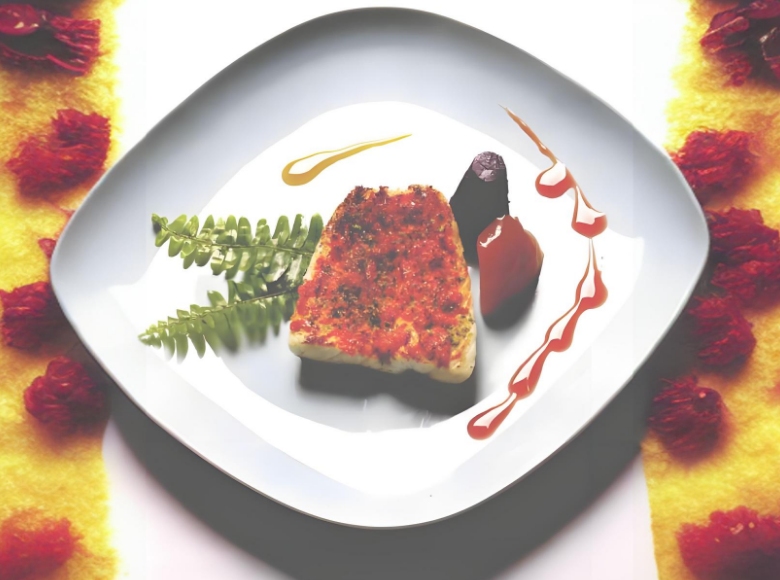
A light blue round plate is paired with sauce drizzled in a flowing, water-like pattern, creating a rhythmic visual effect. Using sauce as a decorative element to add movement is a common plating technique. The addition of vibrant green fern leaves transforms what might have been a simple grilled fish into something visually stunning. Plum sauce and orange sauce dotted on the plate can also be dipped into, providing a unique sweet and tangy flavor.
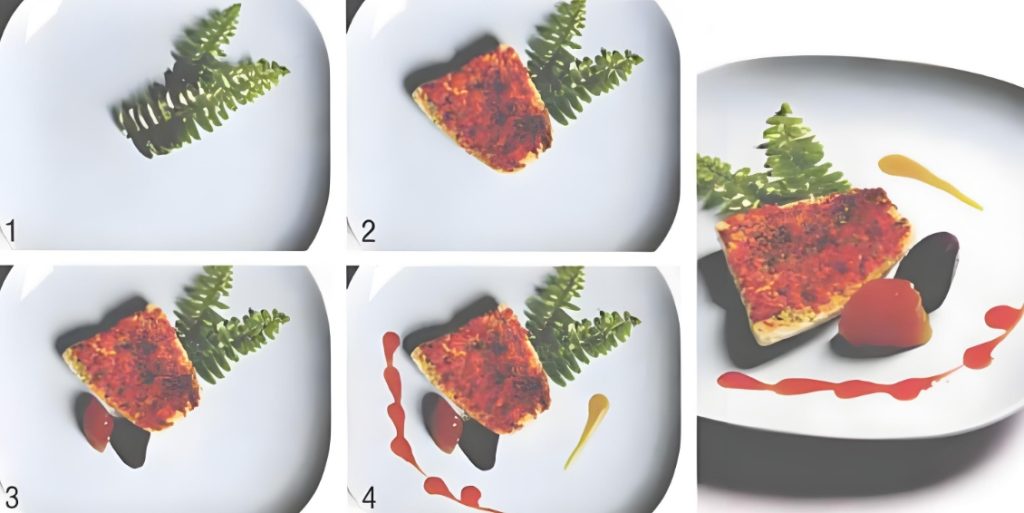
Plating Method
①Place two sprigs of maidenhair fern on the plate, overlapping their ends slightly.
②Drizzle sea urchin sauce over the grilled fish, sprinkle with seaweed powder, and place it at the overlapping ends of the ferns.
③Add pickled apple slices and purple sweet potato pieces next to the grilled fish.
④Finally, on the empty space of the plate, use plum sauce and orange juice sauce to create teardrop shapes, then pull them out to create a flowing effect.
Scene 2: Ceramics Paired with Bamboo Leaves for Fun
The grilled fish wrapped in red bamboo leaves adds not only aroma but also a visually striking bright red touch. The two “whiskers” left by the bamboo leaves on each side give the plating a more three-dimensional and dynamic look.
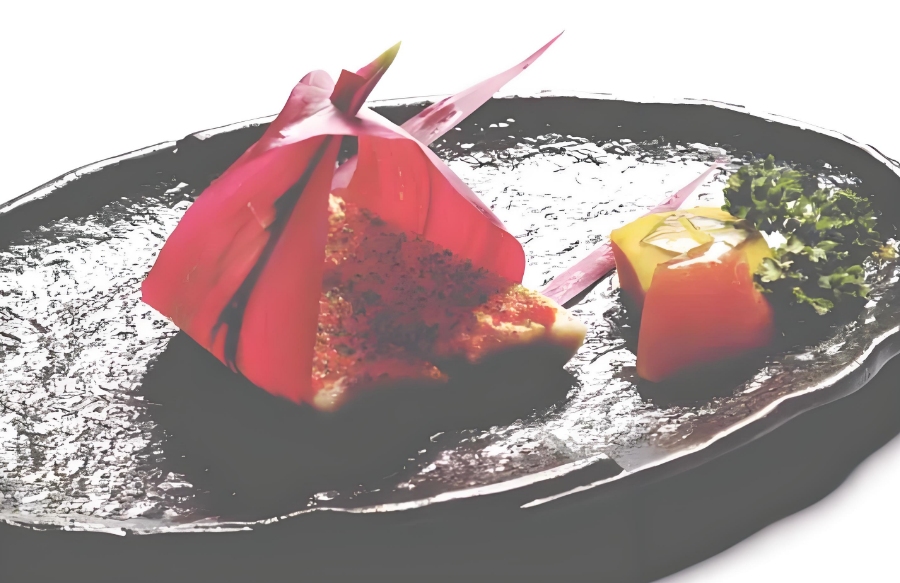
Plating Method
①First, cut two small whiskers on both sides of the red bamboo leaf, then make a small slit at the base. Fold the other end into the slit and place it on the plate.
②Drizzle the grilled fresh fish with sea urchin sauce, sprinkle with seaweed powder, and position it at the base of the folded red bamboo leaf.
③Place pickled apple, pumpkin, and cilantro beside the red bamboo leaf as garnish. These are edible and enhance the dish with a rich, authentic Japanese flavor.
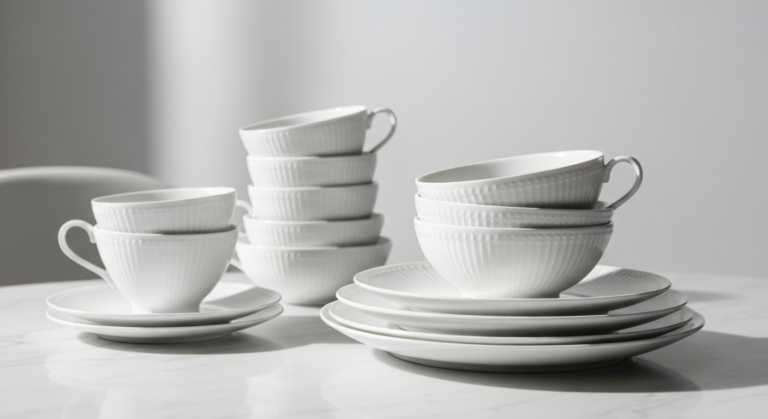
Custom Solutions Available
Our technical experts are always ready to assist you in finding the perfect customized solution for your dinnerware needs.