Rosenthal Dinnerware Review: Why It’s Called the Peak of “German Elegance”
Market Background and Core Conflict
If you only look at brand stories, Rosenthal is easy to categorize as “expensive, famous, but irrelevant to me.”
German porcelain brand with a century-long history. Classic collaborations with designers. Frequent appearances in high-end department stores and wedding registries.
But the real market contradictions are threefold:
- On one side are urban families pursuing “less but better.” They’re willing to pay more for white porcelain that works “from breakfast to New Year’s dinner.”
- On the other side is e-commerce flooding cheaper bone china/reinforced porcelain. These tout microwave and dishwasher compatibility, plus “more Instagram-worthy” patterns.
- Add one reality: Western second-hand markets overflow with “barely used fine china sets” sold at low prices. This shows people can afford them and love them, but can’t actually use them.
Rosenthal sits right in this gap.
Design and porcelain quality are strong enough. But price and “delicate feel” create psychological barriers for daily use in some households.
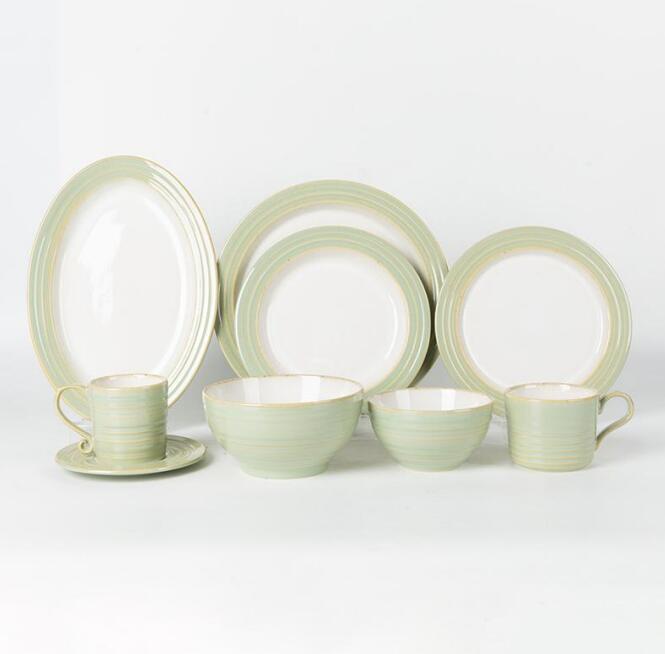
Within Rosenthal’s full lineup, Thomas for Rosenthal’s Loft series is the most representative “daily-use line.”
White fine porcelain. Understated same-color embossed stripes. Made in Germany. Clearly positioned for “both everyday use and entertaining.”
Macy’s and Bloomingdale’s pages position it as “fine porcelain for everyday use or entertaining.” They emphasize German manufacturing, dishwasher and microwave compatibility.
This is also the focus of this review:
From the perspective of a Chinese family wanting “one set to truly use daily for 10 years”—is Rosenthal, especially Loft series, worth it?
High Praise for “Looks + Durability,” But a Few Hidden Traps
Overall Review Direction
Taking Thomas for Rosenthal Loft as representative, mainstream North American channels rate it around 4.4–4.5/5 (Macy’s, Bloomingdale’s similar).
Reviews share very consistent keywords:
- “Light weight but very durable”
- “Great quality plates”
- “Perfect for everyday use”
- “Pieces over 20 years old… dishwasher safe”
- “Subtle lines… elegant… fit any occasion” (Fine lines elegant, change tablecloth for different occasions)
From a time dimension, many users repurchase/supplement pieces. This shows it’s not “impulsive wedding gift buying,” but continuous supplementation after years of use.
✅ Highlights: 3 Details That Win Over Long-Time Users
- “Light, but not fragile”—True daily-use porcelain feel Multiple reviews mention Loft plates and bowls are “light yet durable.” Compared to thick reinforced porcelain used in many hotels, this significantly reduces carrying burden, especially when a table is full of dishes. This is very friendly for those frequently serving and clearing dishes. Lightness is felt every day.
- Low-key same-color texture makes “all white” not look cheap Users especially emphasize the fine same-color, same-material concentric embossed circles on plate surfaces. Some describe it as “delicate but definitely visible,” “subtle touch of elegance.” In Chinese home blogger terms: It’s not “white plates,” but “white plates with design sense.” Better for photography, entertaining, and tablecloth matching. Multiple reviews mention “just change tablecloth and napkins to change the whole style.” This appeals to users wanting “buy less but not always the same feel.”
- Time-tested: Users with 20+ years of use One longtime user explicitly wrote: Some of their Loft dinnerware has been used for 20+ years. Always put in dishwasher. Still in normal service. For dinnerware, this is a very important signal:
- Glaze resists dishwasher alkaline detergents
- Pattern itself is structural design, not decal—no peeling issues
- Long-term use shows no significant discoloration/crazing feedback For those wanting “buy once right, use 10+ years,” this is more persuasive than any “brand story.”
❌ Purchase Warnings: Overlooked Yet Critical Complaints
- Some plates/bowls are “oval” not standard round—stacking and storage pitfalls In Macy’s user reviews, someone complained they thought they bought a “round cereal bowl.” Upon receipt, discovered it was an oval bowl. Not only couldn’t it stack with existing round bowls, but the return process hassle left them unhappy. This reflects that Rosenthal/Thomas emphasizes multiple shape combinations in Loft series. But e-commerce pages don’t present “oval/rectangular” intuitively enough, causing misunderstandings. For space-sensitive Chinese families (small kitchens, narrow cabinets), pay special attention:
- Before buying, confirm round or oval
- Mixing shapes causes inconsistent stacking heights and storage waste
- Modular is good, but increases “replacement piece cost” Loft series is a typical modular separate piece system: Various sized plates, shallow bowls, deep bowls, cup-saucer sets can be freely combined. Advantage is flexibility. Disadvantage is:
- First purchase without planning easily becomes “bought a bunch but not a set”
- Future replacement pieces need specific model numbers, and prices aren’t low From Bloomingdale’s and RoyalDesign set compositions: Typical 12-piece sets only include 4 dinner plates + 4 salad plates + 4 bowls. Deep soup bowls, dessert plates, fish plates needed for daily Chinese meals still require separate purchases.
- Price range awkward: Not reassuring enough for “rough-use families” In unit price dimension, Loft large dinner plates, American coffee cups, bowls are mid-to-high price fine porcelain in North American department stores. Significantly more expensive than IKEA/mass brands, but lower than handmade bone china and gold-rimmed premium lines. For families used to “using plates as cutting boards,” this price easily creates psychological burden. Afraid to truly use casually, it gradually becomes “plates only taken out for holidays.” Loses the meaning of “daily-use line.”
Material, Craftsmanship, Cost, and Usage Experience
1. Material: German-Made Fine Porcelain—Finding Balance Between Function and Aesthetics
- Loft series uses fine porcelain (high-grade fine china), not bone china or thick reinforced porcelain.
- Compared to common restaurant reinforced porcelain:
- Thinner, denser, better translucency
- Feel isn’t “heavy and rough,” more suitable for home and light dining scenarios
- Compared to English bone china:
- Color leans neutral cool white, not cream white
- Doesn’t pursue extreme thinness and translucency, but “light enough + sturdy enough”
- German production line control is very stable. Size precision and glaze uniformity are both good. This is the foundation for “usable 10+ years.”
2. Craft Design: Fine Stripes + Multiple Shapes, Visual and Functional Considerations
- Classic embossed fine stripes (ribbed/concentric lines):
- Not printed but part of porcelain body structure—wear-resistant, won’t fade
- Slight embossing also reduces large-area food sticking to plates to some extent, especially oily dishes
- Multiple shape strategy: Round plates, oval plates, square plates, shallow/deep bowls, etc.
- Extremely friendly for Western plating, can present different dish layers
- For Chinese meals, oval plates are actually very suitable for whole fish and long meat cuts, but require advance cabinet space planning
- Cup-saucer lines are unified but functions are finely divided: After dinner cup, stackable cup, mug, coffee cup, etc. A plus for users pursuing “corresponding cup type for each beverage.” May seem complex for families wanting “just one universal cup.”
3. Cost and Pricing: What Are You Paying For?
In Rosenthal’s (including Thomas brand) pricing structure, you’re mainly paying for:
- Stable craftsmanship and yield costs of German manufacturing (not Eastern European or Asian production lines)
- Long-term non-discontinued classic line—Loft launched years ago, still continuously sold in major department stores, facilitating replacement pieces years later
- Brand premium: Rosenthal itself is positioned as a porcelain brand with very strong design sense and artistic collaborations. Even though Loft is the more “everyday” Thomas series, it benefits from parent brand’s overall image.
From usage lifespan perspective:
Assume one Loft dinner plate costs about the same as a two-person meal at a mid-range restaurant. If it can truly be used 10–20 years like longtime users, daily usage cost is clearly worthwhile.
But prerequisite: You actually use it daily, not lock it in cabinets.
Who Should Buy, Who Shouldn’t?
Very Suitable for These Groups
- Families believing “using long beats buying more”
- Don’t love changing dinnerware sets annually, willing to pay for “10-year timeless” design
- Limited kitchen storage, hoping one white porcelain set can handle different occasions through tablecloth/napkin changes
- People mixing Chinese-Western meals, valuing plating effects
- Home cooks making salads, pasta, roasted dishes, also often making Chinese home-cooked meals
- Occasionally hosting Christmas, birthdays, holiday gatherings, needing a set of “presentable” plates on table
- Enjoy photographing and sharing meals with dinnerware—Loft’s texture photographs very well in natural light
- Office workers/small families, high usage intensity but not rough
- Mainly rely on dishwasher, little hand-washing time
- Won’t use knives forcefully on plates cutting bones and such
- Have requirements for cup-saucer feel, like German rational, no-pattern style
Not Highly Recommended for These Groups
- Families with small children, and very “freewheeling” daily meals
- Frequent drops, messy stacking and throwing
- Habit of putting plates directly into oven for violent heating For this usage scenario, better to first consider reinforced porcelain/high-quality melamine or lower-cost daily porcelain. Upgrade to Rosenthal when kids are older.
- “Space-anxious” small kitchen users who also want to mix shapes
- Very small cabinets, fixed shelf heights
- Still want to buy round plates + oval plates + square plates Easily encounter “can’t stack evenly, can’t fit” troubles. Better to simply choose a dinnerware series with unified contours.
- Users expecting dinnerware with strong built-in style (large florals, small florals, gold edges)
- Love Wedgwood’s English romance
- Or Chinese gold-rimmed, peony-patterned plates Rosenthal Loft is typical minimalist functionalist. If you enjoy “atmosphere from patterns,” Rosenthal’s other Studio-Line or European floral brands are better matches.
How to Choose Rosenthal/Loft More Reliably?
1. Sets vs. Individual Pieces: Recommend “Basic Set + Key Supplements”
- Basic option:
- 12-piece set (dinner plates + salad plates + bowls) as “daily three-meal foundation”
- Additional pieces Chinese families should supplement:
- 1–2 large oval plates (whole fish, roasted meat)
- 2–4 deeper soup bowls/large bowls
- 1–2 rectangular plates, can serve as appetizer/dessert plates
- Don’t recommend buying too many coffee cup-saucer sets initially. If home mainly uses mugs for water and tea, just pick one most versatile cup type.
2. Parameters and Details to Always Verify
- Shape: Confirm round / oval / rectangular, especially for bowls and shallow plates
- Size: 28 cm dinner plates better suit “Chinese style full plate of food,” 22 cm salad plates better for staples or breakfast
- Stacking height: Best to measure your cabinet shelf height first, then calculate stacking height of same models, avoiding reality of “1 cm short, can’t close door.”
3. Usage and Care: How to Actually Use It 10+ Years
- Dishwasher: Loft verified by longtime users for years, but still recommend:
- Avoid hard contact stacking with metal cookware, reduce metal scratches
- Use neutral dishwasher tablets, less strong alkaline high-temperature self-cleaning mode
- Microwave: Officially clearly usable, but:
- Avoid sudden temperature changes (just taken from fridge then long high-power heating)
- Daily avoidance:
- Using plates as cutting boards to cut hard bones
- Stacking with excessive heavy objects on bottom layer
Rosenthal’s Market Opportunities in Coming Years
From global dinnerware trends, next 3–5 years have several clear directions:
- Minimalist white porcelain comeback: Compared to fancy patterns, emphasizes material, lines, and shapes more. Loft fits this trend perfectly.
- “Less but better” consumer mindset: Willing to spend more on one durable good rather than frequent replacements. Rosenthal’s long-term sales and replacement-piece friendliness fit this exactly.
- Increasing mixed scenarios: Chinese meals + light Western meals, family gatherings + online social sharing raise higher requirements for dinnerware appearance and adaptability.
Combining brand positioning, long-term user reviews, and actual usage logic, if you’re looking for a set that’s:
- Design doesn’t age
- Quality supports 10 years
- Not “too precious to actually use”
daily-use fine porcelain dinnerware, Rosenthal, especially Thomas Loft series, is a top-tier option worth serious consideration.
Prerequisite: Think through shape and storage issues before ordering. Don’t get caught off guard by that “oval bowl.”
If you have any questions or need to Customized tableware service from GC Porcelain, please contact our Email:info@gcporcelain.com for the most thoughtful support!