Nano Antibacterial Glaze for Custom Tableware: Technology, Benefits, and Buyer Guide
When B2B buyers source custom ceramic tableware, they are no longer evaluating design alone. Surface performance now matters just as much as shape, color, and branding. One of the most discussed functional upgrades in the market is nano antibacterial glaze—a glaze system engineered to reduce bacterial survival on the ceramic surface while maintaining food-contact safety, appearance, and durability. For importers, wholesalers, hotel suppliers, and private-label tableware brands, understanding this technology helps separate real manufacturing capability from generic marketing claims.
What Is Nano Antibacterial Glaze?
Nano antibacterial glaze is a fired ceramic glaze that contains antibacterial functional phases—commonly based on silver ions (Ag⁺), titanium dioxide (TiO2), or a combination of both. Unlike temporary spray coatings, this functionality is built into the glaze system and must survive kiln firing, dishwashing, daily wear, and food-contact use.
In the custom tableware industry, this matters because the glaze is the actual interface between the product and the end user. It affects:
- hygiene perception
- cleanability
- stain resistance
- long-term appearance
- compliance risk
- brand positioning in hospitality and retail channels
A true antibacterial glaze is therefore not just a decorative finish. It is an engineered functional ceramic surface.
Why Nano Antibacterial Glaze Matters in Custom Tableware
For overseas buyers, especially in hospitality, healthcare catering, premium retail, and institutional procurement, ceramic tableware must deliver more than visual appeal. The product must also perform consistently in real use.
Key Reasons Buyers Care About Antibacterial Glaze
1. It Supports Hygiene-Focused Product Positioning
In hotels, restaurants, healthcare dining, and airline catering, antibacterial surface claims can strengthen product positioning and support premium marketing.
2. It Reflects the Supplier’s Technical Level
A factory that can successfully produce antibacterial glaze usually has better control over glaze chemistry, firing consistency, defect reduction, and compliance documentation.
3. It Helps Buyers Reduce Quality Risk
A supplier that cannot control antibacterial additives may create problems such as haze, discoloration, pinholes, crazing, or unstable test performance. That means higher rejection rates and more after-sales issues.
How Nano Antibacterial Glaze Works
There are two mainstream technical routes in ceramic tableware: silver-ion antibacterial systems and TiO2 photocatalytic systems.
Silver Ion (Ag⁺) Antibacterial Mechanism
Silver-based antibacterial glaze works mainly through the activity of Ag⁺ ions at or near the glaze surface. Silver ions interact with bacterial proteins and enzymes, especially sulfur-containing groups, damaging membrane function and interfering with essential cellular processes. Studies also show that silver ions can disrupt DNA-related functions and eventually lead to bacterial death. Source
A simplified reaction is often described as:
Protein–SH + Ag⁺ → Protein–S–Ag + H⁺
This matters in ceramic tableware because the antibacterial effect depends not only on the presence of silver, but on how the silver is stabilized, dispersed, and exposed at the fired glaze surface.
Why Ag⁺ Systems Are Popular
- broad-spectrum antibacterial action
- strong performance on non-porous hard surfaces
- suitable for built-in ceramic glaze systems
What Buyers Should Watch For
Poorly engineered silver-based glazes may cause:
- clouding
- yellowing
- discoloration
- crazing
- unstable antibacterial results
These quality risks have been reported in technical literature and patent disclosures related to antimicrobial ceramic glazes. Source
Titanium Dioxide (TiO2) Photocatalytic Mechanism
TiO2 antibacterial glaze works through photocatalysis. Under suitable light, titanium dioxide generates electron-hole pairs that react with oxygen and water on the surface to produce reactive oxygen species (ROS), including hydroxyl radicals and superoxide radicals. These ROS attack bacterial cell walls, proteins, and nucleic acids. Source
A simplified mechanism includes:
- TiO2 + light → electron-hole pairs
- surface reactions generate •OH, •O2−, and H2O2
- ROS damage bacterial membranes and internal components

Anatase TiO2 typically has a band gap of about 3.2 eV, while rutile TiO2 is about 3.0 eV, which is why crystal phase and light conditions strongly influence performance. Source
Why TiO2 Systems Are Attractive
- chemically stable ceramic-compatible functionality
- strong scientific basis for photocatalytic antibacterial action
- potential self-cleaning synergy in some formulations
What Buyers Should Watch For
TiO2-based antibacterial claims must be matched with the correct testing logic. If the antibacterial effect depends on photocatalysis, buyers should ask under what lighting conditions the performance was verified.
Factory Process Control: What Good Manufacturers Do Differently
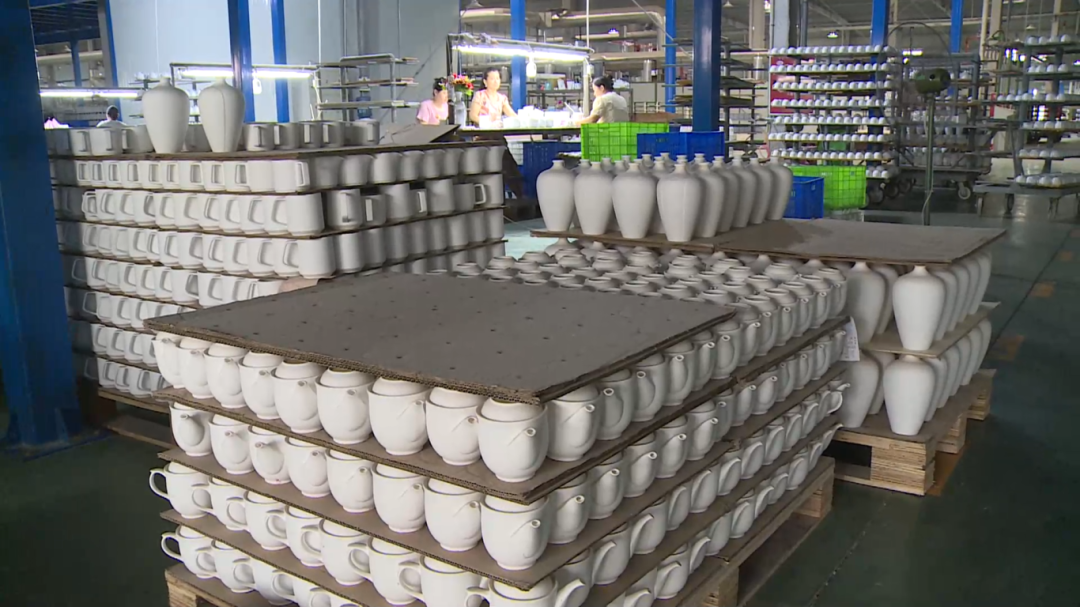
For B2B buyers, the most important question is not “Does the glaze contain antibacterial additives?” but “Can the supplier control them in mass production?”
Raw Material and Additive Selection
Reliable factories typically use one of these approaches:
1. Silver-Carrying Frit or Inorganic Carrier
This route improves silver dispersion and reduces the risk of uncontrolled color drift.
2. TiO2 Functional Glaze
This route relies on well-dispersed TiO2 in the glaze matrix, often with optimization for particle size and surface activity.
3. Hybrid Ag + TiO2 System
This can combine contact killing and photocatalysis, but it is more difficult to stabilize in appearance and process consistency.
Key Production Control Points
A professional ceramic tableware supplier should tightly control:
Glaze Slurry Stability
Important variables include:
- specific gravity
- viscosity
- pH
- sedimentation behavior
- particle size distribution
If the antibacterial additive settles faster than the base glaze, the antibacterial effect and color tone may vary from batch to batch.
Additive Dispersion
Nano-scale additives must be dispersed evenly. Agglomeration can cause:
- local roughness
- gloss reduction
- pinholes
- inconsistent antibacterial zones
- visual specks
Glaze Thickness
If the glaze is too thin, antibacterial performance and coverage may be weak. If it is too thick, the risk of defects increases, especially blistering, crawling, and poor bubble release.
Firing Curve Control
The firing process must balance:
- glaze melting
- gas release from the body
- additive stability
- final surface smoothness
- glaze-body fit
If the glaze seals too early while gases are still escaping, the surface may develop pinholes or blisters. Raw material reaction kinetics, particle size, application method, and firing schedule all influence the final glaze quality. Source
Common Ceramic Glaze Defects in Antibacterial Tableware
When antibacterial glaze is not engineered properly, common ceramic defects can appear.
Pinholes
Pinholes are small open surface holes caused by trapped gases escaping through the glaze during firing. In tableware, they are especially problematic because they affect cleanability and perceived hygiene.
Blisters
Blisters are larger gas-related surface defects caused by overfiring, trapped gas, or glaze-thickness imbalance.
Crazing
Crazing is a network of fine cracks in the glaze caused by thermal expansion mismatch between glaze and body. When the glaze contracts more than the body during cooling, tensile stress builds up and the glaze cracks. Source
Shivering
Shivering is the opposite of crazing. It happens when the glaze is under excessive compression and flakes off at rims or edges.
Clouding and Discoloration
These are common risks in poorly controlled silver-based antimicrobial systems. For custom tableware, even a strong antibacterial claim is commercially weak if it damages gloss, whiteness, or brand color consistency.
How B2B Buyers Should Evaluate an Antibacterial Tableware Supplier
For importers and sourcing teams, antibacterial glaze should be treated as a supplier qualification topic, not just a product feature.
Ask These Technical Questions
1. What Is the Antibacterial Mechanism?
Is it based on Ag⁺, TiO2 photocatalysis, or a hybrid system?
2. Which Test Standard Was Used?
The supplier should clearly explain whether the claim is supported by:
- ISO 22196 for antibacterial-treated non-porous surfaces Source
- ASTM E2180 for incorporated antimicrobial agents on hydrophobic or hard surfaces Source
- ISO 27447 for photocatalytic antibacterial materials Source
If the supplier uses a TiO2 mechanism but cannot explain photocatalytic test conditions, buyers should be cautious.
3. Is the Antibacterial Effect Durable?
Ask for evidence after:
- dishwashing cycles
- abrasion testing
- food-contact exposure
- production batch variation
4. Is the Tableware Food Safe?
For ceramic tableware, antibacterial performance must go together with food-contact compliance.
In the U.S., FDA guidance defines action levels for leachable lead in ceramicware by product category, including flatware, cups, mugs, pitchers, and hollowware. Source
In the EU, ceramic food-contact articles fall under Regulation (EC) No 1935/2004 and Directive 84/500/EEC, which focus on lead and cadmium migration and declaration requirements. Source
5. Can the Supplier Maintain Appearance Consistency?
Buyers should check:
- gloss consistency
- whiteness
- color repeatability
- surface smoothness
- cutlery-mark resistance
- micro-defect rate
A good supplier must balance function, food safety, and aesthetics at the same time.
International Standards Relevant to Antibacterial Ceramic Tableware
ISO 22196
Measures antibacterial activity on plastics and other non-porous surfaces. Widely referenced for hard-surface antibacterial claims. Source
ISO 27447
Applies to semiconducting photocatalytic materials and is especially relevant for TiO2-based antibacterial surfaces. Source
ASTM E2180
Used to evaluate the effectiveness of incorporated antimicrobial agents in hydrophobic or hard-surface materials. Source
ISO 6486-1
Specifies a test method for the release of lead and cadmium from ceramic ware and glass dinnerware intended for food use. Source
Final Thoughts: Why Nano Antibacterial Glaze Is a Serious Buyer Topic
For ceramic tableware buyers, nano antibacterial glaze is more than a functional upgrade. It is a strong indicator of whether a supplier truly understands ceramic materials engineering.
A qualified supplier should be able to deliver:
- clear antibacterial mechanism
- correct test-standard matching
- stable glaze appearance
- low defect rate
- food-contact compliance
- repeatable batch production
In other words, a reliable antibacterial ceramic tableware supplier does not just sell a claim. They sell a controlled ceramic surface system.
Sources
- ISO 22196 – Measurement of antibacterial activity on plastics and other non-porous surfaces: https://www.iso.org/standard/54431.html
- ISO 27447 – Antibacterial activity of semiconducting photocatalytic materials: https://www.iso.org/obp/ui/en/#!iso:std:69874:en
- ASTM E2180 – Activity of incorporated antimicrobial agents in hydrophobic materials: https://www.astm.org/e2180-18.html
- ISO 6486-1 – Release of lead and cadmium from ceramic ware: https://www.iso.org/obp/ui/en/#!iso:std:67561:en
- FDA Ceramicware Lead Guidance: https://www.fda.gov/files/inspections%2C%20compliance%2C%20enforcement%2C%20and%20criminal%20investigations/published/CPG-Sec.-545.450-Pottery-%28Ceramics%29–Import-and-Domestic—Lead-Contamination.pdf
- EU Ceramic Food Contact Summary: https://eur-lex.europa.eu/legal-content/CS/ALL/?uri=LEGISSUM%3Al21300
- Silver Ion Antibacterial Mechanism Study: https://pmc.ncbi.nlm.nih.gov/articles/PMC2292600/
- TiO2 Photocatalytic Antibacterial Review: https://pmc.ncbi.nlm.nih.gov/articles/PMC12610392/
- Glaze Thermal Expansion and Crazing: https://digitalfire.com/article/understanding+thermal+expansion+in+ceramic+glazes
- Glaze Process Variables and Firing Behavior: https://www.doria.fi/bitstream/handle/10024/177898/kronberg_thomas.pdf
Custom Solutions Available
Our technical experts are always ready to assist you in finding the perfect customized solution for your dinnerware needs.