Banquet vs Fine Dining Tableware: How to Choose the Right Ceramic for Your Event
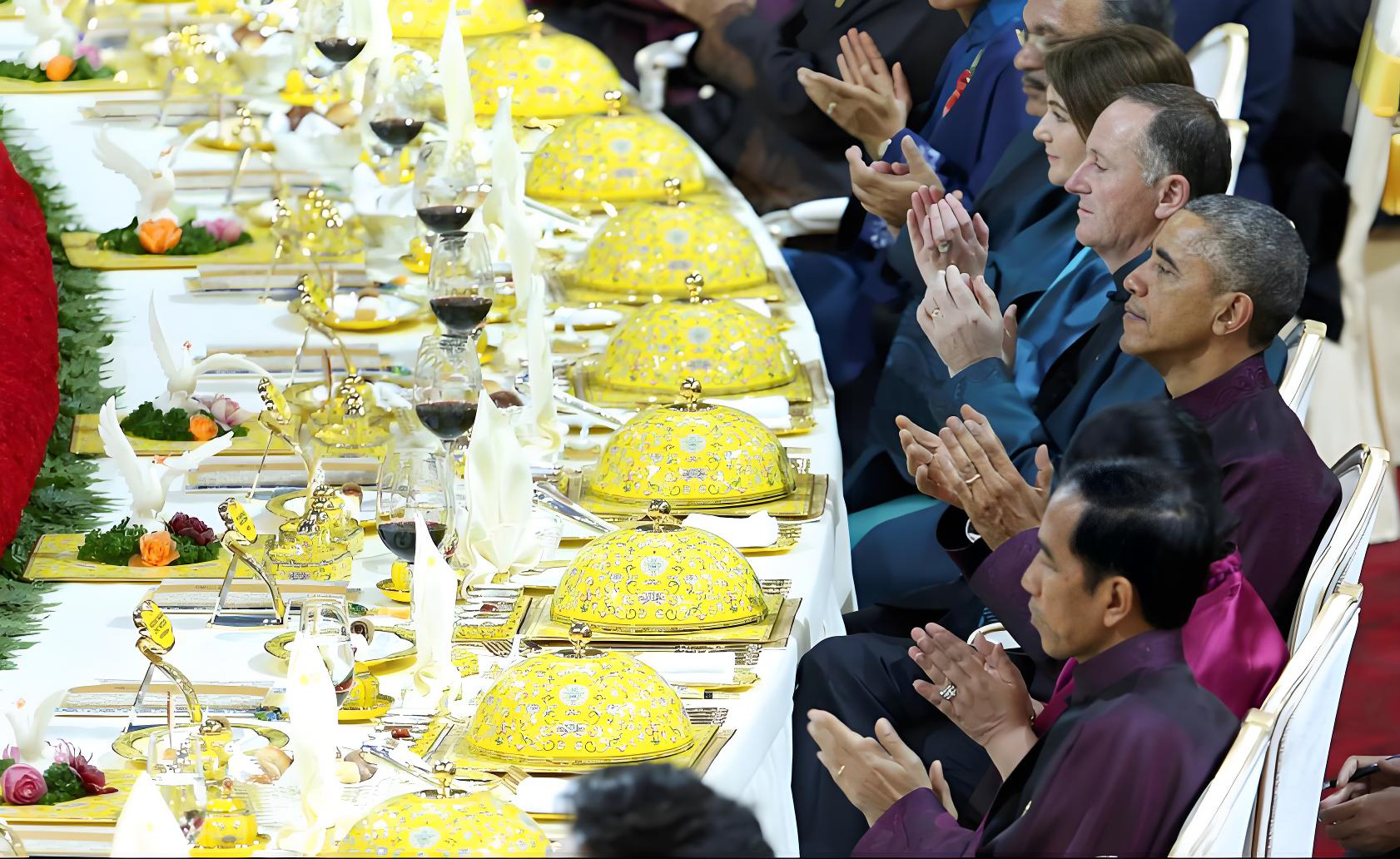
Banquet tableware and fine dining tableware serve opposite masters. Banqueting demands speed, volume, durability, and storage efficiency — pieces that can be transported, stacked, cleared rapidly, and washed in industrial cycles without visible degradation. Fine dining demands thinness, presentation, precision, and the tactile signals of refinement — pieces that communicate luxury through material and form. Specifying the wrong category for either context costs money and creates service problems that no amount of beautiful food can overcome.
This guide compares banquet and fine dining tableware across material, weight, durability standards, procurement economics, and the specific decisions that determine which spec is right for your event or property.
Key Takeaways
- Banquet tableware priority order: Durability → stackability → weight → cost. Presentation is secondary.
- Fine dining tableware priority order: Presentation → material signal → weight → precision. Durability matters but not at the expense of the first three.
- Banquet service requires tableware that can stack 20–30 deep without stability loss. Fine dining pieces rarely stack more than 10–12 high.
- The weight threshold for banquet service is ≤ 380g for a 28cm plate; heavy pieces compound over mass clearing and transport.
- Fine dining bone china is not appropriate for banquet contexts — its chip resistance is insufficient for the handling speeds and volumes that banquet service requires.
- For mixed-use hotel properties, the most cost-effective strategy is separate tableware programs per outlet rather than a compromise spec that serves neither context well.
Defining the Service Contexts
Banquet Service
Banquet service covers formal events (gala dinners, weddings, corporate functions, conference F&B) where food is served simultaneously to large numbers of guests—typically 50 to 1,000+ covers in a single service. Key operational characteristics:
- Speed of service: All guests at a table receive their course within 60–120 seconds of each other
- Clearing speed: Tables are cleared rapidly between courses to maintain event timing
- Transport and storage: Plates travel on trolleys, in stacks of 20–30, between kitchen, service floor, and dishwash
- Staff: Often includes banquet-specific service teams or temporary staff less trained in fine tableware handling
- Volume peaks: A single event can use 2,000–5,000 pieces in one evening
These conditions create the highest stress environment any ceramic tableware experiences. Chip risk during trolley transport, stack instability during rapid clearing, and thermal shock from hot-hold equipment to cool plate storage are routine.
Fine Dining Service
Fine dining service covers intimate à la carte restaurants (typically 20–80 covers) where each course is individually plated and presented. Key operational characteristics:
- Presentation focus: Each plate is a canvas; the tableware contributes directly to guest perception
- Handling protocol: Trained service staff follow specific plate-handling procedures
- Service pace: Slower, more deliberate; plates are inspected before being presented
- Volume: Lower piece counts per service; restock orders are smaller
- Guest scrutiny: Guests notice tableware details — weight, rim profile, translucency, surface finish
Material Comparison
|
Material |
Banquet Suitability |
Fine Dining Suitability |
Notes |
|---|---|---|---|
|
Heavy vitrified porcelain |
Excellent |
Poor |
Too heavy for fine dining feel |
|
Standard vitrified porcelain |
Excellent |
Acceptable |
Commercial workhorse |
|
Fine vitrified porcelain |
Good |
Good |
Best crossover option |
|
Bone china |
Poor |
Excellent |
Too fragile for banquet volume |
|
New bone china |
Acceptable |
Good |
Bone china appearance, better durability |
|
Poor (weight) |
Acceptable (select contexts) |
Too heavy for banquet; niche fine dining |
Why bone china fails in banquet contexts:
Bone china’s lower chip resistance — a function of its bone ash composition changing the clay body’s fracture mechanics — means that at banquet clearing speeds (where plates are stacked rapidly on trolleys by multiple staff simultaneously), chip and breakage rates are 3–5× higher than with commercial vitrified porcelain. The premium material cost multiplied by elevated breakage creates an economics problem that is immediate and ongoing.
Why heavy vitrified porcelain underserves fine dining:
Weight of 450–550g for a dinner plate is a service staff ergonomic issue in fine dining (same argument as for high-volume restaurants), but more critically, heavy pieces with thick walls communicate “institutional” rather than “refined.” The material signals the wrong positioning before the food arrives.
Weight and Ergonomics
Banquet service weight targets:
|
Item |
Target Weight |
Maximum |
Reason |
|---|---|---|---|
|
Dinner plate (28cm) |
300–380g |
420g |
Stack weight; trolley loads of 30 plates = 9–12kg |
|
Side plate (18cm) |
150–220g |
260g |
High-frequency clearing item |
|
Soup bowl (350ml) |
200–280g |
320g |
Often carried two-handed during service |
|
Coffee cup + saucer |
180–250g combined |
300g combined |
Mass coffee service between courses |
Fine dining weight guidance:
Fine dining weight targets the opposite end: pieces should feel substantial without being heavy — a distinction that bone china achieves through its material density, not its mass. A bone china dinner plate at 240–300g feels premium because the thin walls and low density create a piece that is lighter than its visual presence suggests.
For fine vitrified porcelain (the most common fine dining material below bone china tier), target 300–380g for a 28cm plate with a refined rim profile — lighter than banquet porcelain, heavier than bone china, sitting in the perceptual “premium” range.
Durability Requirements
Banquet
|
Test |
Banquet Requirement |
Standard | |
|---|---|---|---|
|
Commercial dishwasher cycles |
1,000+ |
750–1,000 min | |
|
Drop impact (steel ball) |
200g from 45cm |
EN 12875-1 | |
|
Thermal shock |
150°C delta |
Standard | |
|
Stack stability (30 plates) |
No lean or topple |
Internal test |
Banquet tableware should be specified to EN 12875-1 compliance as a minimum. For properties running 3–5 events per week, higher-specification testing (200g ball from 45cm rather than the standard 35–40cm) is worthwhile given the production volume.
Fine Dining
Fine dining durability requirements are less about impact resistance and more about long-term glaze integrity:
|
Test |
Fine Dining Requirement | ||
|---|---|---|---|
|
Commercial dishwasher cycles |
1,000+ with zero glaze change | ||
|
Decoration retention |
No fade after 800 cycles | ||
|
Scratch resistance |
No visible glaze scratches from cutlery | ||
|
Gold/platinum retention |
No banding erosion after 500 cycles |
Fine dining tableware is typically washed in a rack-type dishwasher rather than a flight-type machine — lower mechanical stress than banquet dishwash — but the gold banding and surface decoration must withstand it indefinitely.
Stackability and Storage
Stackability is a procurement criterion that buyers rarely think about until tableware arrives in a kitchen that cannot store it efficiently.
Banquet Stackability Requirements
- Stack height test: 30 plates must form a stable, plumb column. Any lean indicates a foot ring or rim geometry problem that becomes a breakage risk on trolleys.
- Rim contact clearance: The glaze on the underside of one plate’s rim must not contact the top face of the plate below — glaze transfer marks appear in dishwashers and accumulate to create permanently marked pieces.
- Dish dolly fit: Verify that your plate diameter matches your dishwash rack dimensions. Common rack formats: 400×400mm, 500×500mm. A 29cm plate does not fit a 400mm rack efficiently — measure before ordering.
Fine Dining Stackability
Fine dining pieces typically stack 6–12 high on service stations. The requirement is neat alignment and no rim damage — less demanding than banquet, but any rim chip visible to a guest is a service incident.
Procurement Economics
Banquet Economics
The economics of banquet tableware are driven by total cost of ownership and replacement frequency:
|
Cost Component |
Banquet |
Fine Dining | |
|---|---|---|---|
|
Unit price (28cm plate, porcelain) |
$3–6 FOB |
$6–15 FOB | |
|
Annual breakage rate |
20–35% |
8–15% | |
|
Expected replacement cycle |
18–24 months full refresh |
3–5 years full refresh | |
|
3-year total cost (200-cover event program) |
$8,000–$18,000 |
$5,000–$12,000 |
Banquet tableware’s higher annual replacement cost partially offsets its lower unit price. Budget for 25–35% annual replacement from the opening inventory.
Opening quantity formula for banquet:
|
Item |
Formula | ||
|---|---|---|---|
|
Dinner plates |
Maximum event cover count × 1.4 | ||
|
Side plates |
Maximum cover count × 1.3 | ||
|
Soup bowls |
Maximum cover count × 1.25 | ||
|
Buffer stock |
+30–40% above formula |
Fine Dining Economics
Fine dining tableware investment is justified by its direct contribution to perceived value — a guest paying $150+ for a tasting menu is experiencing the tableware as part of the proposition. The investment amortizes over 3–5 years of consistent presentation.
Opening quantity formula for fine dining:
|
Item |
Formula | ||
|---|---|---|---|
|
Dinner plates |
Cover count × 3–4 | ||
|
Course plates (each) |
Cover count × 2–3 | ||
|
Buffer stock |
+15–20% above formula |
For a direct supply relationship enabling restock orders at 500-piece MOQ for both banquet and fine dining programs, see our custom dinnerware page. For the full hotel tableware procurement framework, see our hotel dinnerware guide.
Product Specification Guide
Banquet specification summary:
|
Parameter |
Specification | ||
|---|---|---|---|
|
Material |
Vitrified porcelain, water absorption < 0.5% | ||
|
Plate weight (28cm) |
300–380g | ||
|
Rim profile |
Narrow, stable foot ring for stacking | ||
|
Decoration |
Under-glaze logo decal only | ||
|
Dishwasher |
EN 12875-1 compliant, 1,000+ cycles | ||
|
Impact |
200g ball drop, 45cm, no chip | ||
|
Certification |
FDA or LFGB per market |
Fine dining specification summary:
|
Parameter |
Specification | ||
|---|---|---|---|
|
Material |
Bone china or fine vitrified porcelain | ||
|
Plate weight (28cm) |
220–360g depending on material | ||
|
Rim profile |
Refined, consistent, showroom-quality finish | ||
|
Decoration |
Under-glaze (commercial); electrolytic gold (luxury) | ||
|
Dishwasher |
1,000+ cycles, zero glaze change | ||
|
Certification |
FDA or LFGB + ISO 6486-1 for premium programs |
Mixed-Use Properties: The Dual-Program Strategy
For hotels operating both banquet facilities and fine dining restaurants, the temptation is to find a single “premium but durable” tableware spec that serves both contexts. This compromise approach produces tableware that is:
- Too heavy or fragile for banquet volume
- Too utilitarian-looking for fine dining presentation
- More expensive than budget banquet ware but not as elevated as true fine dining material
The economically rational approach: two separate programs with a shared glaze family and logo system.
|
Program |
Material |
Spend per Piece |
Annual Replacement |
|---|---|---|---|
|
Banquet |
Vitrified porcelain |
$4–7 |
25–35% |
|
Fine dining |
Bone china or fine porcelain |
$12–25 |
8–15% |
Visual consistency is achieved through shared glaze color and logo placement. Material differentiation is achieved through two supplier specifications, managed as a single account relationship where possible.
FAQ
What is the best material for banquet tableware?
Vitrified porcelain — specifically commercial-grade with water absorption below 0.5% and EN 12875-1 chip resistance compliance — is the standard for banquet tableware. The priority is durability under high-volume handling: trolley transport, rapid stacking, industrial dishwashers, and thermal shock from hot-hold equipment. Bone china is inappropriate for banquet contexts; its chip resistance is insufficient for the handling speeds and volumes that banquet service involves.
Can I use fine dining tableware for banquet events?
Not sustainably, and not economically. Fine dining tableware — particularly bone china — has chip resistance characteristics that are incompatible with banquet handling speeds. In practice, using bone china for a 500-cover gala dinner produces breakage rates 3–5× higher than commercial vitrified porcelain, and the cost of replacing premium pieces replaces any perceived quality benefit within two or three events.
How much banquet tableware do I need?
The planning formula is: maximum event cover count × 1.4 for dinner plates, × 1.3 for side plates, × 1.25 for bowls. Add 30–40% buffer above the formula to account for breakage, dishwasher cycle time, and the reality that multiple events may overlap in setup and teardown phases. A 500-cover banquet program needs approximately 700–750 dinner plates in inventory, not 500.
How do weight and stackability affect banquet service?
At banquet scale, weight compounds: a trolley loaded with 30 plates at 380g each weighs 11.4kg — manageable per trip. At 520g per plate, the same trolley weighs 15.6kg — a cumulative ergonomic load across hundreds of trips per event that increases staff fatigue and drop risk. Stackability affects storage density and transit stability; an unstable 30-plate stack on a moving trolley is a breakage and safety incident. Test both criteria with 30-plate sample stacks before finalising any banquet tableware purchase.
Custom Solutions Available
Our technical experts are always ready to assist you in finding the perfect customized solution for your dinnerware needs.