5-Star Hotel Tableware Standards: What Procurement Managers Actually Look For
Five-star hotel tableware procurement is evaluated against six criteria: material quality, commercial durability, branding consistency, food-safety compliance, supply reliability, and service terms. A supplier that scores well on price but fails on batch consistency—where pieces from restock orders don’t match the originals—creates a visible service quality problem that no savings justify. This guide documents what experienced hospitality procurement teams actually check, the measurable thresholds they use, and how to specify them in a supplier brief.
This guide is written for hotel procurement managers, F&B directors, and hospitality group purchasing officers sourcing tableware for luxury properties.
Key Takeaways
- Five-star hotel tableware is evaluated primarily on durability and consistency, not just initial appearance. A piece that looks perfect on day one but chips within three months of service is a procurement failure.
- The industry benchmark for commercial dishwasher performance is 1,000+ wash cycles without measurable glaze degradation. Ask for documented test data, not verbal assurances.
- Batch consistency—the ability to match new restock pieces to original pieces three years later—is the criterion that eliminates the most suppliers from hotel programs. It requires documented glaze and clay body formulations.
- Five-star standard requires under-glaze logo printing for all branded pieces. On-glaze prints fade in commercial dishwashers; under-glaze prints do not.
- Food-safety certification for a five-star hotel program should include FDA 21 CFR or LFGB plus ISO 6486-1. The ISO 6486-1 requirement is what separates systematic compliance from one-time testing.
- A supplier’s defect handling policy—specifically, the written remedy for non-conforming goods—is evaluated as a proxy for their QC confidence.
Criterion 1: Material Quality Standards
Bone China vs Vitrified Porcelain
Five-star hotels use different materials across different outlets, and the distinction matters for procurement specification:
|
Outlet Type |
Standard Material |
Whiteness Requirement |
Wall Thickness |
|---|---|---|---|
|
Signature fine dining |
Bone china (30–50% bone ash) |
Ivory tone, high translucency |
2–3mm rim |
|
All-day dining |
Vitrified porcelain |
Bright white (WI ≥ 85) |
3–5mm rim |
|
Banqueting |
Vitrified porcelain or new bone china |
Bright white |
4–6mm rim |
|
Executive lounge |
Fine porcelain or bone china |
High whiteness |
2.5–4mm rim |
|
Room service |
Vitrified porcelain |
Standard white |
4–6mm |
Whiteness Index (WI) is the measurable standard for ceramic whiteness. Bone china typically achieves WI 78–85 (ivory). High-grade vitrified porcelain for luxury hotel use should achieve WI ≥ 85 (bright white). Ask suppliers for whiteness index documentation from a calibrated spectrophotometer measurement.
Translucency test: Hold the piece up to a light source. Bone china will show light transmission through the body — the thinner the wall, the more pronounced. This is not a defect; it is the defining quality signal of genuine bone china. Standard porcelain shows no light transmission.
Water absorption: Any piece used in commercial food service must achieve water absorption below 0.5% (vitrified standard). Non-vitrified ceramics absorb liquids and bacterial material and are not suitable for commercial hotel use regardless of appearance. Request water absorption test data from any supplier you shortlist.
Criterion 2: Commercial Durability Standards
This is the criterion that eliminates the most suppliers from five-star hotel programs. Visual appearance in a showroom is not durability evidence.
Dishwasher Cycle Performance
Commercial hotel dishwashers operate at 65–85°C wash temperature with aggressive detergents. Acceptable five-star standard: no measurable glaze degradation after 1,000 wash cycles.
What degradation looks like: crazing (fine surface crack network visible in raking light), glaze erosion (dull patches where glaze has thinned), gold or platinum dissolution (banding loses definition), decoration fade (logo or pattern becomes indistinct).
How to evaluate: Request a third-party test report from SGS, Intertek, or Bureau Veritas showing glaze condition and decoration retention after 1,000 cycles in a commercial dishwasher simulation. Suppliers who cannot produce this documentation have not tested to this standard.
Chip and Impact Resistance
EN 12875-1 is the European standard for domestic and commercial ceramic dishwasher resistance. Request compliance documentation. For five-star hotel procurement, supplement with a drop-ball impact specification: the piece must pass a 200g steel ball drop from 40cm height without chipping. This simulates the impact of a plate being knocked off a pass or table edge during service.
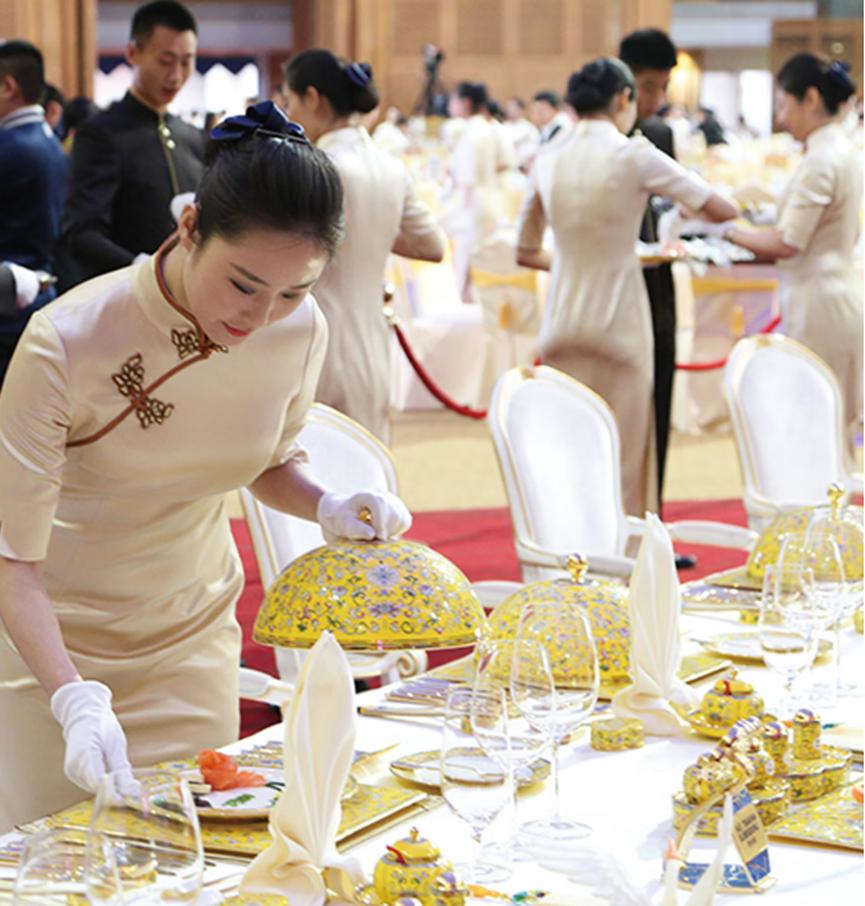
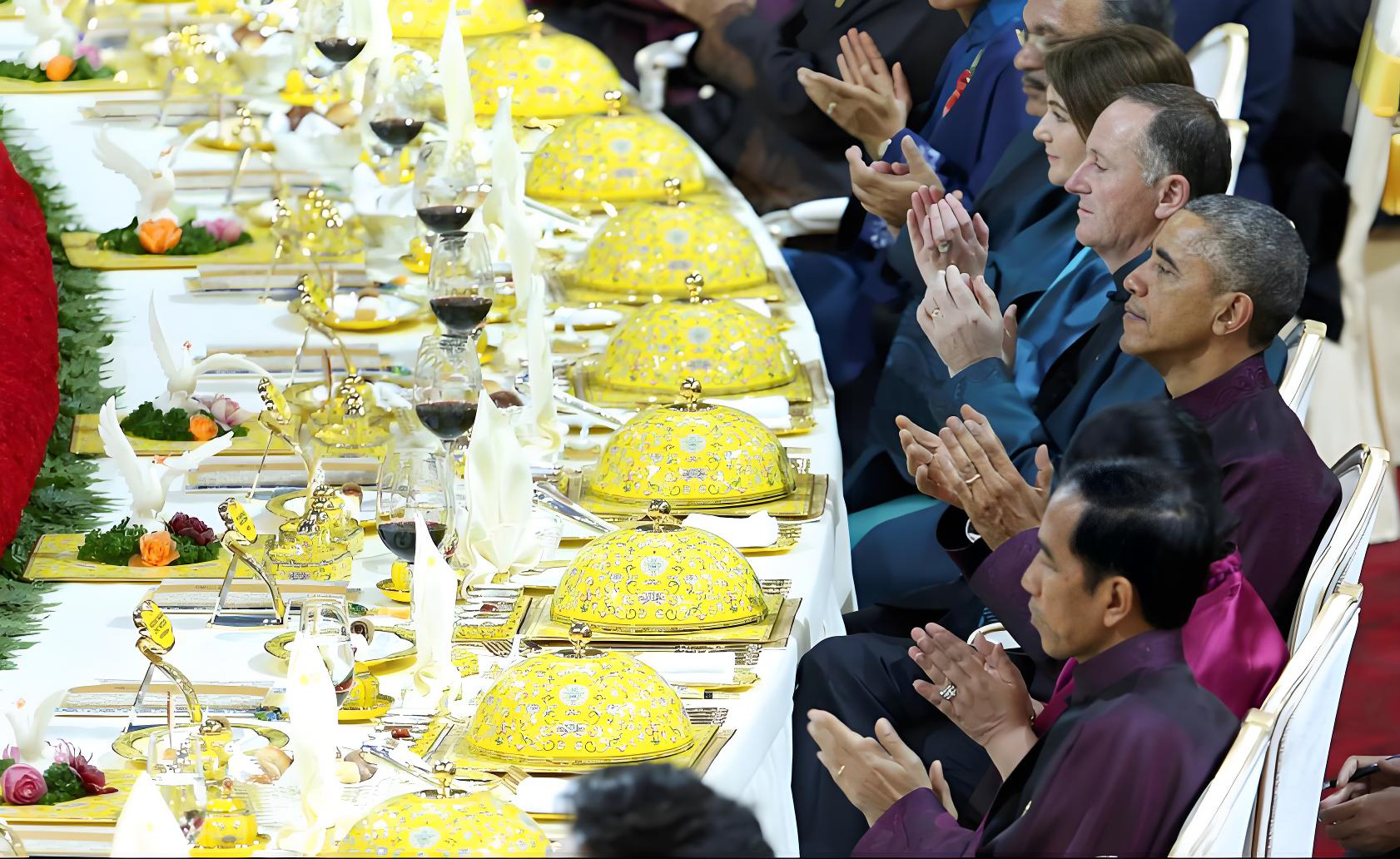
GC Porcelain’s hotel-grade vitrified porcelain is tested to a 250g ball drop from 40cm — exceeding EN 12875-1 requirements based on standards established by government-level procurement (APEC Summit tableware).
Thermal Shock Resistance
The minimum commercial hotel standard: the piece survives a 150°C delta temperature shock (heated to 150°C, then immersed in cold water) without cracking. This covers the range of temperatures encountered in hotel F&B service — from a heated food pass to a cold marble buffet surface.
Request thermal shock test documentation. Pieces without this data should not be placed in banqueting or buffet service.
Criterion 3: Branding and Decoration Standards
Logo Printing: Under-Glaze Required
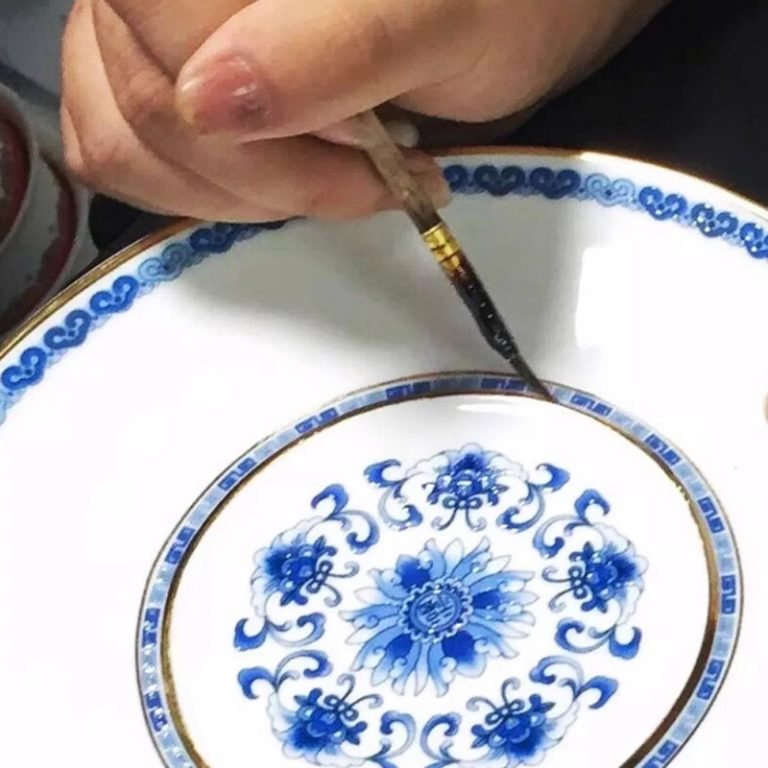
For five-star hotel tableware, under-glaze decoration is the only acceptable standard for commercial use. Under-glaze printing (the decoration is applied before the glaze and fired beneath it) is permanently bonded to the ceramic body. It cannot fade, wash off, or abrade in commercial dishwasher service.
On-glaze printing (applied after glazing and fired at lower temperature) produces brighter colors but sits on the surface layer. Under aggressive commercial dishwashing conditions, on-glaze decoration shows measurable fade within 200–500 wash cycles — visible to guests comparing a new piece to a six-month-old piece.
Specify “under-glaze decal printing” in your procurement brief and request confirmation from the supplier that their process uses under-glaze application. If a supplier offers under-glaze printing at a premium over on-glaze, accept it — the operational cost of replacing faded-logo tableware every 12 months is far higher.
Color Consistency Across Batches
Delta-E (ΔE) is the measurable standard for color difference in ceramic glazes. A ΔE of 0 means identical; ΔE < 1 is imperceptible to the human eye; ΔE 1–3 is a marginal difference visible under close examination; ΔE > 3 is clearly visible in normal service conditions.
Five-star hotel standard: restock pieces must match the original order to ΔE ≤ 2.0. This requires the factory to maintain documented glaze formulation records with specific ingredient ratios, tied to a color reference standard (typically a Pantone reference or a retained master sample).
Ask any supplier: “How do you ensure color consistency between our original order and a restock order placed two years from now?” A factory that answers with “we keep records” without explaining what those records contain does not have the process in place.
Gold and Platinum Banding
For fine dining and prestige service applications, gold and platinum banding must be applied using electrolytic bright gold (≥ 12% gold content), not cheap print-gold. Test by examining banding under magnification: electrolytic gold has an even, mirror-like surface without visible print grain. Print-gold shows a slightly granular texture.
Electrolytic gold and platinum are not microwave-safe (which is irrelevant for restaurant plating service) but are fully dishwasher-safe when fired correctly. Specify this in your brief for any fine dining application.
Criterion 4: Food-Safety Compliance Standards
Minimum Certification for Five-Star Hotel Use
|
Market |
Required Certification |
What It Tests | |
|---|---|---|---|
|
US properties |
FDA 21 CFR |
Lead ≤ 0.5 mg/L, Cadmium ≤ 0.25 mg/L | |
|
EU properties |
LFGB (EN 1388-2) |
Lead ≤ 0.3 mg/L flat / ≤ 1.5 mg/L hollow, tested in 4% acetic acid | |
|
International (recommended) |
ISO 6486-1 |
Systematic leaching compliance testing | |
|
High-standard programs |
All three |
Belt-and-suspenders compliance |
What Documentation to Request
Do not accept a certificate logo. Request the original test report from the accredited laboratory with: the laboratory’s accreditation number, the specific sample batch tested, and the numerical leaching results for lead and cadmium. Verify the report number with the issuing lab’s online verification portal.
ISO 6486-1 significance: Unlike FDA and LFGB, which can be satisfied by a single one-time test, ISO 6486-1 requires documented testing protocols at production intervals. A factory holding ISO 6486-1 has integrated compliance testing into their production QC process — not just run a test when applying for certification.
GC Porcelain maintains an on-site National First Grade Laboratory for lead/cadmium testing, enabling batch-level test reports within 3–5 days rather than the 7–14 days required for external lab testing.
Criterion 5: Batch Consistency and Supply Standards
Why Batch Consistency Eliminates More Suppliers Than Any Other Criterion
A five-star hotel tableware program operates for 3–5 years between full replacement cycles. During that time, breakage and attrition require restock orders — typically 15–20% of original volume annually. Those restock pieces must be visually indistinguishable from the originals.
Batch inconsistency is visible when: glaze tone differs (one shade warmer or cooler), logo placement shifts by more than 2mm, piece weight differs measurably, or surface finish texture changes. Each of these signals a factory that does not maintain documented production standards.
What to ask suppliers:
- “Do you maintain the original glaze formulation records for client orders?”
- “What is your process for ensuring a restock order placed in 2028 matches our 2026 original?”
- “Can you provide a reference contact at a hotel client who has placed restock orders?”
A factory with documented batch management answers these questions specifically. A factory without it deflects them.
MOQ Flexibility for Restock Orders
Opening orders typically meet MOQ thresholds easily (5,000–50,000 pieces). Restock orders are often smaller (500–2,000 pieces for broken items). Confirm before your opening order that the factory will fulfill restock orders at or below 500-piece MOQ for your specific shapes.
A supplier that requires 2,000-piece minimums for restocks forces you to maintain excessive safety stock — which has its own cost. Five-star hotel programs need restock flexibility, not just opening-order capacity.
Criterion 6: Supplier Service Standards
Response Time and Communication
Five-star hotel programs operate on timelines where a slow response creates real operational problems. Evaluate suppliers during the RFQ process: a factory that takes five days to respond to a quotation request will take proportionally longer during production queries.
Acceptable standard for a five-star hotel supplier: email response within 24 hours for routine queries; 48 hours for technical questions requiring factory input.
Defect Handling Policy
Request the supplier’s written defect handling policy before placing any order. The document should specify:
- Accepted defect threshold (AQL 2.5 is standard: ≤ 21 defects per 1,000 pieces)
- Remedy for non-conforming shipments: replacement in next order or proportional credit
- Claim window: typically 30–60 days from delivery
A supplier that declines to put defect handling terms in writing has not been asked to be accountable to them before. This is a disqualifying signal for a five-star program.
Reference Verification
Before finalizing a five-star hotel tableware supplier, request three reference contacts at hotel properties of comparable tier. Call or email at least two. Ask specifically: “Were there any QC issues, and how did the factory handle them?” The answer to the second question matters as much as the first.
Five-Star Tableware Evaluation Scorecard
Use this to score and compare suppliers during your procurement process:
|
Criterion |
Weight |
Evaluation Question |
Score (1–5) |
|---|---|---|---|
|
Material: correct grade for outlet |
10% |
WI data, water absorption < 0.5% | |
|
Durability: 1,000 wash cycle test data |
20% |
Third-party test report available | |
|
Durability: EN 12875-1 chip resistance |
10% |
Compliance documentation | |
|
Branding: under-glaze printing confirmed |
15% |
Process documentation | |
|
Branding: batch ΔE ≤ 2.0 commitment |
10% |
Written specification in contract | |
|
Food safety: FDA/LFGB with lab report numbers |
15% |
Verifiable test reports | |
|
Food safety: ISO 6486-1 |
5% |
Certificate + production testing protocol | |
|
Supply: restock MOQ ≤ 500 pcs |
5% |
Written confirmation | |
|
Service: defect policy in writing |
5% |
AQL + remedy terms documented | |
|
Service: hotel references verified |
5% |
Two reference checks completed | |
|
Total |
100% |
A score of 4.0 or above (out of 5.0) is the threshold for a five-star hotel program. Below 3.5, identify which criteria are failing and whether they are negotiable or disqualifying.
For a full guide to the sourcing process — from brief to delivery — see our guide to sourcing custom dinnerware for hotels and brands.
FAQ
What material is standard for five-star hotel fine dining tableware?
Bone china is the standard material for five-star hotel fine dining — it delivers the ivory tone, translucency, and thin wall profile that communicates luxury service. Genuine bone china contains 30–50% bone ash (calcined cattle bone), which produces its defining characteristics. For all-day dining and banqueting within the same five-star property, vitrified porcelain with a whiteness index of 85 or above is the standard — it offers better chip resistance and lower replacement cost while maintaining the bright white appearance expected at this tier.
How many wash cycles should five-star hotel tableware withstand?
The professional standard for five-star hotel commercial use is 1,000+ wash cycles without measurable glaze degradation. Commercial hotel dishwashers operate at 65–85°C with aggressive detergents — significantly more intensive than domestic machines. Ask any supplier for a third-party test report (SGS, Intertek, or Bureau Veritas) documenting glaze condition and decoration retention after 1,000 commercial wash cycles. Suppliers who cannot produce this documentation have not tested to this standard.
Why is batch consistency important for hotel tableware?
A hotel tableware program runs for 3–5 years. During that time, breakage and attrition require restock orders — typically 15–20% of original volume annually. If restock pieces differ visibly from the originals in glaze tone, logo placement, or surface finish, the inconsistency is visible to guests and undermines the brand presentation the hotel invested in at opening. Batch consistency requires the factory to maintain documented glaze formulation records with specific ingredient ratios tied to a color reference standard — ask suppliers directly how they manage this.
What certifications should a five-star hotel tableware supplier hold?
For a five-star hotel program, the minimum certification package is: FDA 21 CFR (for US properties) or LFGB (for EU/international properties), plus ISO 6486-1 for documented systematic compliance testing. ISO 6486-1 is what distinguishes a supplier who tests at production intervals from one who ran a single test when applying for certification. Additionally, request ISO 9001 (quality management) and ask about BSCI or SA8000 if your group’s procurement policy includes social compliance auditing.
How do I specify under-glaze printing in a hotel tableware procurement brief?
In your decoration specification section, write: “All branded decoration to be applied using under-glaze decal printing. Decoration must be applied prior to glaze application and co-fired at production temperature. On-glaze or overglaze decoration is not acceptable.” Include this as a contractual requirement in your Purchase Order, not just a preference in the brief. When samples arrive, verify by examining the decoration edge: under-glaze decoration has a slight glaze sheen over it; on-glaze decoration has a visible raised edge where the decal meets the glaze.
Custom Solutions Available
Our technical experts are always ready to assist you in finding the perfect customized solution for your dinnerware needs.