Restaurant Ceramic vs Melamine: Which Tableware Survives Daily Commercial Use?
Ceramic and melamine are the two dominant commercial tableware materials in the food service industry, and they serve opposite needs. Ceramic is food-safe at all temperatures, dishwasher-durable indefinitely, and accepted in all service contexts—but chips, adds weight, and costs more per piece. Melamine is lighter, near-shatterproof, and lower cost—but has documented food-safety limitations at high temperatures, degrades visually over time, and is not accepted in all service contexts. The right material depends on your operation type, service temperature requirements, and what your guests will actually notice.
This guide compares both materials on every criterion that matters for commercial restaurant procurement.
Key Takeaways
- Melamine is not safe for hot food above 70°C (158°F) — at higher temperatures, melamine monomer migration into food exceeds safe limits. This rules out melamine for hot soup service, entrees plated from ovens, and any buffet application where plates contact heated food.
- Ceramic lasts indefinitely in commercial use; melamine degrades visually within 12–24 months of daily commercial dishwashing — scratches accumulate and gloss dulls.
- Melamine is 50–70% lighter than equivalent-size ceramic — a real ergonomic advantage in high-volume fast-casual operations.
- Ceramic wins on food safety (no temperature restrictions, no migration concerns); melamine wins on shatter resistance (essentially unbreakable in most service conditions).
- The realistic annual cost per piece over 3 years is often comparable — ceramic costs more upfront but breaks less frequently; melamine costs less upfront but degrades faster and cannot be repaired.
- Outdoor, casual, and children’s dining are melamine’s strongest use cases. Fine dining, hot food service, and any operation with health inspection scrutiny require ceramic.
Material Overview
Ceramic (Vitrified Porcelain)
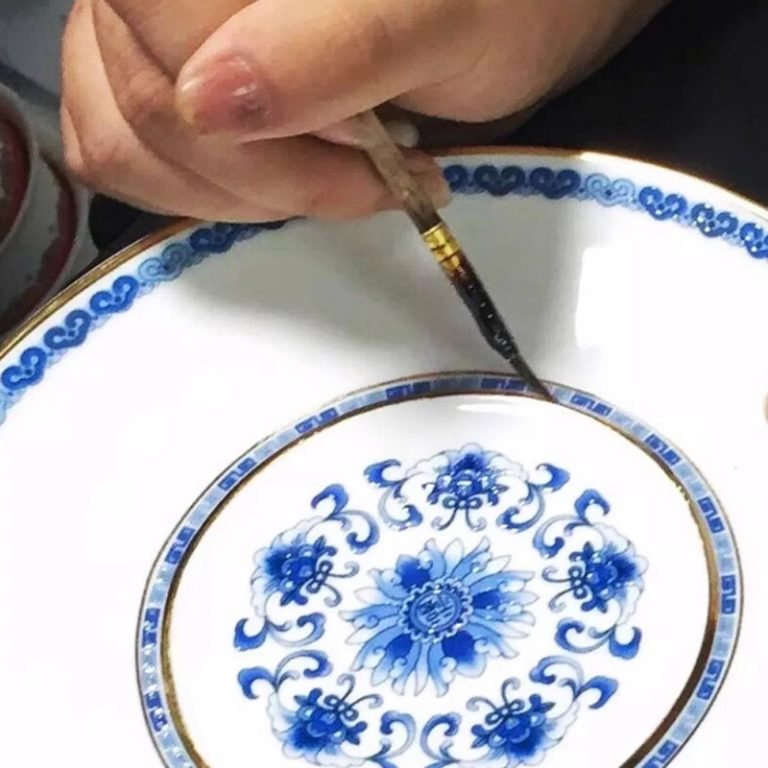
Commercial restaurant ceramic is vitrified porcelain—fired at high temperature until the clay body becomes glass-like with water absorption below 0.5%. The result is a non-porous, inert material with no chemical migration under any food service temperature, unlimited commercial dishwasher durability for the body (decoration may fade over time), and food-safe compliance across all regulatory frameworks.
Ceramic chips and breaks when dropped or struck. Chipped ceramic is a food safety hazard (sharp edges, porous chip surface) and must be removed from service.
Melamine
Melamine tableware is a thermoset plastic made from melamine-formaldehyde resin, pressed into shape under heat and pressure. The result is a lightweight, essentially shatterproof piece with a smooth surface that mimics ceramic appearance at a fraction of the weight.
The critical limitation: melamine is not chemically inert at elevated temperatures. Above approximately 70°C (158°F), melamine monomer and formaldehyde can migrate from the plastic into food. Multiple regulatory agencies—including the FDA, EFSA, and Taiwan FDA—have published guidance on melamine migration limits and temperature restrictions.
Food Safety Comparison
This is the most consequential difference between the two materials for restaurant operations.
|
Food Safety Factor |
Ceramic |
Melamine |
|---|---|---|
|
Chemical migration |
None (inert material) |
Melamine/formaldehyde above 70°C |
|
FDA approval |
Fully approved for all food temperatures |
Approved for cold/room-temp food only |
|
EU EFSA limits |
No restrictions |
2.5 mg/kg food migration limit |
|
Hot soup service (>70°C) |
Safe |
Not recommended / not compliant |
|
Microwave use |
Safe |
Not safe — accelerates migration |
|
Acidic foods (tomato, citrus) |
Safe |
Increased migration reported at temperature |
|
Health inspection risk |
None |
Risk if used for hot food |
The 70°C threshold in practice:
A soup served at 85°C (standard for food safety compliance) is above the melamine migration threshold. A plate coming off a 200°C kitchen line and holding an entree: still well above 70°C for the first few minutes of service. An outdoor buffet in summer heat with plates sitting under a heat lamp: temperature-dependent.
For any operation serving hot food — which is most restaurants — melamine carries regulatory and food-safety risk that ceramic does not. Health inspections in most US jurisdictions flag melamine for hot food service.
Durability: How Each Ages in Commercial Use
Ceramic Durability
Ceramic chips and breaks in impact events. The frequency depends on operation type:
|
Operation |
Annual Breakage Rate |
Notes |
|---|---|---|
|
Fine dining |
8–15% |
Controlled handling, lower volume |
|
Casual dining |
15–25% |
Normal commercial service |
|
Fast-casual |
25–40% |
High volume, rapid clearing |
|
Outdoor / terrace |
30–50% |
Hard surface drop risk |
When ceramic does not break, it maintains full food-safety compliance and appearance indefinitely. A ceramic piece in service for 5 years that has not been chipped or cracked is fully serviceable.
Melamine Durability
Melamine does not shatter — this is its primary advantage. Dropped melamine bounces; dropped ceramic breaks. However, melamine degrades through a different mechanism: surface wear.
Commercial dishwasher cycles scratch the melamine surface with every wash. The scratches accumulate microscopic channels that:
- Harbor bacteria that cannot be fully removed by dishwashing
- Trap food color (coffee, sauces, beet) producing visible staining
- Create dull, scratched appearance that reads as “dirty” to guests
Realistic melamine service life in commercial use: 12–24 months before visible degradation requires replacement. In contrast, ceramic that survives impact events in service can last 5+ years.
Weight and Ergonomics
|
Item |
Ceramic (28cm plate) |
Melamine (28cm plate) |
|---|---|---|
|
Typical weight |
350–480g |
150–240g |
|
Stack of 20 plates |
7–9.6 kg |
3–4.8 kg |
|
Drop impact |
High chip risk |
Near-shatterproof |
The weight difference is real and operationally significant in high-volume operations. Service staff carrying stacked plates across a dining room multiple times per shift experience less fatigue with melamine. In outdoor and casual settings where plates are transported longer distances or handled less carefully, melamine’s weight advantage compounds.
Commercial Dishwasher Performance
|
Dimension |
Ceramic |
Melamine |
|---|---|---|
|
Dishwasher temperature |
Tolerates 65–90°C |
≤ 60°C recommended |
|
Detergent compatibility |
Full commercial grade |
Restricted — high-pH detergents accelerate surface degradation |
|
Appearance after 1,000 cycles |
No change if undamaged |
Visible scratch accumulation, dull surface |
|
Bacterial hygiene |
Non-porous, fully hygienic |
Scratched surface may harbor bacteria |
|
Breakage in dishwasher |
Possible if struck |
Near-zero |
Dishwasher temperature note: Most commercial dishwashers operate at 65–85°C wash and 82–90°C rinse. This is above the recommended maximum for melamine (60°C). Regular exposure to rinse temperatures above 60°C accelerates melamine surface degradation — an effect visible within 6–12 months in daily commercial use.
Cost Comparison: Unit Price and TCO
Unit price comparison (28cm dinner plate, commercial quality, 1,000 pcs):
|
Material |
Unit Price FOB China |
Unit Price Landed US/EU |
|---|---|---|
|
Standard vitrified porcelain |
$3.50–$6.00 |
$5.50–$9.50 |
|
Fine vitrified porcelain |
$5.50–$9.00 |
$8.50–$14.00 |
|
Commercial melamine |
$1.50–$4.00 |
$2.50–$6.50 |
3-Year Total Cost of Ownership (120-cover casual restaurant, 360 opening plates):
|
Scenario |
Ceramic (mid-grade) |
Melamine |
|---|---|---|
|
Opening cost (360 plates @ $7 / $3.50 landed) |
$2,520 |
$1,260 |
|
Year 1 replacement (20% / 60% replaced) |
$504 |
$756 |
|
Year 2 replacement (20% / 40% replaced) |
$504 |
$504 |
|
Year 3 replacement (20% / full refresh at 2yr) |
$504 |
$1,260 (full refresh) |
|
3-Year Total |
$4,032 |
$3,780 |
The melamine scenario assumes a full replacement at Year 2 due to visual degradation — which is conservative. Some operations replace melamine annually for food safety and appearance reasons, significantly increasing the 3-year cost. The TCO gap between ceramic and melamine closes substantially when melamine replacement cycles are factored in.
Appearance Over Time
|
Criterion |
Ceramic (Year 3) |
Melamine (Year 3) |
|---|---|---|
|
Surface gloss |
Unchanged |
Noticeably duller |
|
Scratch visibility |
None (unless chipped) |
Visible under normal lighting |
|
Color vibrancy |
Unchanged |
Slightly faded |
|
Guest perception |
“Clean, professional” |
“Worn, budget” |
|
Instagram-worthy |
Yes |
Increasingly no |
Appearance degradation in melamine is irreversible — you cannot restore a scratched, dull melamine piece. Ceramic’s appearance does not degrade with age; its failure mode is discrete (chip or break) rather than gradual.
For operations where tableware is photographed by guests or featured in brand marketing, ceramic maintains its appearance indefinitely; melamine does not.
Service Context Decision Guide
|
Service Context |
Recommended Material |
Reason |
|---|---|---|
|
Fine dining |
Ceramic |
Food safety, appearance, brand positioning |
|
Mid-range casual dining |
Ceramic |
Food safety, 3-year TCO competitive |
|
Fast-casual (room temp food) |
Melamine or ceramic |
Melamine for weight/cost; ceramic for food safety |
|
Hot food service (any type) |
Ceramic only |
Melamine migration above 70°C |
|
Soup service |
Ceramic only |
Serving temperature >70°C |
|
Outdoor / terrace dining |
Melamine acceptable |
Shatter resistance; cold/room-temp food |
|
Children’s dining |
Melamine acceptable |
Drop safety; cold food service |
|
Staff cafeteria (self-serve) |
Melamine acceptable |
Low guest scrutiny; weight advantage |
|
Buffet (hot food trays) |
Ceramic only |
Food safety; melamine under heat lamps |
|
Buffet (cold/room-temp items) |
Either |
Operational preference |
|
Health inspection scrutiny |
Ceramic |
No migration risk; no inspector ambiguity |
The simple rule: If your plates will contact food above 70°C — which is most cooked food — use ceramic. If you are serving cold or room-temperature items in a low-scrutiny, high-breakage environment (outdoor bar, children’s menu, staff dining), melamine is viable.
FAQ
Is melamine safe for restaurant use?
Melamine is safe for food contact at temperatures below 70°C (158°F). Above this threshold, melamine monomer and formaldehyde can migrate into food at levels that exceed regulatory guidance. The FDA, EFSA, and other food safety authorities recommend against using melamine for hot food, hot beverages, or microwave use. For restaurant operations serving cooked food (virtually all table-service restaurants), ceramic is the food-safe choice. Melamine is suitable for serving cold or room-temperature food in appropriate settings.
How long does melamine tableware last in commercial use?
In daily commercial restaurant use with machine dishwashing, melamine tableware shows visible surface degradation — dull finish, scratch accumulation — within 12–24 months. Most commercial operators replace melamine on a 1–2 year cycle to maintain appearance standards. Ceramic tableware, by contrast, maintains its appearance indefinitely unless it is chipped or broken. The TCO advantage of melamine’s lower unit price is significantly offset by its shorter service life.
Can melamine go in a commercial dishwasher?
Melamine can be machine washed, but commercial dishwashers operating above 60°C wash temperature and 82–90°C rinse temperature exceed melamine’s recommended maximum. Regular exposure to these temperatures accelerates surface degradation: surface scratching, gloss loss, and bacteria-harbouring micro-channels develop faster than with handwashing or gentle machine cycles. Most commercial food service operations experience visible melamine degradation within 6–12 months of daily machine dishwashing.
Which is more cost-effective over 3 years: ceramic or melamine?
For most casual dining operations, the 3-year TCO is broadly comparable — melamine saves on opening cost but requires earlier replacement due to visual degradation, while ceramic costs more upfront but lasts significantly longer before requiring replacement. The TCO gap closes further if melamine is replaced annually (common in some operations) rather than at 2 years. For operations where food safety requires ceramic (hot food service), the comparison is irrelevant — melamine is not a viable option.
Custom Solutions Available
Our technical experts are always ready to assist you in finding the perfect customized solution for your dinnerware needs.