The History of Chinese Porcelain: Tang Dynasty to State Banquet
China invented porcelain. That single fact—accepted without dispute by ceramic historians—shapes every hotel, restaurant, and corporate tableware purchase made today. The word “china” is a synonym for fine ceramic dinnerware in English precisely because China’s manufacturers were producing porcelain at a quality and consistency that the rest of the world could not match for over a thousand years. This guide traces that history from the earliest high-fired ceramics of the Tang Dynasty through the refinement of Jingdezhen’s imperial kilns, the global spread of blue-and-white ware, and the evolution into the state banquet porcelain that GC Porcelain produces today—with direct implications for what quality, heritage, and craftsmanship mean in a modern B2B sourcing context.
Key Takeaways
- China has been producing high-fired ceramic ware recognizable as proto-porcelain since the Eastern Han Dynasty (25–220 CE); true white porcelain with kaolin clay body emerged during the Tang Dynasty (618–907 CE).
- The Song Dynasty (960–1279) produced the most refined monochrome porcelain in Chinese history—Ru, Guan, Ge, Jun, and Ding wares—establishing aesthetic standards that modern premium manufacturers still reference.
- Jingdezhen, Jiangxi Province, has been China’s primary porcelain manufacturing center since the 10th century and remains so today; its kaolin deposits and historical kiln infrastructure created a concentration of ceramic expertise that no other region has matched.
- The iconic blue-and-white porcelain emerged during the Yuan Dynasty (1271–1368) using imported cobalt from Persia, and became the dominant global export format during the Ming Dynasty (1368–1644)—the template for what most Western buyers still picture when they hear “fine china.”
- State banquet porcelain—produced for Chinese government diplomatic events—represents the highest technical and aesthetic standard in Chinese ceramic manufacturing and forms the heritage lineage of manufacturers like GC Porcelain.
- Modern Chinese manufacturers produce over 65% of global hotel and restaurant tableware by volume, a market position built directly on this 1,400-year manufacturing heritage.
Origins: Han and Tang Dynasty Ceramics
The story of Chinese porcelain begins not with a single invention but with a centuries-long technical progression. During the Eastern Han Dynasty (25–220 CE), Chinese potters in Zhejiang Province were producing “proto-porcelain”—high-fired stoneware with a vitrified body and thin glaze—at temperatures above 1,200°C. This was technically distinct from the earthenware produced elsewhere in the ancient world, which fired at 800–1,000°C and produced porous, fragile vessels.
The critical innovation was identifying and refining kaolin—a white-firing, high-alumina clay that vitrifies at high temperature into the dense, non-porous body we now call porcelain. During the Tang Dynasty (618–907 CE), potters in Hebei Province developed the first true white porcelain using refined kaolin clay bodies. Tang white ware from the Xing kilns in Hebei achieved a whiteness and translucency that contemporary ceramic technology in the Arab world, Persia, and Europe could not replicate.
Tang Ceramic Innovation and International Trade
The Tang Dynasty was China’s most internationally connected imperial era, with the Silk Road carrying Chinese goods—including ceramics—to Central Asia, the Middle East, and East Africa. The discovery of Tang-era Chinese ceramics in archaeological sites from Iraq to Tanzania documents the reach of early Chinese ceramic exports. Arab traders recorded their astonishment at Chinese white ware; they called it “al-Qashani” (from Kashan, Persia, where Chinese-style ceramics were first imitated).
This international demand for Chinese ceramics created the first major export-driven manufacturing industry in history—a pattern that continues to define Chinese ceramic manufacturing today.
The Three Colors of Tang: Sancai Ware
Alongside white porcelain, the Tang Dynasty produced sancai (三彩, “three-color”) earthenware using lead glazes in amber, green, and cream-white. Sancai ware was not porcelain—it fired at lower temperatures—but it demonstrated the sophistication of Tang decorative ceramic technique and was widely exported. Sancai figures, horses, and vessels are among the most recognizable objects from Tang-era China in museum collections worldwide.
The Song Dynasty: Peak Aesthetic Refinement
If the Tang Dynasty established Chinese porcelain’s technical foundation, the Song Dynasty (960–1279) represents its aesthetic pinnacle. Song ceramic production is characterized by monochrome glazes of extraordinary subtlety—jade-green celadon, sky-blue ru ware, ivory-white ding ware—produced at imperial and semi-imperial kilns to standards that remain references for fine ceramic aesthetics eight centuries later.
The Five Classic Song Wares
Chinese ceramic historians identify five Song wares as the defining standards of the period:
|
Ware |
Kiln Location |
Glaze Characteristics |
Historical Significance |
|---|---|---|---|
|
Ru (汝) |
Ruzhou, Henan |
Sky blue–green, crackle glaze, sesame-seed spur marks |
Imperial court ware; fewer than 100 pieces survive |
|
Guan (官) |
Hangzhou, Zhejiang |
Grey-green with prominent crackle pattern |
Official court kiln; name means “official” |
|
Ge (哥) |
Longquan, Zhejiang |
Crackle glaze in two colors (“golden wire, iron wire”) |
Named for the elder of two brothers; legendary provenance |
|
Jun (钧) |
Yuzhou, Henan |
Blue-purple opalescent glaze, copper-red splashes |
Imperial flower pot production; unique copper reduction technique |
|
Ding (定) |
Quyang, Hebei |
White porcelain with carved decoration, ivory tones |
Most widely produced; influenced subsequent white ware tradition |
Song Ru ware is among the most valuable ceramics in the world—a Song Ru brush washer sold at Sotheby’s Hong Kong in 2017 for HK$294 million (approximately US$37.7 million). The rarity and value of authentic Song ware reflects both the technical mastery of its production and the small number of surviving examples.
Song Ceramic Aesthetics and Their Modern Legacy
Song dynasty ceramic aesthetics—restraint, subtle color, natural forms—remain the reference point for premium Chinese ceramic production. GC Porcelain’s glazing and form development draws directly on Song aesthetic principles adapted for high-volume commercial production. When hotel procurement teams specify “premium Chinese porcelain,” they are implicitly referencing a standard established during the Song Dynasty.
Jingdezhen: The Porcelain Capital
No location is more central to the history of Chinese porcelain than Jingdezhen (景德镇) in Jiangxi Province. The city has been China’s primary porcelain manufacturing center since the Song Dynasty and remains so today—a continuity of craft concentration spanning more than a thousand years.
Why Jingdezhen
Jingdezhen’s dominance traces to three factors: abundant local kaolin deposits of exceptional purity, access to pine forests for kiln fuel, and proximity to the Yangtze River system for shipping finished goods. The city’s ceramic expertise developed through continuous generational transmission—kiln masters trained their children, who trained their children, accumulating technical knowledge across centuries.
During the Ming Dynasty, the Yongle Emperor (r. 1402–1424) formally designated Jingdezhen as the imperial kiln city, establishing the Imperial Kiln Factory (御窑厂) that produced all official court ceramics. This designation concentrated the best potters, best materials, and highest standards in one location—and created the training infrastructure that made Jingdezhen synonymous with quality porcelain for 600 years.
Jingdezhen Today
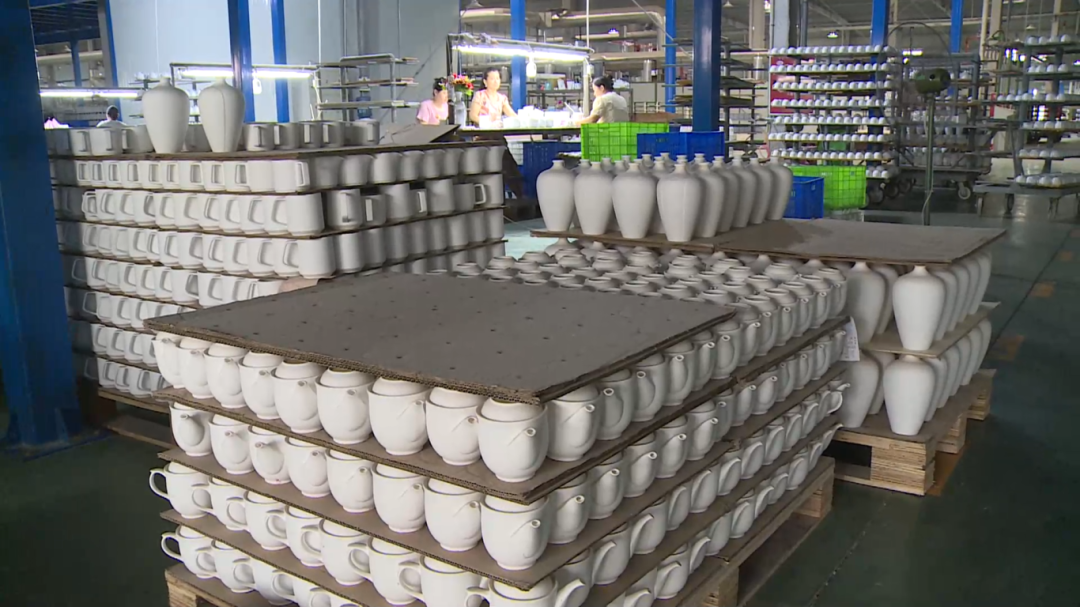
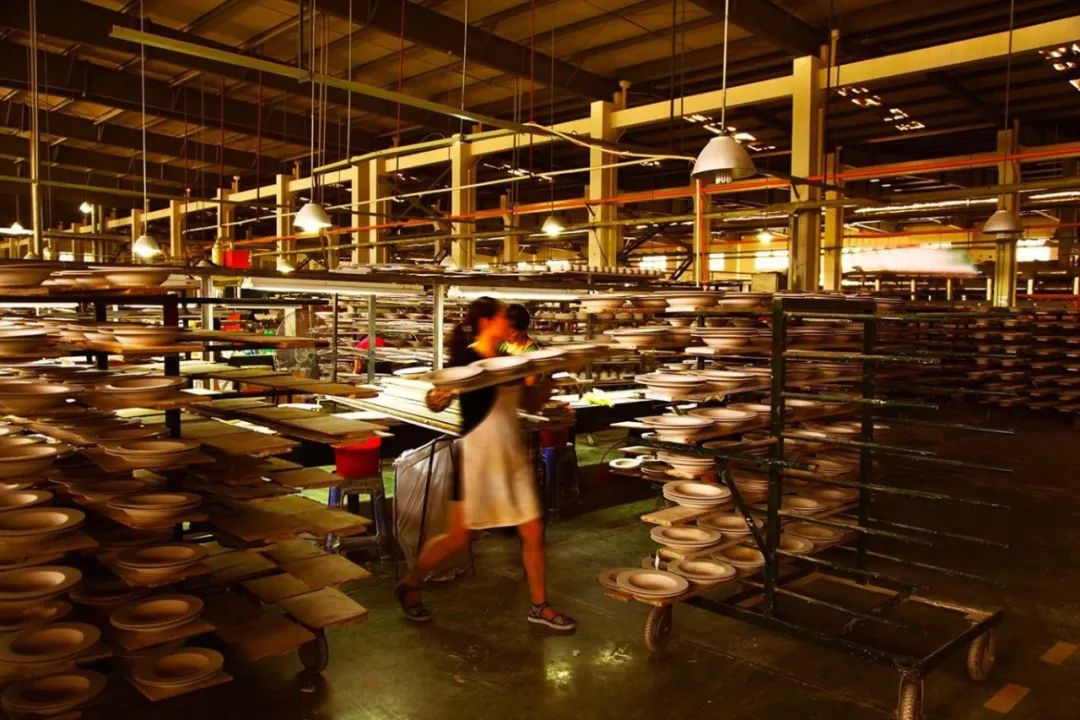
Jingdezhen remains an active manufacturing center with approximately 100,000 people employed in ceramic production and related industries. The city produces both artistic fine porcelain at the artisan level and industrial-scale tableware for export markets. Manufacturers based in Jingdezhen—or trained in Jingdezhen’s ceramic tradition—carry a heritage designation that carries weight with hotel procurement teams seeking authenticity alongside quality.
Yuan and Ming: Blue-and-White and Global Export
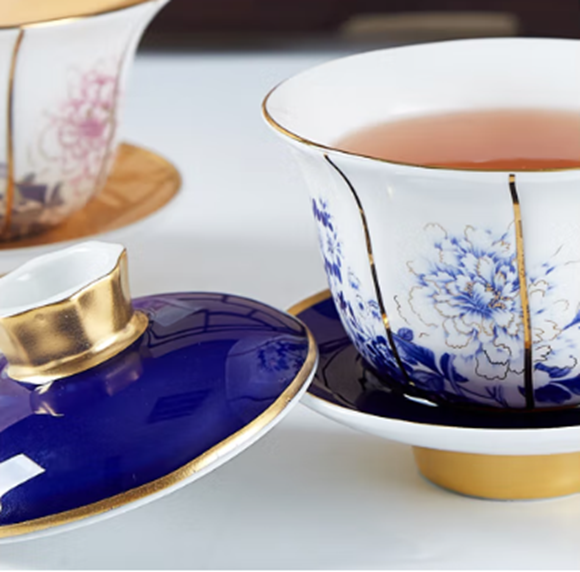
The Yuan Dynasty (1271–1368) produced the defining innovation in Chinese ceramic decoration: blue-and-white porcelain. Using cobalt oxide pigment imported from Persia—a material that fired to vivid blue under Chinese kiln conditions—Yuan potters at Jingdezhen developed a decorated porcelain style that became the most copied and influential ceramic format in world history.
The Cobalt Question
The deep cobalt blue of Yuan and early Ming blue-and-white ware came from imported smalt (cobalt silicate) from the Kashan region of Persia. Chinese-source cobalt produced a greyer, less saturated blue. The vivid blue associated with 14th-15th century Jingdezhen ware is specifically the result of this imported Persian cobalt—a detail that explains both the technical quality of the period and its eventual replication challenges.
Ming Dynasty: Standardization and Global Export
The Ming Dynasty (1368–1644) standardized blue-and-white porcelain into the format that dominated global ceramic markets for three centuries. Ming blue-and-white ware was exported across Southeast Asia, the Middle East, East Africa, and eventually Europe via the Portuguese and Dutch East India Companies from the late 16th century.
European demand for Chinese blue-and-white was so intense that the Dutch East India Company (VOC) imported an estimated 3 million pieces of Chinese porcelain to Europe between 1602 and 1682 alone. When Chinese export was disrupted during the Ming-Qing transition, European manufacturers developed their own blue-and-white imitations—Delftware in the Netherlands, Meissen in Germany—direct technological responses to Chinese ceramic dominance.
The Ming Yongle and Xuande periods (1403–1435) are considered the artistic peak of imperial blue-and-white production. Pieces from these reigns—identifiable by reign marks on the base—command the highest prices at auction. A Ming Yongle blue-and-white flask sold at Christie’s in 2014 for US$16.5 million.
Qing Dynasty: Imperial Refinement and European Influence
The Qing Dynasty (1644–1912) represents both the technical apex of Chinese imperial porcelain production and the beginning of its engagement with European aesthetic influences. The Kangxi, Yongzheng, and Qianlong reigns (1661–1795) are considered the golden age of Qing imperial porcelain.
Technical Innovations of the Qing Period
Qing ceramicists developed several decorative formats that remain influential:
- Famille rose (粉彩, fěncǎi): Overglaze enamel decoration using opaque pink-red pigments derived from colloidal gold. Introduced during the Yongzheng reign (1723–1735), famille rose achieved a painterly quality impossible with underglaze blue.
- Famille verte (五彩, wǔcǎi): Overglaze enamel in five colors—green-dominant palette with red, yellow, black, and blue.
- Enamel on copper ground: Exclusive to the imperial court; painted enamel on copper-ground porcelain for the emperor’s personal use.
The Qing imperial kilns at Jingdezhen, directed by the legendary kiln supervisor Tang Ying (唐英, 1682–1756) during the Yongzheng and Qianlong reigns, produced technical achievements in glaze chemistry and firing control that have not been surpassed. Tang Ying documented 57 distinct glaze colors achievable at Jingdezhen—a technical record that served as a reference for ceramic chemists centuries later.
European Market Ware: Armorial and Trade Porcelain
Qing manufacturers also produced significant quantities of custom-decorated porcelain specifically for European export, including armorial porcelain—dinner services decorated with the heraldic arms of European noble families. European buyers sent designs to Chinese manufacturers, who replicated them in enamel decoration on porcelain forms. This is, in essence, the 18th-century version of modern OEM custom tableware manufacturing.
The armorial porcelain trade demonstrates that Chinese manufacturers have been executing custom-branded tableware for international B2B buyers for over 300 years—a heritage that informs the OEM and ODM capabilities of manufacturers like GC Porcelain today.
Modern Era: State Banquet Porcelain and B2B Manufacturing
The transition from imperial to modern Chinese ceramic manufacturing accelerated after 1949 with the establishment of state-owned ceramic factories and formal quality standardization. The most significant development for understanding modern premium Chinese porcelain is the state banquet tableware tradition.
State Banquet Porcelain: The Highest Standard
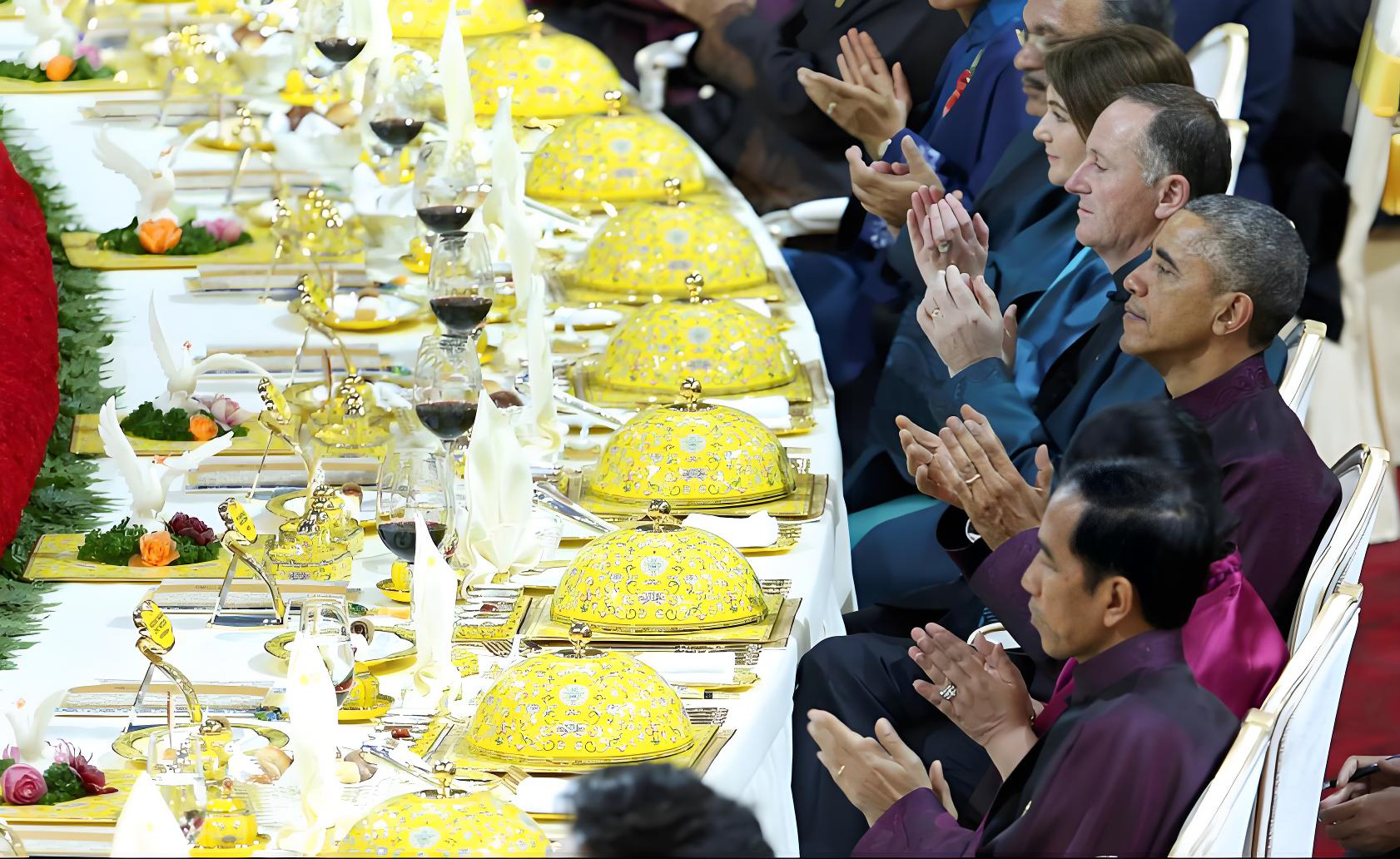
Chinese state banquets—diplomatic dinners hosted by the Chinese government for visiting heads of state—use porcelain produced to the most demanding specifications in Chinese manufacturing. State banquet ware requirements:
- Whiteness index ≥ 88 (on a scale of 0–100, where 100 is perfect white)
- Water absorption rate ≤ 0.1% (essentially non-porous)
- Thermal shock resistance: withstand 180°C to 20°C transition without cracking
- Chip resistance: edge chipping force ≥ 45N
- Glaze surface hardness: ≥ 7 on Mohs scale
- Design: custom per diplomatic event, often incorporating traditional Chinese decorative motifs
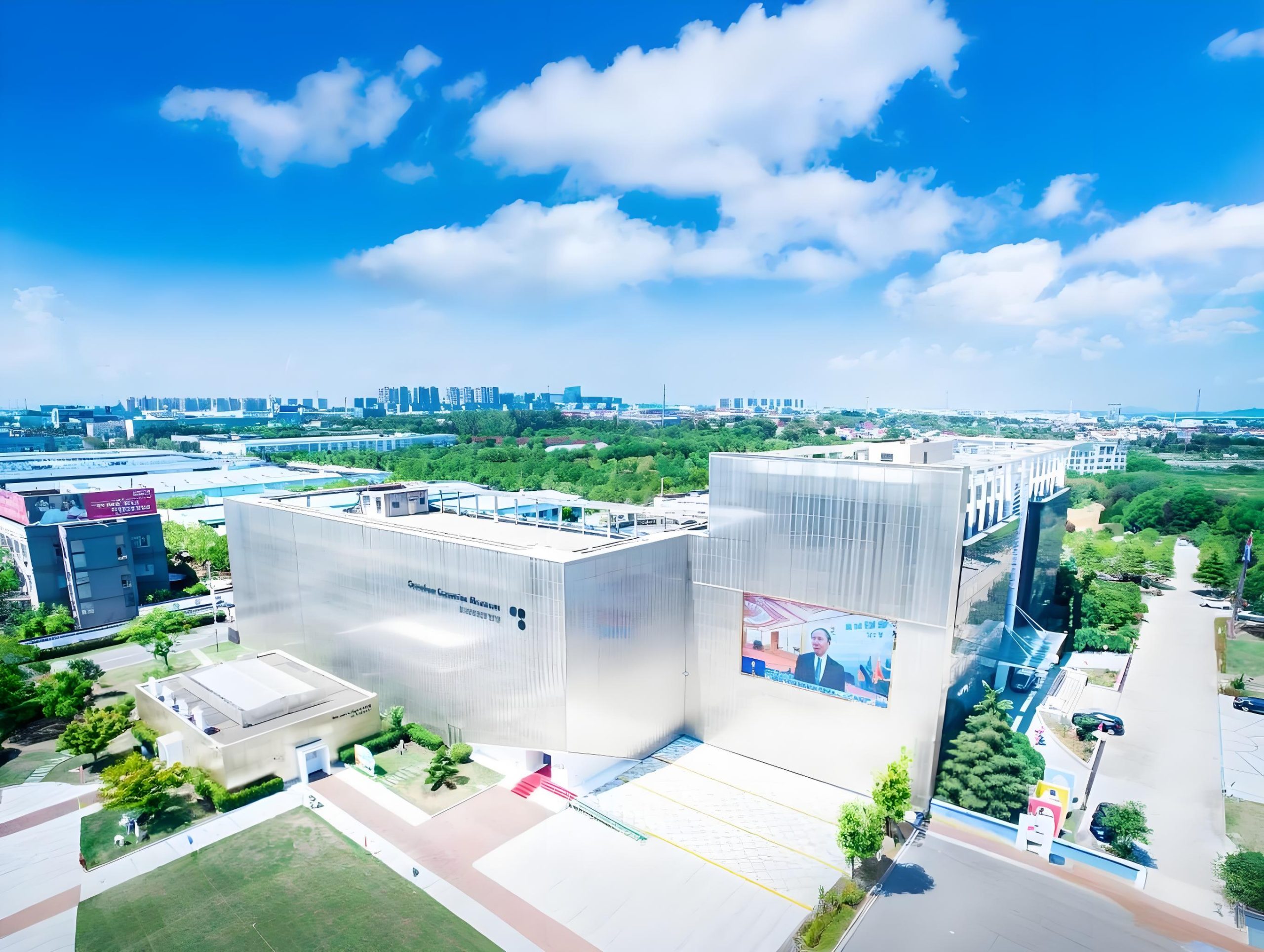
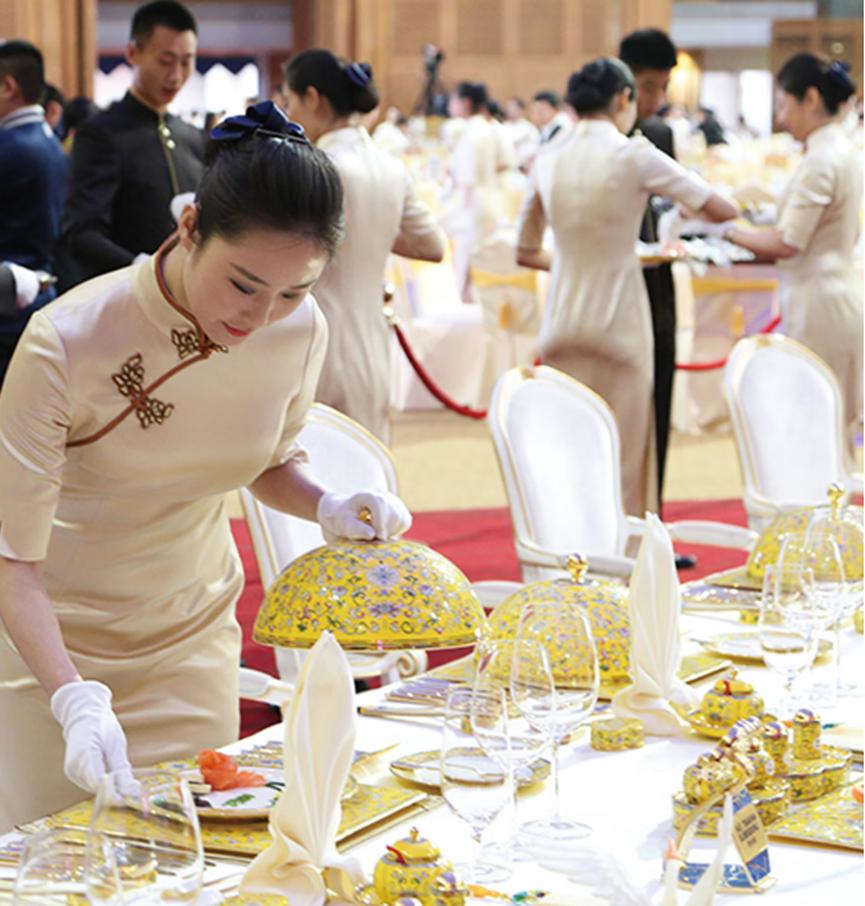
GC Porcelain’s manufacturing heritage traces directly to the state banquet tableware tradition. The company has supplied tableware for APEC summits, the Belt and Road Forum, and other major diplomatic events—applying state banquet production standards to hotel and commercial tableware clients.
The Modern Manufacturing Landscape
China’s ceramic tableware manufacturing industry today concentrates in four primary regions:
|
Region |
Primary Product |
Volume Scale |
Heritage Period |
|---|---|---|---|
|
Jingdezhen, Jiangxi |
Fine porcelain, artisan, OEM custom |
Small-medium batch |
Song Dynasty onward |
|
Tangshan, Hebei |
Bone china, mass production |
High volume |
20th century industrial |
|
Nanjing, Jiangsu |
State banquet, premium OEM/ODM |
Medium-high volume |
Republican era onward |
|
Chaozhou, Guangdong |
Hotel and restaurant ware |
High volume export |
20th century export trade |
This geographic specialization is not accidental—it reflects the accumulation of specific raw material access, kiln infrastructure, and generational technical knowledge in each region over decades or centuries. When evaluating Chinese tableware suppliers, understanding which manufacturing tradition a factory draws from provides context for the quality tier and specialization they represent. For a detailed overview of current manufacturing capabilities, see our guide to tableware manufacturers in China.
What This History Means for Modern Procurement
Understanding Chinese porcelain history is not merely cultural context—it has direct implications for B2B tableware procurement decisions.
Heritage as a Quality Signal
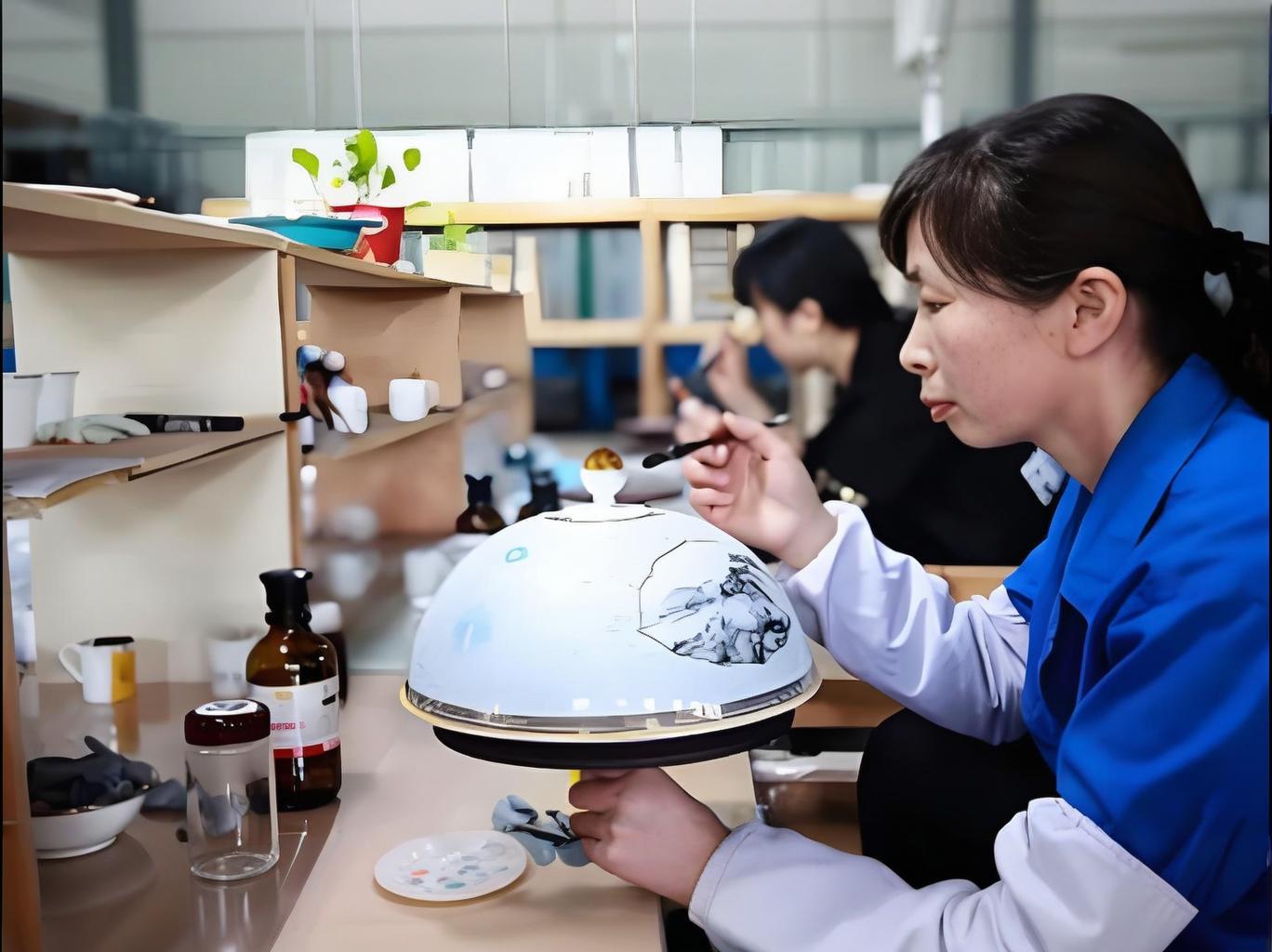
A manufacturer with demonstrable roots in China’s ceramic heritage tradition—state banquet supply history, Jingdezhen production lineage, or documented continuity with historical kiln traditions—has access to accumulated technical knowledge that cannot be replicated by a factory established in the last decade. This heritage shows in glaze chemistry sophistication, kiln temperature control precision, and quality consistency across production batches.
When GC Porcelain’s state banquet history is listed in a capability document, it is not marketing decoration—it is a specification indicator. State banquet supply requires documented quality control processes, traceable raw material sourcing, and compliance with food safety standards that form the foundation of commercial hotel tableware production.
The OEM Tradition
The Qing Dynasty armorial porcelain trade established a 300-year precedent for Chinese manufacturers executing custom-branded tableware for international buyers. Modern OEM dinnerware manufacturing—custom shapes, custom decoration, buyer’s branding—is a continuation of this tradition with updated technology. The supply chain relationship between a hotel procurement team and a Chinese OEM manufacturer echoes the relationship between 18th-century European trading companies and Jingdezhen kiln masters.
For hotels and restaurant groups commissioning custom tableware, this heritage is operationally relevant: it means that the manufacturing infrastructure, technical vocabulary, and quality expectations for custom work are deeply embedded in the culture of Chinese ceramic production. For more on the current OEM process, see our complete guide to custom ceramic tableware.
Certifications in Historical Context
Modern food safety certifications—ISO 6486-1 for ceramic tableware, FDA 21 CFR for US market compliance, LFGB for European market—are technical standards applied to a manufacturing tradition that predates them by centuries. Chinese manufacturers who take certification seriously are applying modern scientific rigor to a craft tradition of extraordinary depth. Manufacturers who dismiss certification as bureaucratic overhead are, in effect, ignoring 1,400 years of accumulated quality standards now expressed in contemporary regulatory language.
FAQ
When did China first produce porcelain?
The first ceramics recognizable as proto-porcelain—high-fired, vitrified stoneware—appeared in China during the Eastern Han Dynasty (25–220 CE) in Zhejiang Province. True white porcelain using kaolin clay bodies emerged during the Tang Dynasty (618–907 CE), primarily from kilns in Hebei Province. The technical gap between Chinese porcelain and ceramics produced elsewhere in the ancient world was substantial: China was producing dense, non-porous, high-fired ware at 1,250–1,350°C while contemporaneous ceramics in Europe and the Middle East fired at 800–1,000°C.
What makes Jingdezhen porcelain historically significant?
Jingdezhen has been China’s primary porcelain manufacturing center since the Song Dynasty (10th century) and has served as the location of China’s Imperial Kiln Factory since the early Ming Dynasty (early 15th century). Its significance comes from three factors: exceptional local kaolin deposits, a continuous tradition of kiln expertise transmitted across generations since the Song period, and its formal designation as the source of all Chinese imperial ceramic production for over 500 years. No other location in the world has maintained comparable ceramic manufacturing concentration and continuity.
What is state banquet porcelain and why does it matter?
State banquet porcelain is tableware produced to the most demanding specifications in Chinese manufacturing for use at Chinese government diplomatic dinners hosting heads of state. Requirements include whiteness index ≥ 88, water absorption ≤ 0.1%, thermal shock resistance across a 160°C differential, and documented food safety compliance. Manufacturers with state banquet supply history—such as GC Porcelain—apply these standards to commercial hotel and restaurant tableware production, meaning the technical floor of their quality control is established by government-level specification rather than commercial market minimums.
How did blue-and-white porcelain become so globally influential?
Blue-and-white porcelain emerged during the Yuan Dynasty (14th century) using imported Persian cobalt and became the dominant Chinese export ceramic format during the Ming Dynasty (15th–17th century). The Dutch East India Company alone imported approximately 3 million pieces to Europe between 1602 and 1682. European demand for Chinese blue-and-white was so intense that when the Ming-Qing transition disrupted Chinese exports in the mid-17th century, European manufacturers developed their own imitations—Delftware, Meissen, Faience—specifically to fill the gap. The global reach of this single decorative format established China’s position as the world’s dominant ceramic supplier, a position it maintains today.
What is the connection between historical Chinese porcelain and modern hotel tableware?
The connection is direct and operational. Modern Chinese hotel tableware manufacturers draw on the same regional manufacturing traditions—Jingdezhen’s artisan heritage, Tangshan’s industrial bone china capabilities, Nanjing’s state banquet tradition—that developed across Chinese ceramic history. The OEM custom tableware relationship that hotel procurement teams use today mirrors the 18th-century Qing Dynasty armorial porcelain trade, in which European buyers commissioned custom-decorated pieces from Jingdezhen kilns. The food safety certifications that qualify a modern manufacturer are the contemporary expression of quality standards accumulated over 1,400 years of high-fired ceramic production.
Custom Solutions Available
Our technical experts are always ready to assist you in finding the perfect customized solution for your dinnerware needs.