Presentation methods for Mongolian diced beef
Ingredients: Cherry tomatoes, beef, etc.
Instructions: Cut the beef into dice-sized cubes, marinate briefly, and pan-sear. Skewer the beef cubes with cherry tomatoes to make beef skewers.
Scene 1: Adding a touch of color and movement to the plating
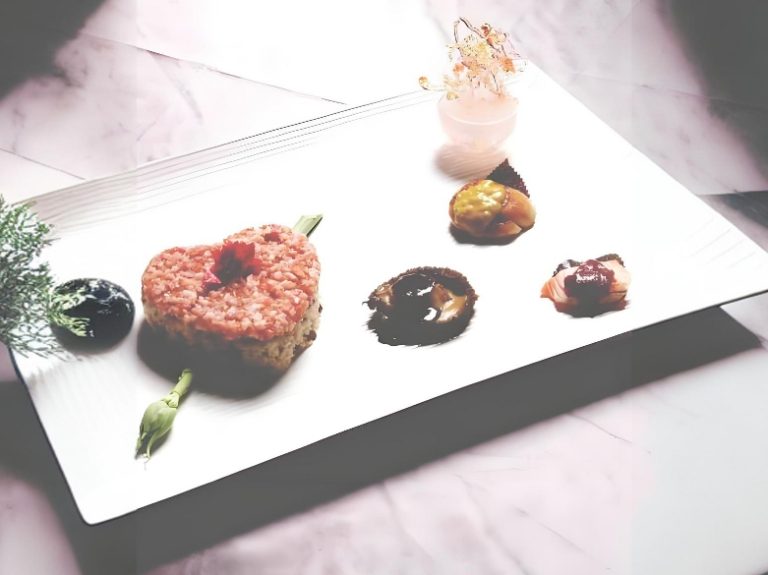
To showcase Western plating techniques, choose a white square porcelain plate with simple lines. Draw curved lines on both sides of the plate to add a sense of rhythm. Since the main dish, beef, has a slightly dark color, use colorful cherry tomatoes to enhance the visual appeal of the plate.
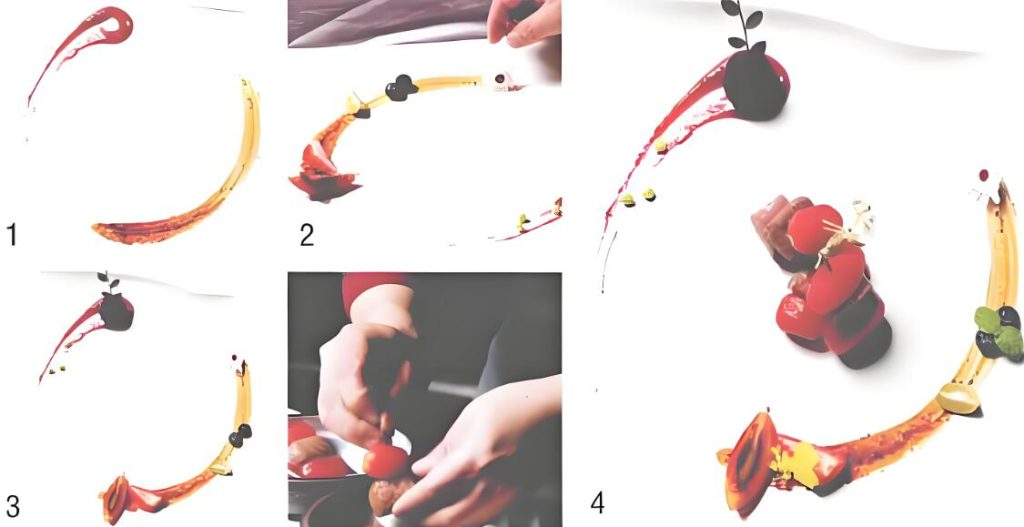
Plating Techniques
①Use rose sauce and teriyaki sauce as paint on the plate. With a brush, draw two symmetrical curved lines on the plate. The lines do not need to connect at the ends; leaving a small gap can enhance the visual appeal.
②At the starting point of one of the curves, place a slice of cherry tomato. Along the line, add small edible decorations like peppercorns, kumquats, or edible flowers.
③At the starting point of the other curve, place a slice of pear to echo the cherry tomato on the opposite side.
④In the center of the plate, place skewered diced beef, garnished with sugar foil and pine leaves to add depth and richness to the plate’s color palette.
Plating Tip: The skewers of diced beef are paired with cherry tomatoes because the refreshing taste of the tomatoes can cut through the richness of the beef. To peel cherry tomatoes, blanch them in boiling water until the skin starts to loosen, then quickly remove and peel while they’re still firm.
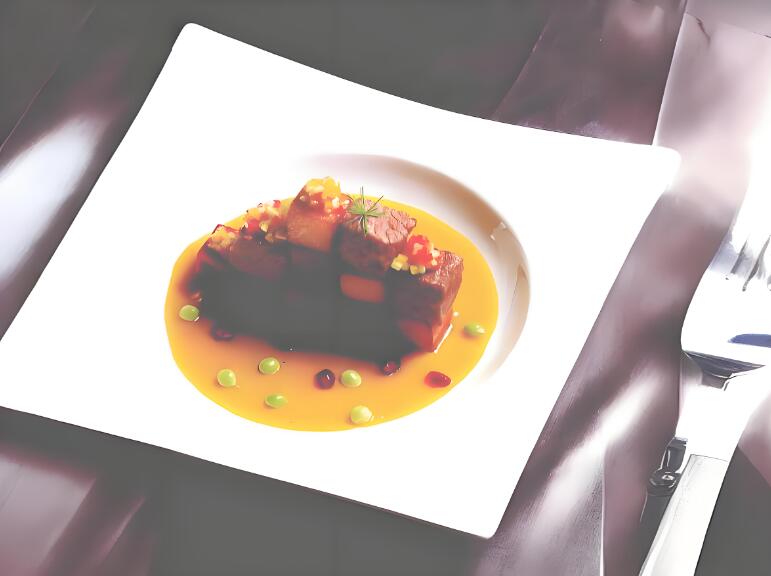
Scene 2: Creating a Neat Aesthetic Through Stacked Arrangements
When arranging small cuts of meat, stacking them can create a neat and visually appealing presentation. This type of plating requires careful attention to symmetry, coordination, and balance. A helpful tip is to cut the ingredients into uniform sizes before stacking them, which aids in creating a tidy visual effect and reduces the likelihood of mistakes.
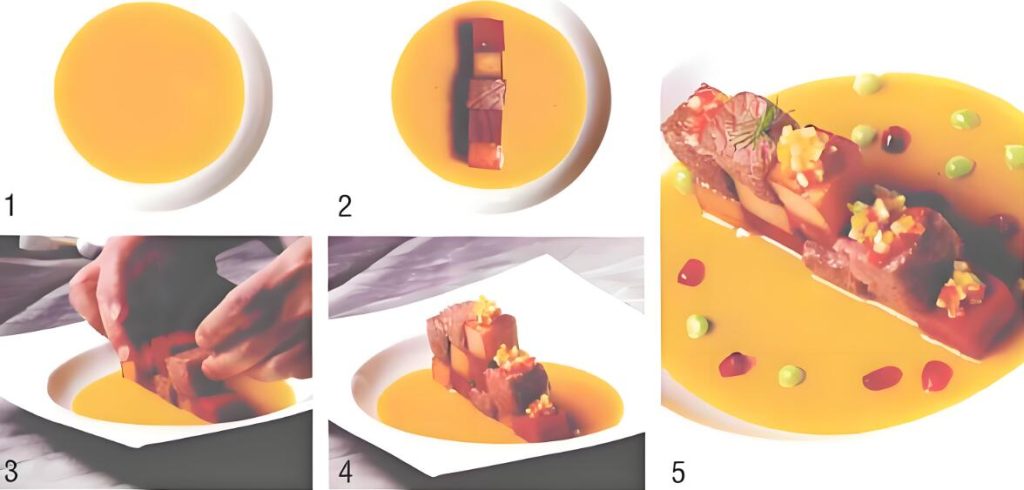
Plating Techniques
①Pour the pumpkin soup into the recessed center of the plate, creating the base color.
②Arrange the diced beef, beets, and potatoes on the plate.
③Stack them into three layers, with the bottom layer having the most pieces, gradually decreasing as you go up. Alternate between the beef and vegetables for variety.
④Finely chop bell peppers—green, yellow, and red—and place them on the top layer to add a burst of color.
⑤Place a sprig of pine leaves on the central piece of beef to create a visual focal point. Sprinkle different colored grains into the pumpkin soup to break up the monotony of the soup’s color.
Plating Tip: Since this dish uses a stacking method, you need to be very careful when preparing the ingredients. Pay special attention to the characteristics of each ingredient to avoid discrepancies caused by shrinkage or expansion during cooking. The more precisely the ingredients are cut, the more visually appealing the plating will be.
Custom Solutions Available
Our technical experts are always ready to assist you in finding the perfect customized solution for your dinnerware needs.