Isostatic Pressing in Ceramic Tableware: How Uniform Pressure Reduces Warpage in Large Flat Plates
For buyers sourcing custom ceramic dinnerware, product shape is only half the story. The other half is process capability. When large flat plates, charger plates, platters, and rectangular serving pieces are poorly formed, they often fail later as warpage, edge lift, center sag, or unstable stacking performance. This is why isostatic pressing has become one of the most important forming technologies in premium ceramic tableware manufacturing.
Figure 1. Isostatic pressing helps create a more uniform density profile than one-direction pressing, which is critical for large flat tableware.
What Is Isostatic Pressing in Ceramic Tableware?
Isostatic pressing is a forming method in which ceramic granulate is compacted under pressure transmitted more uniformly through an elastic membrane or tool system. Unlike conventional one-direction pressing, where pressure is mainly applied from a single axis, isostatic pressing is designed to distribute pressure more evenly around the article.
In tableware production, this matters most when manufacturing:
- dinner plates
- coupe plates
- charger plates
- platters
- oval serving ware
- irregular or asymmetric tableware
- embossed or logo-customized pieces
Industrial equipment suppliers for tableware specifically describe isostatic pressing as suitable for round, oval, multi-edge, non-symmetric flat or deep ware, and emphasize its value for both small and large production volumes Source.
Why Is Isostatic Pressing Important for Custom Dinnerware?
For B2B buyers, the question is not just whether a factory can make a shape. The real question is whether the factory can make that shape consistently, at scale, and within tight flatness tolerance.
Large flat ceramic items are particularly vulnerable because any small density variation in the green body can turn into visible distortion after drying and firing. DORST, a major press manufacturer, states that cold isostatic pressing helps achieve homogeneous density distribution across the entire body, which helps avoid distortion and cracking caused by uneven shrinkage during sintering, especially in larger parts Source.
That is exactly why high-end hotelware, branded OEM dinnerware, and custom premium tableware programs often prefer suppliers with real isostatic pressing capability.
How Pressure Uniformity Reduces Warpage
The Core Principle
The forming logic is straightforward:
- Uneven pressure creates
- Uneven green density, which causes
- Uneven shrinkage during drying and firing, leading to
- Warpage, cracking, or dimensional instability
In other words, if one area of a ceramic plate is denser than another, those areas will not shrink at the same rate later in the process.
Why Large Flat Plates Are the Most Sensitive
Large flatware has a wide span and relatively shallow depth. That geometry makes it highly sensitive to:
- rim over-compaction
- center under-compaction
- fill asymmetry
- thickness variation
- uneven support during drying and firing
This is why pressure uniformity becomes a hidden but decisive quality factor in:
- 11″–13″ dinner plates
- charger plates
- buffet platters
- rectangular serving trays
- thin-profile coupe designs
A Practical Way to Think About Deformation
Factories often evaluate deformation as the ratio of maximum out-of-plane deviation to the reference span of the article.
Warpage rate
Dwarp = (hmax / Lref) × 100%
Where:
- hmax = maximum measured bow or lift
- Lref = reference diameter, length, or effective span
For a buyer, lower warpage means better:
- stackability
- carton fit
- visual consistency
- automation compatibility
- table presentation quality
Why Green Density Matters So Much
Homogeneous Green Density Is the Real Target
In ceramic tableware pressing, the goal is not only to shape the article. The deeper goal is to create a homogeneous green body. Sacmi specifically highlights that its isostatic tool systems enable articles with homogeneous green density and avoid over-pressing at rim areas Source.
That detail is important because rim over-pressing is one of the most common root causes of later deformation in large flatware.
Green Density Affects Shrinkage Behavior
A simplified production-side way to express local shrinkage is:
Linear shrinkage
SL = ((Lgreen – Lfired) / Lgreen) × 100%
If green density varies across the article, local shrinkage will also vary. That is when plates start to show:
- edge-up warpage
- dish-down deformation
- ovality
- unstable foot-ring contact
- inconsistent glaze appearance on curved surfaces
What Happens in the Factory?
Typical Process Flow
A professional isostatic pressing line for ceramic tableware usually follows this sequence:
- spray-dried ceramic granulate preparation
- controlled filling of the press tool
- isostatic compaction
- demolding and transfer
- fettling or rim finishing
- drying
- glazing or decoration
- firing
- sorting and inspection
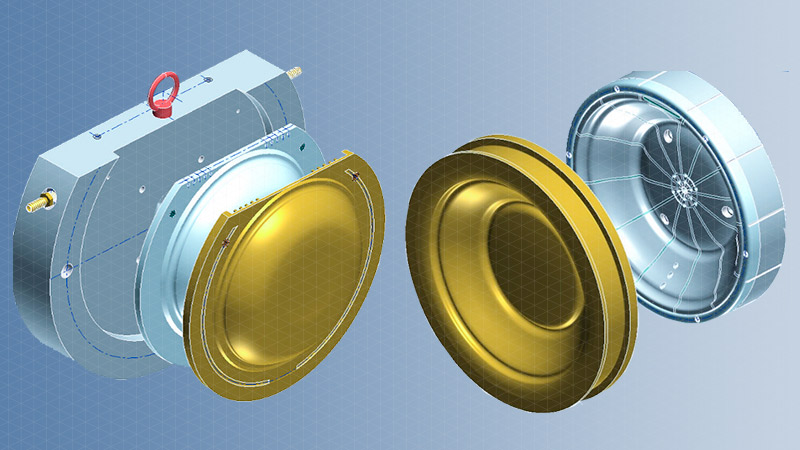
Figure 2. Example of an isostatic tool scheme used in ceramic tableware production Source.
Key Process Parameters Buyers Should Understand
Even if a buyer does not need exact engineering data, it is useful to know which variables separate a serious supplier from an average one.
1. Granulate Quality
Stable spray-dried powder is essential. The supplier should control:
- moisture consistency
- particle size distribution
- granule flowability
- binder distribution
If the granulate is unstable, pressure uniformity will never be truly stable.
2. Filling Accuracy
Before pressing even begins, the tool must be filled evenly. This is especially critical for:
- non-round plates
- embossed tableware
- logo-customized pieces
- asymmetrical platters
Poor filling creates local mass imbalance, which later becomes local shrinkage imbalance.
3. Pressure Curve Control
DORST notes that modern isostatic systems use closed-loop controlled isostatic pressure curves and process control systems for evaluation of production data Source.
That matters because the quality of pressing depends not only on peak pressure, but also on:
- pressure ramp
- dwell time
- repeatability
- pressure response of the membrane system
4. Tool and Membrane Condition
A worn membrane or unstable tool alignment can distort the pressure field even if the machine setting looks correct on paper. That is why top suppliers treat tooling as a controlled asset, not as a consumable afterthought.
Industrial Capability Range
Commercial tableware press suppliers publish useful indicators of scale and capability.
Sacmi lists isostatic tools for article forming at up to 300 bar, and tableware systems capable of producing flat plates up to roughly 390–410 mm depending on model Source.
DORST states that its GFZ3 tableware press can operate at 300 bar and handle green circular articles up to 480 mm, with square, oval, and rectangular articles also supported Source.
For buyers, this shows that isostatic pressing is not just a niche lab technology. It is a mature industrial process built for real ceramic tableware production.
Common Defects When This Process Is Poorly Controlled
Warpage and Bowing
This is the most obvious risk. A plate may visually look fine at green stage but warp after firing due to non-uniform density and shrinkage.
Rim Distortion
If rim zones are over-pressed while the body center is under-compacted, the plate can develop edge lift or poor flatness.
Cracking and Lamination
Trapped air, poor fill distribution, or badly controlled pressure rise can create internal weakness that later appears as cracks or lamination defects.
Pinholes
Pinholes are often blamed only on glaze, but porous or poorly compacted body regions can also contribute by releasing gases unevenly during glaze firing.
Crazing Risk
Although crazing is primarily related to glaze-body fit, inconsistent body maturity caused by uneven compaction can increase stress variation and make the defect more likely.
Why B2B Buyers Should Ask About Isostatic Pressing
If you are sourcing OEM or ODM ceramic tableware, especially for premium retail, horeca, hospitality, or giftware markets, this process affects more than just production.
It directly influences:
- quality consistency across batches
- complaint risk
- shipment reliability
- breakage rate
- rework cost
- premium appearance
- fit for automated packing and stacking
A capable supplier should be able to explain not only that they use isostatic pressing, but also how they verify density consistency and flatness control on large flat articles.
Questions to Ask a Ceramic Tableware Supplier
Ask These Before Placing a Custom Order
How do you control warpage on large flat plates?
A strong supplier should explain:
- forming method
- fill control
- press curve control
- drying control
- kiln support method
- flatness inspection process
What size range can your isostatic pressing line handle?
This helps verify whether the supplier is genuinely equipped for large-format platters or charger plates.
How do you prevent rim over-pressing?
If the supplier understands this question, that is already a positive sign.
Can you provide flatness inspection reports or internal QC standards?
Experienced suppliers usually have internal acceptance criteria for flatware beyond visual checking.
How do you validate food-contact safety?
A strong answer should include testing, documentation, and understanding of destination-market requirements.
Food Safety and Standards Buyers Should Know
For custom dinnerware sourcing, shaping quality and food-contact compliance must go together.
ISO 6486-1
ISO 6486-1:2019 specifies the test method for the release of lead and cadmium from ceramic ware, glass ceramic ware, and glass dinnerware intended for food contact Source.
ASTM C373
ASTM C373-18(2023) covers water absorption, bulk density, apparent porosity, and apparent specific gravity. ASTM notes that these properties help determine the degree of maturation of a ceramic body and its structural performance Source.
ISO 10545-3 and ISO 10545-4
Although these are tile standards, they are often used by ceramic professionals as useful benchmark methods for evaluating:
- water absorption
- porosity
- density
- modulus of rupture
- breaking strength
Official ISO summaries confirm the scope of ISO 10545-3:2018 and ISO 10545-4:2019 for those physical properties Source Source.
FDA Guidance for the U.S. Market
FDA guidance on ceramic foodware remains highly relevant for U.S.-bound shipments. In its lead contamination guidance for pottery and ceramics, FDA lists action criteria by ware category, including 3.0 μg/mL for flatware, 2.0 μg/mL for small hollowware, 0.5 μg/mL for cups/mugs, 1.0 μg/mL for large hollowware other than pitchers, and 0.5 μg/mL for pitchers Source.
FDA also warns that products labeled “Lead Free” can still face regulatory action if production controls do not prevent contamination, and recommends segregation and verification practices during manufacturing Source.
Final Takeaway for Buyers
When sourcing ceramic tableware, especially large flat plates and platters, isostatic pressing should be seen as a quality-control advantage, not just a machine specification.
Its real value is this:
- more uniform pressure
- more homogeneous green density
- more stable shrinkage behavior
- lower warpage risk
- better dimensional consistency
- stronger premium product performance
For serious B2B buyers, one of the best supplier evaluation questions is:
How do you verify pressure uniformity and flatness consistency on large flat tableware?
A factory that can answer this clearly is usually a factory that understands ceramic engineering, not just ceramic decoration.
Need Help with Custom Ceramic Tableware Development?
If you are developing a new dinnerware line, hotelware collection, or private-label ceramic tableware program, it is worth discussing the forming process before approving shape design, embossing details, or plate size.
Early process review can help reduce:
- sample revisions
- deformation issues
- delay in mass production
- post-firing quality losses
Custom Solutions Available
Our technical experts are always ready to assist you in finding the perfect customized solution for your dinnerware needs.