Underglaze in Custom Tableware: High-Temperature Pigment Stability Explained for B2B Buyers
For importers, wholesalers, hospitality brands, and private-label buyers, underglaze is more than a decorative term. It is a technical indicator of whether a ceramic factory can deliver consistent color, safe food-contact performance, and long-term durability at scale. In custom tableware manufacturing, the real challenge is not simply applying color under a transparent glaze, but ensuring that the pigment remains stable through high-temperature firing without bleeding, fading, blistering, or causing glaze defects. Source
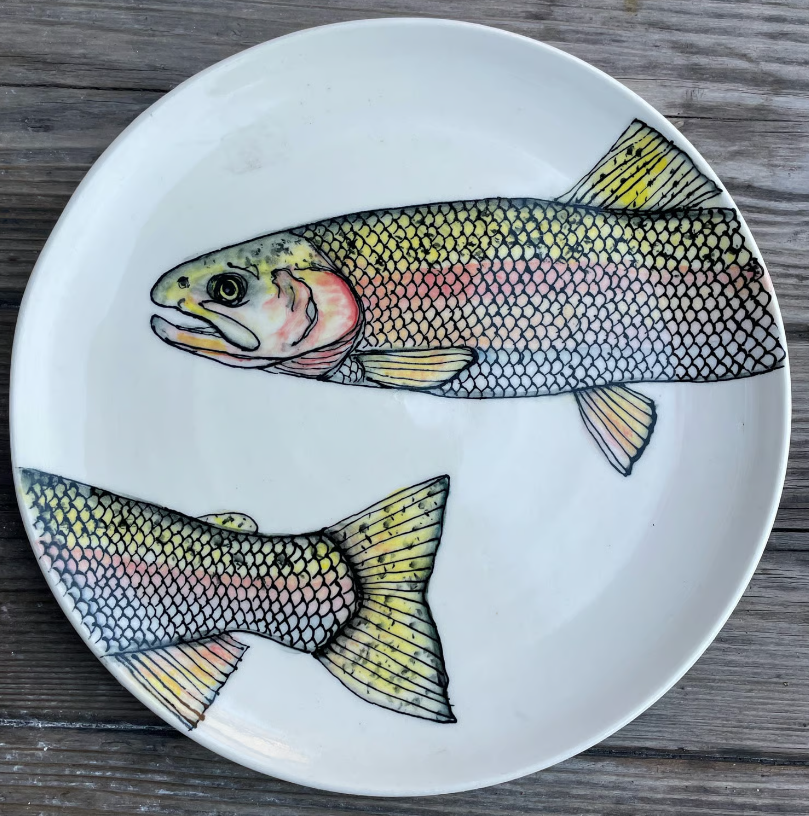
What Is Underglaze?
Underglaze refers to a decoration system in which a pigmented ceramic layer is applied to greenware, leather-hard clay, or bisque ware and then covered with a transparent glaze before the final firing. In industrial tableware production, this method is widely used for logos, patterns, line work, brand graphics, and hospitality decoration because the design is protected beneath the glaze layer rather than exposed on the surface. Source
For B2B buyers, this matters because underglaze decoration generally offers better resistance to utensil abrasion, repeated dishwashing, and daily service wear than exposed overglaze decoration. It is especially relevant in hotelware, restaurantware, promotional ceramics, and OEM/ODM dinnerware programs where appearance consistency and service life directly affect reorder rates and brand reputation.
Why Underglaze Matters in Custom Tableware
In export-oriented ceramic production, underglaze sits at the intersection of design, durability, and compliance. A supplier that controls underglaze well is usually also strong in glaze formulation, kiln control, firing repeatability, and defect prevention. In other words, underglaze quality often reveals the true technical level of the factory.
Underglaze vs. Overglaze
The commercial advantage of underglaze is simple: the decoration is encapsulated under a glassy glaze layer. This gives better protection against mechanical wear. However, it also makes production more demanding because the pigment must survive the chemistry of the glaze melt and the thermal cycle of firing.
How Do Pigments Stay Stable Under the Glaze at High Temperature?
The answer lies in crystal chemistry, glaze-pigment interaction, and thermal compatibility.
At peak firing, the transparent glaze becomes a viscous silicate melt. If the pigment is unstable, it may partially dissolve into the glaze, causing color loss, hue shift, or blurred edges. Stable underglaze systems therefore rely on pigments with crystal structures that can withstand high-temperature sintering and resist dissolution in the glaze. Source
A major ceramic glaze review reports that zircon-based pigments are among the most stable ceramic colorants up to 1200°C, and that frit systems containing zirconia can reduce pigment solubility and improve color retention in glazes. Source
Common High-Stability Pigment Systems
1. Spinel pigments
Spinel pigments are among the most stable ceramic color systems. A classic example is cobalt aluminate spinel, with the formula:
CoO + Al2O3 → CoAl2O4
This structure is valued because the crystal lattice remains stable during firing, helping the ceramic or glaze layer maintain color stability at high temperature. Source
2. Zircon-based pigments
Zircon-host pigments are also widely used in industrial ceramics because of their strong chemical and thermal stability. Zircon can be represented as:
ZrO2 + SiO2 → ZrSiO4
Its stability helps protect chromophore ions and improve color retention in high-temperature glaze systems. Source
Why Some Colors Are Harder Than Others
Not all underglaze colors behave equally during firing. In production, blue and black spinel systems are typically more stable, while bright reds, oranges, and some pinks are often more process-sensitive. This is why experienced ceramic factories validate each color against a specific glaze, body, and temperature window instead of assuming that all pigments behave the same.
The Science Behind Underglaze Stability
Glaze Dissolution and Color Bleeding
If the pigment is too soluble in the glaze melt, the decoration can lose edge sharpness and saturation. This leads to visible bleeding, haloing, or muddy color after firing. The risk is higher when the transparent glaze is overly aggressive, too fluid, or poorly matched to the pigment chemistry.
Digitalfire notes that underglazes must be tuned so they do not overmelt or undermine bonding, and that low LOI (loss on ignition) is important to reduce bubble-clouding in the glaze. Source
Thermal Expansion and Residual Stress
Even when the color is chemically stable, the ware can still fail if the glaze and body do not expand and contract compatibly during cooling.
The coefficient of thermal expansion can be expressed as:
α = (1 / L0) · (dL / dT)
Where:
- α = coefficient of thermal expansion
- L0 = original length
- dL / dT = change in length per unit temperature
Residual glaze stress can be simplified as:
σ ≈ Eg · (αg − αb) · ΔT / (1 − νg)
Where:
- σ = residual stress in glaze
- Eg = glaze elastic modulus
- αg = glaze thermal expansion
- αb = body thermal expansion
- ΔT = cooling interval
- νg = Poisson’s ratio of glaze
This mismatch is the main cause of crazing. Digitalfire explains that crazing occurs when the fired glaze has a significantly higher expansion than the body, while ASTM C554 specifically addresses crazing resistance in fired glazed ceramic whitewares by thermal shock. Source Source
Water Absorption and Body Maturity
The ceramic body must also be properly matured. If the body is underfired and remains too porous, glaze fit and long-term durability may be compromised.
Water absorption can be expressed as:
W = ((M2 − M1) / M1) × 100%
Where:
- W = water absorption
- M1 = dry mass
- M2 = saturated mass
For premium tableware, low water absorption is often associated with better vitrification, stronger body performance, and more stable glaze fit.
How Ceramic Factories Control Underglaze in Production
A good underglaze result does not come from the pigment alone. It comes from a controlled production system.
Typical Process Control Ranges
Below are common industrial reference ranges for vitrified tableware and porcelain-like systems:
| Process Parameter | Typical Range | Production Purpose |
|---|---|---|
| Bisque firing | 780–900°C | Build handling strength while preserving surface absorbency |
| Pigment particle size | d50 ≈ 1–10 μm | Balance color strength, edge definition, and chemical stability |
| Dry underglaze thickness | 15–40 μm | Avoid weak color or excess gas generation |
| Dry transparent glaze thickness | 150–300 μm | Ensure coverage without excessive haze or bubble retention |
| Glaze slurry density | ~1.40–1.55 g/cm³ | Improve consistency in glaze pickup |
| Final firing peak | 1180–1280°C | Typical range for stoneware and porcelain tableware |
| Peak soak time | 10–30 min | Help glaze maturity while limiting pigment dissolution |
| Cooling zone control | especially 1000–600°C | Improve glaze fit and color repeatability |
| Color tolerance | ΔE* ≤ 1.0–2.0 for critical logos | Maintain brand consistency |
Color Difference Control
Professional factories often control decoration repeatability using instrumental color measurement:
ΔE*ab = [ (ΔL*)2 + (Δa*)2 + (Δb*)2 ]1/2
This is especially important for chain-store programs, branded hotelware, and corporate gift tableware where logo color must remain consistent across repeat orders.
Key Production Practices
Match pigment system to firing temperature
The same color may perform differently at 1180°C and 1280°C. Strong suppliers qualify each pigment for a defined firing window.
Use an optically clean transparent glaze
Digitalfire notes that transparent glazes with excessive micro-bubbles can obscure underglaze decoration, especially in certain high-boron or high-viscosity systems. Source
Keep decoration layer chemistry low in gas release
Organic binders, poor milling, or unstable raw materials can create trapped gas and surface defects during glaze firing.
Validate process window before bulk production
A serious ceramic factory should not rely on one successful sample. It should validate the design through multiple test firings, glaze thickness variations, and color loading trials before approving mass production.
Common Underglaze Defects and What Causes Them
Pinholes
Pinholes are tiny holes in the glaze surface caused by gas escaping too late during firing. In underglaze systems, the causes often include high LOI, excessive organics, thick decoration application, or poor glaze melt behavior. Source
Crazing
Crazing is a network of fine cracks caused mainly by glaze-body thermal expansion mismatch. This is not just an appearance defect. It can weaken ware, reduce hygiene confidence, and increase breakage risk in service. Digitalfire notes that crazing can significantly reduce the strength of fired ware. Source
Bleeding and haloing
When pigments partially dissolve into the glaze, lines become soft and edges lose definition. This is especially problematic for logos, narrow stripes, and fine hospitality decoration.
Cloudiness or micro-bubble haze
Even a stable pigment can look poor if the transparent glaze traps bubbles or scatters light. The result is a dull, greyed, or visually blurred decoration.
Crawling
If the underglaze seals the bisque surface too much, the glaze may fail to wet and adhere evenly. This can lead to bare patches or localized glaze pull-back. Source
Shivering
The opposite of crazing, shivering happens when compressive mismatch causes glaze to flake off edges. This is a serious safety and quality issue in tableware.
Why B2B Buyers Should Pay Attention to Underglaze Performance
For overseas buyers, underglaze quality is a practical supplier evaluation tool.
It affects brand consistency
If the same design appears sharp and deep-blue in one batch but blurred or purple-shifted in another, the problem is usually not artwork. It is poor pigment-glaze stability or firing inconsistency.
It affects complaint risk
Unstable underglaze systems can cause:
- color variation between lots
- glaze haze over logos
- edge bleeding
- dishwasher durability concerns
- cracking or glaze defects
- rejected shipments
It reflects the factory’s real technical level
A supplier that can control underglaze well usually understands:
- pigment family selection
- glaze chemistry
- firing curve optimization
- glaze fit
- defect root-cause analysis
- repeat-order color control
That is why underglaze is a useful technical checkpoint during supplier qualification.
How to Evaluate a Ceramic Supplier for Underglaze Tableware
Ask what pigment family is being used
A competent factory should be able to explain whether the decoration relies on spinel pigments, zircon-host pigments, or other ceramic stain systems.
Ask for a process window, not just a sample
A good sample is not enough. Ask for:
- firing temperature range
- glaze thickness tolerance
- color tolerance target
- repeat-order control method
- known risk colors
Ask for food-contact and durability testing
For export markets, suppliers should understand the relevance of:
Ask how they control glaze fit
If a supplier cannot discuss thermal expansion, glaze-body matching, or craze testing, their production control may not be strong enough for demanding B2B projects.
Why ISO, FDA, and ASTM Matter for Underglaze Tableware
ISO 6486-1:2019
ISO 6486-1:2019 specifies the test method for the release of lead and cadmium from ceramic ware, glass ceramic ware, and glass dinnerware intended for food contact. This standard is highly relevant for custom tableware programs entering regulated export markets. Source
FDA CPG 545.450
The FDA lead guidance lists ceramicware action levels by category, including:
- Flatware: 3.0 μg/mL
- Small hollowware: 2.0 μg/mL
- Cups/mugs: 0.5 μg/mL
- Large hollowware: 1.0 μg/mL
- Pitchers: 0.5 μg/mL
These benchmarks matter when decoration is close to food-contact surfaces or when buyers require US-market compliance documentation. Source
BS EN 1388-1:1996
This European standard addresses determination of lead and cadmium release from ceramic ware intended for contact with food. Source
ASTM C554
ASTM C554 covers crazing resistance of fired glazed ceramic whitewares by a thermal shock method, making it highly relevant for glossy underglaze tableware used in demanding service environments. Source
Final Takeaway for Importers and Private-Label Buyers
In custom ceramic tableware, underglaze is not just a decoration method—it is a manufacturing capability test.
A supplier that can produce stable underglaze decoration usually has better control over:
- pigment selection
- glaze formulation
- kiln firing
- color consistency
- defect prevention
- food-contact quality
So when comparing suppliers, do not evaluate underglaze only by how attractive the sample looks. Evaluate whether the factory can reproduce that same result consistently across mass production, repeat orders, and export compliance requirements.
A beautiful sample proves design ability. A stable underglaze system proves manufacturing ability.
Sources
- Digitalfire – Underglaze
https://digitalfire.com/glossary/underglaze - Digitalfire – Glaze Crazing
https://digitalfire.com/trouble/glaze+crazing - ISO 6486-1:2019
https://www.iso.org/standard/67561.html - FDA CPG 545.450 – Lead Contamination
https://www.fda.gov/regulatory-information/search-fda-guidance-documents/cpg-sec-545450-pottery-ceramics-import-and-domestic-lead-contamination - FDA Lead Guidance PDF
https://www.fda.gov/files/inspections%2C%20compliance%2C%20enforcement%2C%20and%20criminal%20investigations/published/CPG-Sec.-545.450-Pottery-%28Ceramics%29–Import-and-Domestic—Lead-Contamination.pdf - BS EN 1388-1:1996
https://knowledge.bsigroup.com/products/materials-and-articles-in-contact-with-foodstuffs-silicate-surfaces-determination-of-the-release-of-lead-and-cadmium-from-ceramic-ware - ASTM C554
https://www.astm.org/c0554-93r20.html - Glass–Ceramic Glazes Review
https://digital.csic.es/bitstream/10261/133810/1/17%20Journal%20of%20Materials%20Science%2C%2047%2C%20%20553-582.pdf - CoAl2O4 and High-Temperature Color Stability Review
https://www.sciopen.com/local/article_pdf/10.26599/JAC.2024.9220941.pdf
Custom Solutions Available
Our technical experts are always ready to assist you in finding the perfect customized solution for your dinnerware needs.