How to Evaluate a Chinese Porcelain Manufacturer: Factory Audit Checklist
A factory audit for a Chinese porcelain manufacturer is different from auditing a garment or electronics factory. The quality signals are ceramic-specific: kiln infrastructure, glaze storage and formulation records, sample room organization, firing temperature logs, QC station placement, and the handling protocols around the most fragile production stages. Most generic factory audit guides miss these entirely. This checklist covers the 28 specific indicators that experienced ceramic buyers use to evaluate a manufacturer before placing a first order—whether conducting the audit in person or via video call.
Key Takeaways
- A legitimate porcelain manufacturer will agree to a video call factory tour without hesitation. Refusal or repeated delay is disqualifying.
- The most important production infrastructure signal is kiln type and age: a tunnel kiln in good condition with documented temperature logs indicates a factory that takes firing consistency seriously.
- Glaze storage is a proxy for QC discipline: labelled containers with batch records and FIFO rotation indicate a factory that can reproduce results batch after batch.
- The sample room tells you what the factory is capable of and what clients it has served. An organized, dated sample room with diverse complexity suggests a real manufacturing operation.
- A factory that cannot show you incoming raw material inspection records is relying on supplier quality rather than verifying it—a meaningful risk for food-contact ceramic.
- The defect tray near the sorting station is one of the most informative things you can see: what is being rejected tells you what the factory’s QC standard actually catches.
Before the Audit: Documents to Request in Advance
Request these before scheduling the audit. A factory’s willingness and speed in providing them is itself an evaluation signal.
|
Document |
What It Tells You | ||
|---|---|---|---|
|
Business License (营业执照) |
Legal registration; verify at gsxt.gov.cn | ||
|
Export License / Foreign Trade Registration |
Right to export directly | ||
|
FDA or LFGB test report (most recent) |
Food safety compliance with verifiable report number | ||
|
ISO 9001 certificate (if claimed) |
Quality management system; verify at certification body | ||
|
Production capacity statement |
Monthly output by product category | ||
|
Client reference list |
Industries and geographies served |
A factory that takes more than 3 business days to provide its Business License and most recent food-safety test report either does not have them organized or is stalling while documents are being obtained. Neither is reassuring.
Section 1: Facility Infrastructure
What to Look For
Factory address matches Business License: Verify that the factory you are touring corresponds to the address on the Business License. Trading companies sometimes present client factories as their own.
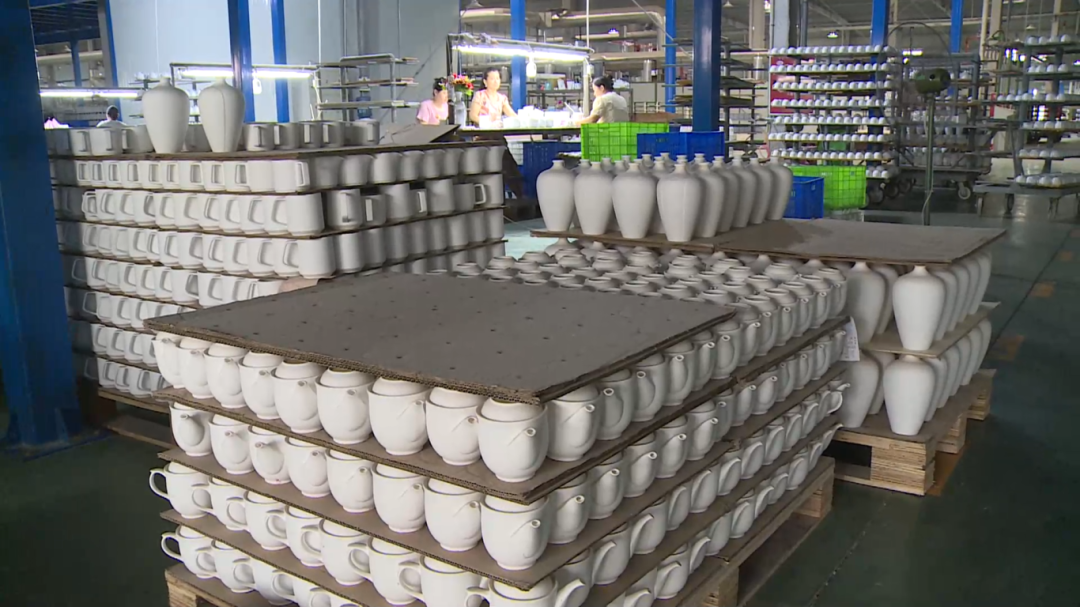
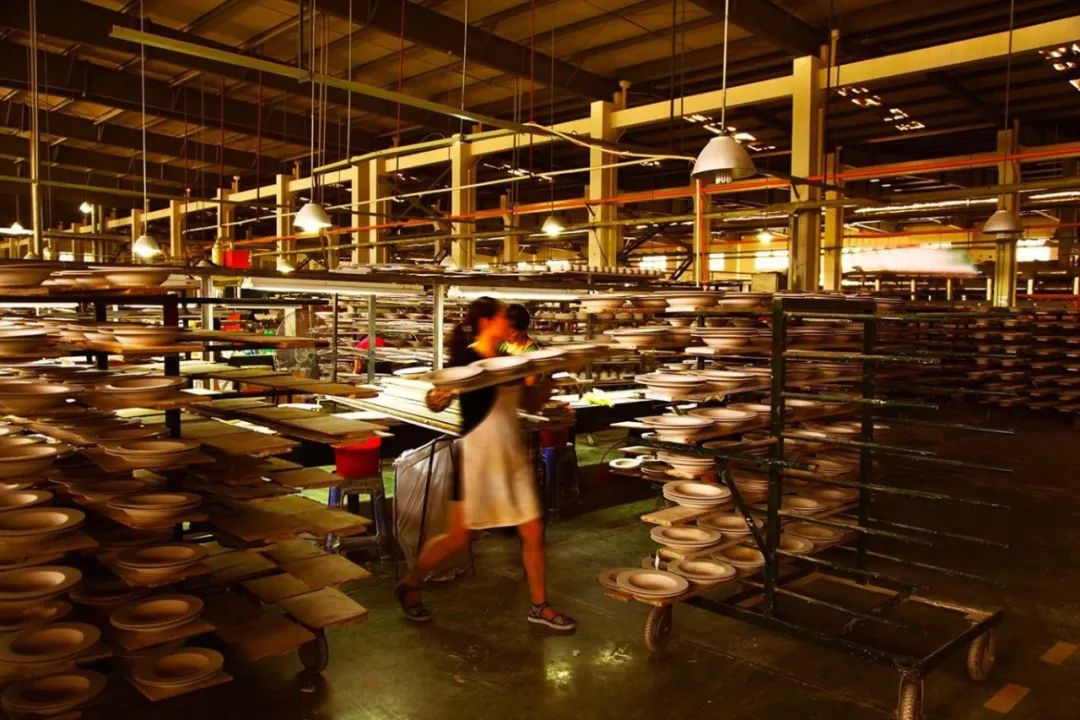
Production floor organization: Is the floor laid out with clear material flow — raw clay input → forming → drying → bisque firing → glazing → glaze firing → decoration → inspection → packing? Disorganized material flow indicates ad hoc management.
Worker safety compliance: Personal protective equipment near kilns and glaze mixing areas. This is a basic safety signal and also a BSCI/SA8000 compliance indicator.
Separate functional areas: Forming, glazing, firing, and decoration should be physically separate areas. Cross-contamination of glaze materials with clay bodies is a quality risk; shared areas indicate limited production scale or poor organization.
Storage organization: Finished goods, work-in-progress, and raw materials should be in clearly labelled storage with separation between them.
Red Flags
- Factory building and equipment appear to be borrowed or rented from another operation
- No clear production flow — areas look like they serve multiple unrelated functions
- Evidence of other product categories being produced in the same space as food-contact tableware
Section 2: Kiln and Firing Capability
Kilns are the core capital equipment of any ceramic manufacturer. The type, condition, and operating discipline around kilns tells you more about a factory’s quality capability than almost anything else.
Kiln Types
|
Kiln Type |
Commercial Suitability |
Quality Signal | |
|---|---|---|---|
|
Tunnel kiln (50–100m+) |
Highest |
Continuous firing with consistent temperature profile; standard for export factories | |
|
Shuttle (periodic) kiln |
Moderate |
Batch firing; more variable than tunnel; acceptable for smaller volume | |
|
Small electric kiln |
Low for commercial volume |
Suitable for artisan/sample production; not for commercial scale |
A factory producing commercial hotel tableware at export scale should have tunnel kiln infrastructure.
What to Observe
Temperature logging: Is there a visible temperature monitoring system — chart recorders or digital displays — showing the kiln temperature profile? Ask to see the firing logs for the past month. A factory with temperature records can investigate and reproduce consistent output. A factory with no records cannot.
Kiln condition: Visible cracks in kiln car furniture (the refractory shelves pieces sit on during firing) indicate thermal cycling stress. Excessive spalling or debris inside the kiln indicates deferred maintenance. These signal potential firing contamination.
Kiln loading density: Are pieces loaded with appropriate spacing for airflow? Overcrowded kiln loads produce firing inconsistencies. Observe an active kiln load if possible.
Cooling area: Is there a defined cooling area between the kiln exit and the inspection/sorting area? Pieces that are handled too hot develop microfractures — a delayed quality failure.
Section 3: Glaze and Raw Material Management
Glaze management is the most direct indicator of a factory’s ability to reproduce consistent results across production batches.
Glaze Storage Audit
Labelling: Every glaze container should be labelled with: glaze name/code, batch number, date of preparation, and responsible operator. Unlabelled glaze containers mean the factory cannot reproduce a specific color if a container is emptied and the formula is not on record.
FIFO rotation: Glazes should be used in first-in, first-out order. Old glaze with evaporation-driven concentration changes produces color drift between early and late production runs in the same order.
Viscosity records: Ask if the factory records glaze viscosity measurements before application. Viscosity drift — glaze that has thickened or thinned from its standard — produces uneven glaze thickness and color variation. A factory that measures viscosity controls the most common cause of batch-to-batch color inconsistency.
Glaze formulation records: Ask to see the formulation record for one of their stock glazes. It should contain ingredient ratios, supplier names, and firing range. A factory that cannot produce this record cannot reliably reproduce the glaze.
Clay Body Records
Incoming clay inspection: Does the factory test incoming clay batches for consistency before use? Basic checks include plasticity, fired color, and shrinkage rate. Factories that accept raw clay without incoming inspection are relying on supplier consistency — which varies.
Clay body formulation records: Similar to glaze records — ingredient ratios, source materials, test firing results. Essential for OEM clients requiring consistent results across multiple production runs.
Section 4: Quality Control Systems
QC Station Placement
QC should happen at multiple points in the production flow, not only at final packing:
- Post-forming: Dimensional check on fresh pieces before drying
- Post-bisque firing: Check for cracks, warping, and body defects before glazing
- Post-glaze firing: Glaze quality check before decoration
- Post-decoration: Decoration accuracy and adhesion check
- Final inspection: AQL sampling at packing
A factory with QC only at final packing catches defects too late — defective pieces have consumed full production cost before being rejected. QC at each stage catches problems earlier and prevents downstream processing waste.
The Defect Tray
Ask to see the defect tray or rejection bin near the final inspection station. What is being rejected tells you:
- What defects the factory’s QC catches (revealing their standard)
- The current defect rate (ratio of rejects to total)
- Whether defects are consistently categorized or mixed indiscriminately
A factory that cannot show you any current defects is either running a perfect day (possible but uncommon) or has no systematic rejection process (more likely for a first-time visit).
AQL Documentation
Ask what AQL standard is used for outgoing inspection. AQL 2.5 is the commercial standard (≤ 21 defects per 1,000 pieces). Ask to see an AQL inspection report from the past month — these should be routine documents in any export factory, not something that needs to be specially prepared.
Section 5: Decoration and Finishing
For branded tableware, the decoration department is as important as the kiln department.
Decal Quality
Decal storage: Ceramic decals (the film-based decoration transfers) should be stored flat, in humidity-controlled conditions, away from direct light. Improperly stored decals produce application defects.
Application station: Is decal application done at a dedicated, clean station with consistent lighting? Poor lighting means applicators miss bubble inclusions or misalignment.
Positioning jig: For orders requiring precise logo placement, does the factory use a positioning jig to ensure consistent placement? Freehand placement produces visible position variation across a large order.
Firing schedule for under-glaze decals: Under-glaze decoration requires the decal to be applied to bisque ware and then covered with glaze before main firing. Confirm the factory’s under-glaze process matches this — not all factories that claim under-glaze capability actually execute it correctly.
Gold/Platinum Banding
If your specification includes gold or platinum banding, observe the banding station:
- Is banding applied by hand or machine?
- Machine-applied banding is more consistent; hand-applied may show subtle width variation
- Ask to see a sample of current production banding quality under magnification
Section 6: Sample Room and Client History
Sample Room Assessment
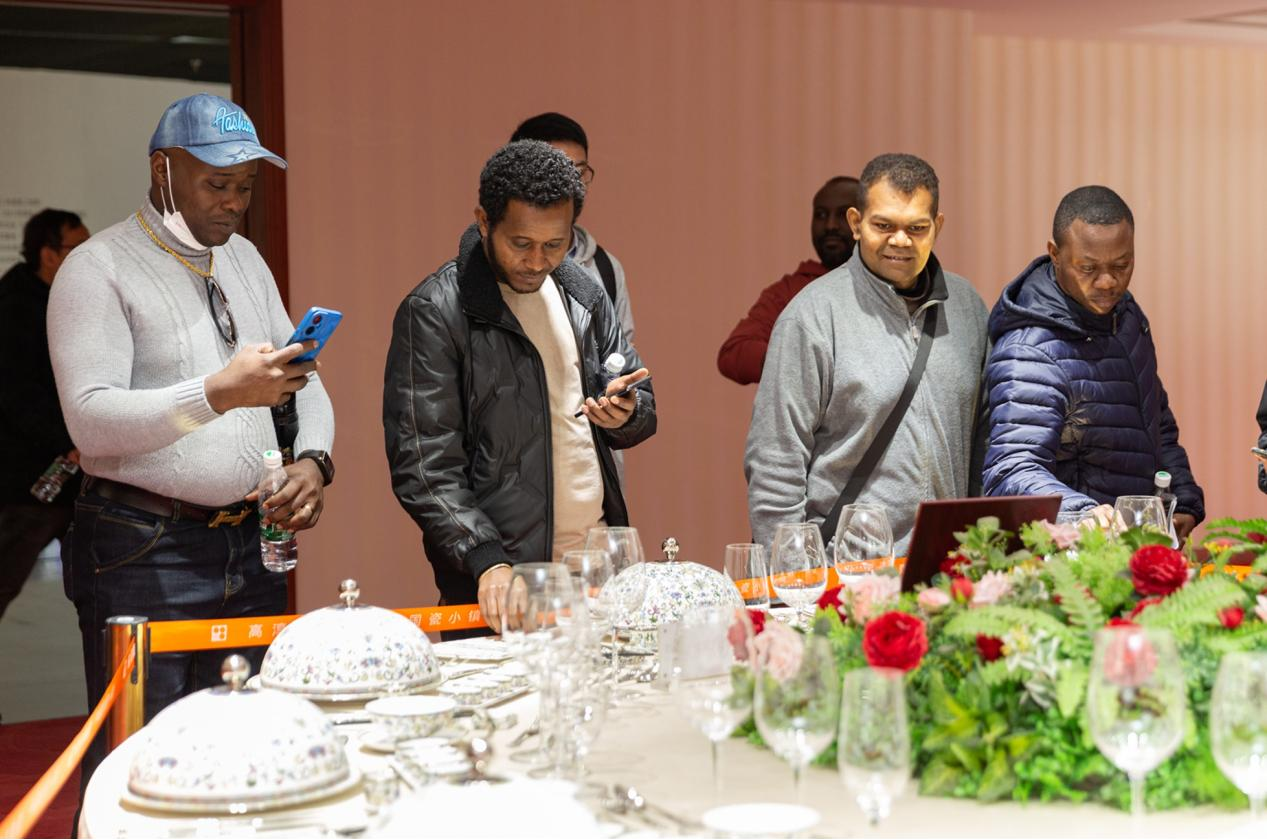
The sample room (showroom with production samples) reveals what the factory is genuinely capable of and what clients it has served:
Complexity range: Are there simple flat plates and complex multi-piece assemblies (teapots, covered casseroles)? Complexity in the sample room indicates tooling and forming capability.
Date organization: Are samples labelled with client name, production date, and specification? Organized, dated samples indicate systematic record-keeping. A sample room full of undated, unlabelled pieces indicates ad hoc production history.
Decoration quality: Examine samples under good lighting. Check for even glaze coverage, decoration registration accuracy, rim consistency, and foot ring uniformity. These samples represent the factory’s aspirational output — actual production may vary, but poor sample quality definitively indicates poor production quality.
International client markers: Look for samples that reference recognizable international hotel chains, restaurant groups, or tableware brands. This is not conclusive verification (samples can be aspirational) but is a reasonable proxy.
Section 7: Documentation and Records
Production Records
|
Record Type |
What It Shows |
Good Sign |
Red Flag |
|---|---|---|---|
|
Firing temperature logs |
QC discipline |
Daily logs, archived by month |
No logs, or logs only for recent periods |
|
Defect rate records |
QC performance |
AQL reports per production run |
No systematic defect records |
|
Glaze batch records |
Reproducibility |
Labelled with batch/date/formula |
No batch traceability |
|
Client order history |
Experience |
Multiple completed export orders |
Only domestic or sample orders |
|
Certification test reports |
Compliance |
Current, from named accredited lab |
Expired or unverifiable |
Export Experience Verification
Ask to see completed export orders — shipping documents, commercial invoices, or Bills of Lading — for at least 3 recent orders to markets matching yours. A factory that cannot show completed export documentation is not an established exporter regardless of what their website claims.
Complete 28-Point Audit Checklist
Facility (5 points)
- Factory address matches Business License
- Clear material flow layout (clay → forming → firing → decoration → packing)
- Functional areas physically separated
- Storage organization with labelled separation
- Worker safety compliance visible
Kiln Infrastructure (5 points)
- Tunnel kiln present (for commercial export volume)
- Temperature monitoring system with logs
- Kiln car furniture in good condition
- Defined cooling area between kiln and inspection
- Kiln loading density appears appropriate
Glaze and Raw Material (5 points)
- All glaze containers labelled with batch/date/formula
- FIFO rotation practiced
- Glaze viscosity records maintained
- Glaze formulation records available on request
- Incoming clay inspection documented
Quality Control (5 points)
- QC stations at multiple production stages (not only final packing)
- Current defect tray or rejection system visible
- AQL standard stated (AQL 2.5 or better)
- AQL inspection reports available from past month
- Defects categorized by type, not mixed
Decoration and Finishing (4 points)
- Decal storage appropriate (flat, humidity-controlled)
- Positioning jig or consistent placement method for logo application
- Under-glaze process correctly described and executed
- Gold/platinum banding quality acceptable under examination
Documentation (4 points)
- Firing logs current and archived
- Glaze batch records traceable
- Completed export orders verifiable (shipping docs)
- Food-safety test report current and from verifiable accredited lab
Scoring: 25–28 = strong candidate; 20–24 = acceptable with noted gaps; below 20 = significant risk, proceed only for low-value test orders.
For the complete supplier evaluation framework covering certifications and commercial terms, see our guide on how to vet a Chinese tableware manufacturer.
FAQ
What should I look for when auditing a Chinese porcelain factory?
The most important ceramic-specific indicators are: tunnel kiln infrastructure with temperature logging (firing consistency), glaze storage with batch records and labelling (reproducibility), QC stations at multiple production stages rather than only at packing (systematic defect management), and sample room organization with dated, labelled samples (production history). For food-contact tableware, a valid FDA or LFGB test report with verifiable report numbers is non-negotiable. Generic factory audit frameworks miss most of these ceramic-specific signals.
Can I audit a Chinese ceramic factory remotely via video call?
Yes, and a well-prepared remote audit covers 80–90% of what an in-person audit reveals. Request a 45–60 minute video call with a structured walkthrough: facility overview, production flow, kiln area, glaze storage, QC station, and sample room. Ask the factory representative to show specific items — glaze labels, temperature logs, defect trays — on camera. A factory that refuses a video call walkthrough or provides only pre-approved footage rather than live navigation is a red flag.
How long does a factory audit take?
A thorough in-person factory audit takes 4–6 hours including travel time within the facility, document review, and discussion. A video call audit takes 45–60 minutes for the walkthrough plus document review time separately. For first-time orders above $20,000 USD, the time investment in a proper audit — or the cost of a third-party audit company ($300–$600) — is substantially less than the cost of a defective shipment or a supply chain disruption.
Should I hire a third-party factory audit company?
For first orders above $20,000 or for long-term supply relationships, yes. Companies like SGS, Bureau Veritas, Intertek, or Asia Quality Focus conduct ceramic factory audits for $300–$600, typically producing a 10–20 page report covering facility, safety, QC, and social compliance. Their auditors are trained in ceramic manufacturing processes and can identify technical issues that a buyer without manufacturing background would miss. The cost is negligible relative to a large order.
What is the most common reason factories fail ceramic audits?
In GC Porcelain’s experience working alongside buyers and in industry contacts, the most common failure points are: inadequate glaze documentation (factories cannot demonstrate glaze batch reproducibility), absence of systematic QC at production stages (defects discovered only at final packing rather than caught during production), and food-safety certifications that are expired or unverifiable. These three issues account for the majority of quality and compliance problems that surface after orders are placed.
Custom Solutions Available
Our technical experts are always ready to assist you in finding the perfect customized solution for your dinnerware needs.