Custom Hotel Dinnerware: Logo Printing, MOQ & Lead Time Explained
Custom hotel dinnerware means tableware carrying your hotel’s brand mark—logo, monogram, color, or proprietary shape—produced specifically for your property. The process has four variables that determine timeline, cost, and outcome: the printing technique, the customization depth, the order quantity, and the lead time your property can accommodate. Getting any of these wrong creates either a product that doesn’t perform in commercial service or a timeline that misses your opening date. This guide explains each variable with the specific data hotel procurement teams need.
Key Takeaways
- Under-glaze printing is the only decoration technique appropriate for hotel commercial use. On-glaze prints fade in commercial dishwashers within 200–500 cycles; under-glaze prints last the life of the piece.
- The minimum MOQ for custom logo printing on existing shapes is 500 pieces—below this threshold, decoration setup costs make branded tableware uneconomical.
- Lead time for logo printing on existing catalog shapes is 21–30 days from artwork approval. New custom shapes add 45–75 days for tooling and sample development.
- Hotel tableware design briefs should include Pantone color reference, vector artwork file, placement specification in millimeters, and target delivery date—missing any of these extends the project timeline.
- For hotel groups with multiple properties, a master supplier agreement specifying a single shape family and glaze color enables consistent restock orders across properties without re-qualification.
- The total landed cost of custom hotel dinnerware (including printing, inspection, and ocean freight) is typically 40–60% above the FOB base unit price.
Printing Techniques: Under-Glaze vs On-Glaze
The printing technique determines whether your hotel logo looks the same on day 1 and day 1,000 of service.
Under-Glaze Printing (Required for Hotel Use)
Under-glaze printing applies the decoration—typically a ceramic decal—directly to the bisque-fired clay body before glazing. The glaze is then applied over the decoration and the entire piece is fired at full production temperature (1,200–1,400°C). The decoration is permanently fused beneath the glaze surface.
Commercial durability: Under-glaze decoration survives 1,000+ commercial dishwasher cycles with no measurable fade. The glaze layer above the decoration provides a physical barrier against detergent abrasion and thermal cycling.
Specify as: “Under-glaze decal printing, applied pre-glaze, co-fired at production temperature.”
On-Glaze Printing (Not Recommended for Hotel Use)
On-glaze printing applies decoration to the finished, glazed piece and fires at a lower temperature (700–900°C). The decoration sits on top of the glaze surface—physically exposed to dishwasher detergents and mechanical abrasion.
Commercial durability: In commercial hotel dishwashers operating at 65–85°C with aggressive detergents, on-glaze decoration shows visible fade within 200–500 cycles. A 150-cover restaurant running 2 seatings per day cycles its dinner plates through the dishwasher approximately 700 times per year—meaning on-glaze logos fade visibly within the first year of operation.
The cost difference: Under-glaze printing adds $0.40–$1.20 per piece over on-glaze. This premium pays back immediately in avoided logo replacement costs. Never accept on-glaze printing for any hotel tableware piece that will go through a commercial dishwasher.
Gold and Platinum Banding
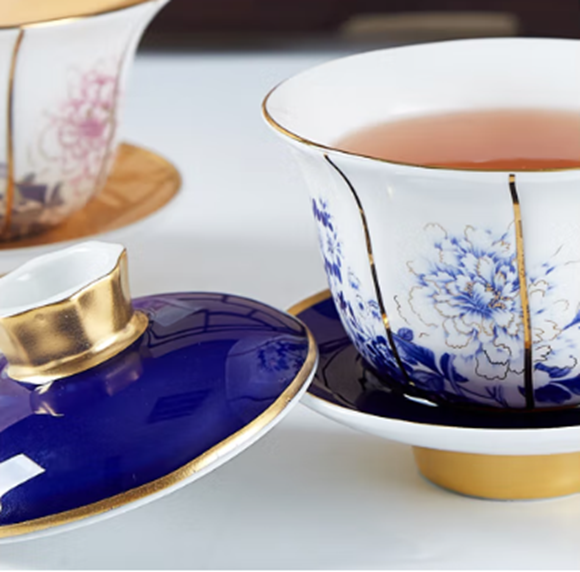
For fine dining and executive lounge applications, gold and platinum banding is applied using electrolytic bright gold (12%+ gold content) fired at a separate, lower-temperature firing cycle after the main glaze firing.
Key points:
- Electrolytic gold is dishwasher-safe when properly applied
- Not microwave-safe (irrelevant for restaurant plating service)
- Adds $1.50–$4.00 per piece; MOQ 500 pieces
- Specify: “Electrolytic bright gold banding, [width in mm], [position description], dishwasher-safe grade”
Customization Levels and What Each Involves
|
Level |
Description |
Design Needed |
Factory Action |
Result |
|---|---|---|---|---|
|
Logo decal |
Hotel mark on existing shape |
Vector logo file |
Print decal, apply under-glaze |
Brand mark on standard shape |
|
Custom glaze color |
Signature color on existing shape |
Pantone reference |
Formulate glaze batch, test color match |
Full-color branded piece |
|
Logo + color |
Brand mark in brand color |
Vector logo + Pantone |
Both above combined |
Fully branded piece on standard shape |
|
Proprietary shape |
New shape developed for property |
CAD file or sketch |
Mold tooling + sample development |
Exclusive shape + brand mark |
|
Premium finish |
Gold/platinum banding + logo |
Vector logo + banding spec |
Three-stage firing |
Luxury branded piece |
Most hotel programs use Level 2 or 3 (logo + brand color) for restaurant outlets, and Level 4 or 5 for signature venues.
MOQ by Customization Type
|
Customization Level |
Minimum Order |
Why | |||
|---|---|---|---|---|---|
|
Logo decal, existing shape |
500 pcs |
Decal printing setup cost | |||
|
Custom glaze color only |
500 pcs |
Glaze batch minimum | |||
|
Logo + custom glaze color |
500 pcs |
Combined setup | |||
|
Logo + gold/platinum banding |
500 pcs |
Per-application minimum | |||
|
New OEM shape + logo |
1,000 pcs |
Mold tooling amortization | |||
|
Full OEM + custom packaging |
1,000–2,000 pcs |
Multiple setup costs |
Aggregation strategy for hotel opening orders:
A hotel opening a 120-cover restaurant, 80-cover lounge, and 40-cover fine dining room might spec:
- Restaurant: 480 dinner plates (logo decal only) → rounds to 500-piece MOQ ✓
- Lounge: 320 cups + saucers (logo + brand color) → 320 below MOQ
Solution: Aggregate the lounge and restaurant decoration specs where they share the same logo file and glaze color. A factory treats shared-spec items as a single decoration run, meaning 320 lounge cups combined with 500 restaurant plates = 820-piece order with one setup cost. Confirm this with your factory—not all accept cross-SKU aggregation.
Lead Time by Outlet and Customization Level
Understanding which phase drives your timeline prevents the most common hotel opening tableware failure: underestimating the total project duration.
Complete Timeline by Customization Level
|
Customization |
Brief to Sample |
Sample Approval |
Bulk Production |
Freight |
Total |
|---|---|---|---|---|---|
|
Logo decal, existing shape |
7–14 days |
5–10 days |
21–30 days |
25–35 days |
58–89 days |
|
Logo + custom glaze |
14–21 days |
7–14 days |
30–45 days |
25–35 days |
76–115 days |
|
New OEM shape + logo |
35–50 days |
14–21 days |
45–60 days |
25–35 days |
119–166 days |
|
Full OEM + gold banding + custom packaging |
50–70 days |
21–28 days |
60–75 days |
25–35 days |
156–208 days |
For hotel openings: Work backward from your soft-opening date and add your selected lead time plus 3 weeks buffer. A property opening in Q4 should finalize tableware specification by Q2 for complex OEM programs, or by early Q3 for logo-print ODM programs.
The Sample Approval Bottleneck
The “Sample Approval” phase is where hotel opening tableware timelines most commonly stall. Internal hotel approval chains (design team → F&B director → GM → ownership) frequently take 3–4 weeks for decisions that factories can execute in 5 days. Two practical solutions:
- Pre-authorize the approval matrix before samples arrive: identify who approves and define a 5 business-day review window.
- Request digital proofs before physical samples: a factory’s design team can generate a photorealistic digital mockup of the decoration on the actual shape within 2–3 days, enabling color and placement approval before committing to physical sample production.
How to Write a Hotel Dinnerware Design Brief
A complete brief submitted at the start of the project compresses total timeline by 2–4 weeks. A brief missing critical information generates back-and-forth that adds weeks to every revision cycle.
Complete hotel dinnerware brief includes:
1. Brand identity files
- Logo in vector format (AI, EPS, or PDF) — not JPEG or PNG
- Brand color specification: Pantone Matching System (PMS) reference numbers
- Typography guidelines if custom font is part of the mark
2. Placement specification
- Which items receive decoration: all pieces, or selected items only
- Placement on each item: rim / well / base / back-stamp
- Size: logo height or width in millimeters on finished piece
- Position: centered / offset / specific coordinate from rim edge
3. Material specification
- Clay body: vitrified porcelain / fine porcelain / bone china / new bone china
- Glaze: standard white / custom Pantone color / matte / satin / gloss
- Decoration finish: standard under-glaze / gold banding (specify width and position)
4. Commercial requirements
- Required certifications: FDA / LFGB / both
- Dishwasher cycle standard: 1,000 cycles minimum
- Decoration technique: under-glaze (specify this explicitly)
5. Quantity and timeline
- Item list with quantities per item
- Delivery port
- Required delivery date
- Buffer stock percentage expected (helps factory plan)
Branding Across Multiple Outlets
Most hotels need different branding levels across their F&B outlets:
|
Outlet |
Recommended Branding |
Rationale | |||
|---|---|---|---|---|---|
|
Signature restaurant |
Full branding: logo + brand color + gold banding |
Brand showcase; guest photography | |||
|
All-day dining |
Logo decal + white glaze |
Functional brand presence; cost-efficient | |||
|
Executive lounge |
Logo + custom glaze color |
Premium signal; same color family as signature | |||
|
Banquet / events |
Logo decal only |
Volume; less guest scrutiny; replacement economics | |||
|
Room service |
Logo back-stamp or small logo |
Functional; pieces often not closely examined | |||
|
Pool bar / casual |
Unbranded or minimal stamp |
High breakage environment; brand ROI low |
Visual consistency strategy: All outlets can share the same Pantone color family and logo file while varying the decoration execution level. The guest reads consistent brand identity; the procurement team manages cost-efficient specifications per outlet.
Multi-Property Programs
For hotel groups with 3+ properties, a master supplier agreement provides operational and cost advantages unavailable to single-property buyers.
What a master agreement should specify:
- Approved shape library (fixed set of shapes used across all properties)
- Approved glaze color standard (Pantone reference with ΔE ≤ 2.0 tolerance for batch matching)
- Approved logo file version (version-controlled; update process defined)
- Restock MOQ: 500 pieces per item per property
- Price schedule: volume pricing based on aggregate annual volume, not per-order volume
- Lead time commitment: 30 days for branded restocks, 45 days for new items
The annual aggregate volume of a 5-property hotel group placing tableware orders adds up to leverage a single-property buyer does not have. Negotiate price breaks and restock flexibility based on annual committed volume, not individual order size.
For the full hotel tableware procurement framework, including material selection and durability standards, see our comprehensive hotel dinnerware guide.

FAQ
What is the minimum order for custom logo hotel dinnerware?
The minimum order quantity for custom logo printing on existing catalog shapes is 500 pieces. Below this threshold, decoration setup costs (decal printing, glaze batch preparation, equipment setup) make the per-unit decoration cost uneconomical for both buyer and factory. For new OEM shapes requiring mold tooling, the practical minimum is 1,000 pieces to amortize tooling cost. Hotel opening orders almost always exceed these thresholds—the more common challenge is managing multiple SKUs, each of which must individually meet the 500-piece minimum.
How long does custom hotel dinnerware take to produce?
For logo printing on existing catalog shapes, total timeline from approved design brief to delivery is 58–89 days (including ocean freight). For custom glaze color plus logo, allow 76–115 days. For new proprietary shapes with OEM mold development, allow 119–166 days minimum. The most common timeline risk is the sample approval stage — internal hotel sign-off processes that take 3 weeks instead of 5 days add weeks to the total. Pre-authorize your approval chain before samples arrive.
What is the difference between under-glaze and on-glaze logo printing?
Under-glaze printing applies the decoration before glazing and fires it beneath the glaze layer at full production temperature. It is permanent and survives 1,000+ commercial dishwasher cycles with no fade. On-glaze printing applies decoration to the finished, glazed piece at lower temperature — the decoration sits on the surface and is exposed to dishwasher detergents. On-glaze logos fade visibly within 200–500 commercial wash cycles — less than one year of hotel service. Always specify under-glaze printing for hotel tableware.
Can I use the same logo artwork for all hotel outlets?
Yes — one vector logo file can be applied across all outlet tableware. The decoration level varies by outlet (full brand color in fine dining, logo-only in banquet), but the underlying artwork file is the same. Maintain a single version-controlled logo file and ensure every production order references this file explicitly. Logo inconsistencies across outlets often trace to different versions of the artwork being used for different orders.
How do I ensure logo color matches my brand standards?
Specify your logo color using a Pantone Matching System (PMS) number in your design brief. The factory’s colorist will formulate a ceramic ink or glaze to match. Request a fired color sample chip for approval before bulk production — ceramic colors shift slightly during high-temperature firing and must be calibrated to match your Pantone reference in fired form, not in wet glaze form. Specify a ΔE ≤ 2.0 tolerance in your purchase agreement to ensure restock orders match the original color.
Custom Solutions Available
Our technical experts are always ready to assist you in finding the perfect customized solution for your dinnerware needs.