2026 Hotel Tableware Trends: What Global Procurement Teams Are Ordering
Hotel tableware procurement in 2026 looks meaningfully different from three years ago. Procurement managers at four- and five-star properties are now qualifying suppliers against sustainability credentials, specifying custom-branded pieces at lower minimum order quantities than were possible in 2022, and tightening durability standards in response to accelerated dishwasher cycles in high-volume operations. This guide summarizes the five trends shaping hotel tableware orders in 2026—drawn from procurement conversations, supplier qualification changes, and shifting specification sheets across the hospitality industry.
Key Takeaways
- Sustainability is now a qualifying criterion, not a preference—EU Green Claims Directive compliance is appearing in hotel group supplier questionnaires for the first time in 2026.
- Custom hotel tableware minimum order quantities have dropped significantly: 500-piece OEM orders are now standard at established Chinese manufacturers, down from 1,000–2,000 pieces in 2020.
- The industry-standard durability threshold for five-star hotel porcelain has moved to 500 commercial dishwasher cycles with no visible chip or glaze degradation.
- Aesthetic preferences are shifting from all-white to textured, earthy, and regionally distinctive designs—a trend that requires closer coordination between procurement teams and OEM suppliers.
- China continues to supply over 65% of global hotel tableware by volume, but procurement teams are demanding more documentation: factory audit access, lab test reports, and certification numbers rather than certificates alone.
- Digital design proofing tools have reduced sample lead times by 30–50% for custom-branded tableware, compressing the OEM sourcing cycle from 90 to 60 days in optimized cases.
Sustainability Moves from Preference to Requirement
Three years ago, sustainability credentials in hotel tableware procurement meant a checkbox on an ESG questionnaire. In 2026, they are qualifying criteria. The European Union’s Green Claims Directive, introduced in 2024, requires businesses making environmental claims to substantiate them with specific documentation—and hotel groups with European operations are passing that requirement downstream to their tableware suppliers.
What “Sustainable” Now Means in a Supplier Qualification Context
The baseline has shifted. Procurement teams in 2026 are not asking whether a factory has sustainability commitments—they are asking for documentation:
- Lead and cadmium test reports with numerical values: Not a certificate, but the actual lab report showing mg/L readings against ISO 6486-1 thresholds. Properties exporting to the US require FDA 21 CFR compliance; EU buyers require LFGB.
- Kiln energy source documentation: Coal-fired kilns are increasingly flagged in hotel group supplier audits. Factories with natural gas or electric kiln operations have a documentation advantage.
- Packaging material declarations: Single-use plastic foam alternatives (molded pulp, paper wrapping) are specified in a growing number of hotel group RFQs.
A reputable manufacturer like GC Porcelain maintains ISO 6486-1 certification with National First Grade Laboratory status and can provide test reports with specific numerical cadmium and lead leaching values on request. Procurement teams should request the report number alongside the certificate so it can be independently verified with the issuing lab.
Lead-Free Glazes Are No Longer a Differentiator—They Are Baseline
In 2021, lead-free glaze was listed as a differentiator in hotel tableware supplier pitches. By 2026, it is table stakes. The more relevant specification is cadmium-free decoration—particularly for pieces with colored rim banding or hand-painted decoration. Cadmium-based pigments produce the most saturated warm colors (red, orange, yellow), and many hotel operations specifying colored accent pieces are not aware they need to explicitly require cadmium-free pigments in their RFQ.
Aesthetics Shift: Earthy, Textured, Regionally Distinctive
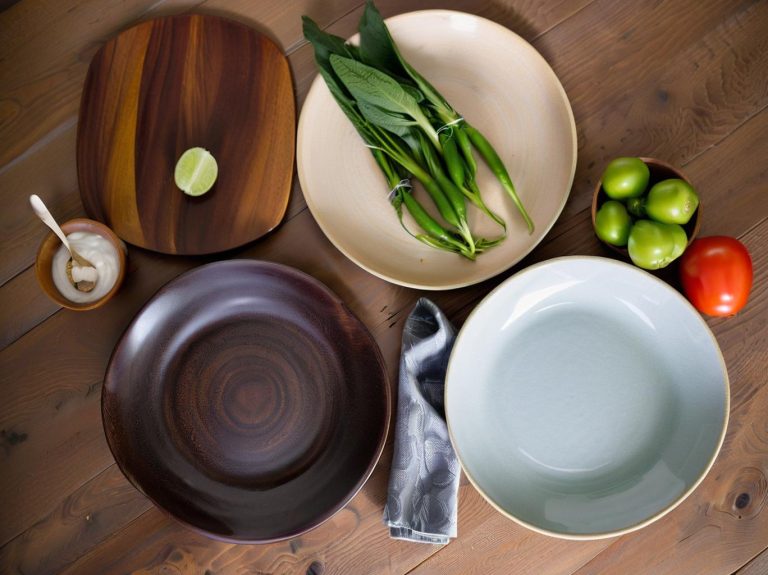
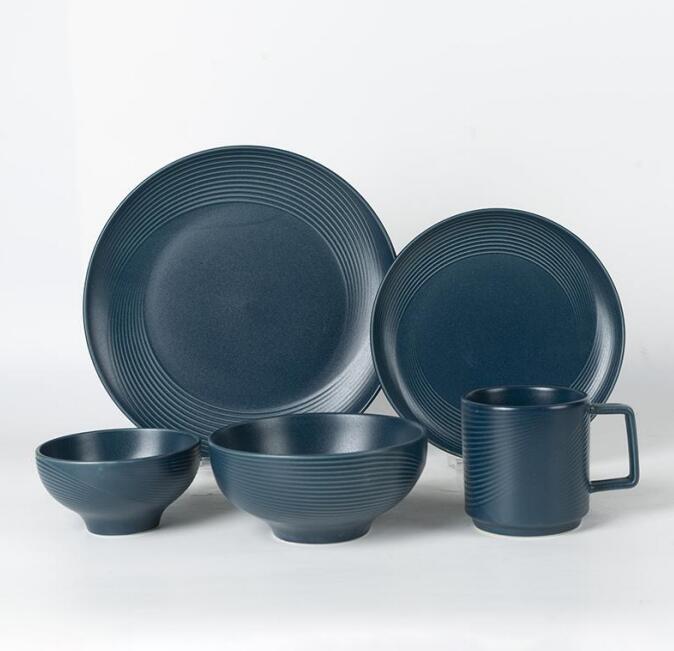
The all-white hotel tableware default is eroding. Properties are differentiating their dining experience through tableware that communicates a regional identity or design perspective, and that requires OEM manufacturing capability—not catalog selection.
The Move Away from Plain White
According to industry data from the International Hotel & Restaurant Association (IH&RA), properties that introduced distinctive tableware as part of a dining experience redesign reported a 12–18% increase in positive guest reviews mentioning “atmosphere” or “presentation” in the 18 months following the change. This is not a soft preference—it is affecting food-and-beverage revenue.
The dominant aesthetic directions in 2026 specification sheets:
|
Aesthetic Direction |
Description |
Technical Requirements |
|---|---|---|
|
Wabi-sabi / organic texture |
Uneven surface texture, subtle glaze variation, handcrafted appearance |
OEM mold work; glaze development 8–12 weeks |
|
Earthy neutral palette |
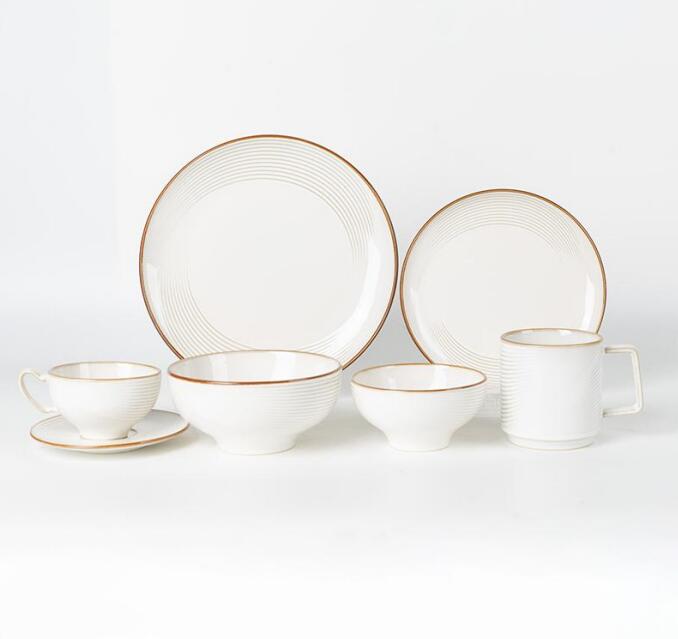
Warm off-whites, sand, terracotta rim banding |
Cadmium-free pigments; LFGB certification critical |
|
Regional material reference |
Local clay tones, stone-look finishes |
Factory R&D collaboration; longer sample timeline |
|
Minimalist monochrome |
Single-color matte glaze, no decoration |
Standard OEM; faster timeline |
Balancing Aesthetic Differentiation with Operational Durability
The tension in 2026 hotel procurement is between design ambition and operational reality. A textured matte-glaze piece that photographs beautifully in a suite may perform poorly in a high-volume commercial dishwasher environment—matte glazes typically show water spot accumulation and surface dulling faster than high-fire gloss glazes under repeated commercial washing.
The practical solution adopted by experienced procurement teams: specify aesthetic requirements for guest-facing accent pieces (bread plates, amuse-bouche bowls, show plates) and maintain vitrified white porcelain for high-turnover everyday pieces (dinner plates, coffee cups). This separates aesthetic investment from operational risk.
Custom Branding at Scale: Lower MOQs, Faster Turnaround
The barrier to custom hotel tableware has dropped substantially since 2020. The combination of improved digital proofing technology, streamlined mold development processes, and increased competition among Chinese OEM manufacturers has reduced both the minimum order quantity and the time required to source custom pieces.
MOQ Compression: What Changed
In 2020, the standard minimum for custom-shaped hotel tableware (OEM with new tooling) was 1,000–2,000 pieces per shape. In 2026, established manufacturers including GC Porcelain accept 500-piece OEM orders for projects requiring custom mold development. For logo-only customization on existing shapes, MOQs start at 300 pieces.
This change has two drivers: more efficient kiln loading optimization allows smaller production runs to be batched economically, and increased factory competition for hotel accounts has compressed MOQ requirements as a competitive signal.
Digital Proofing Reduces Sample Rounds
The traditional custom tableware development cycle involved 2–3 physical sample rounds, each requiring 3–4 weeks of production and international shipping. In 2026, the leading OEM manufacturers offer digital 3D rendering and glaze simulation before physical samples are produced. Properties can approve design direction digitally and commission a single physical sample round for final sign-off.
For procurement teams with existing relationships with a qualified supplier, this reduces the OEM development timeline from the traditional 90 days to 60–65 days in optimized cases. For full custom shape development (new mold from scratch), 75–90 days remains the realistic timeline.
For properties evaluating their first custom dinnerware project, our hotel dinnerware sourcing guide covers the full OEM development process including how to structure a specification brief.
Durability Standards Tighten
Hotel tableware is not a decorative purchase. A piece that fails after 200 dishwasher cycles in a property running 3 washing cycles per day has an effective service life of under three months. Five-star hotel procurement specifications have moved to a measurable durability threshold: 500 commercial dishwasher cycles with no visible chip, crack, or glaze degradation as the qualifying standard.
Vitrified Porcelain vs Bone China: Durability in Commercial Use
The question procurement teams ask most often: is bone china appropriate for commercial hotel use, or is vitrified porcelain the only viable option?
|
Property |
Vitrified Porcelain |
Bone China |
|---|---|---|
|
<0.5% (non-porous) |
<0.5% | |
|
Chip resistance |
High (dense body) |
Moderate-high |
|
Translucency |
Low-moderate |
High |
|
Commercial dishwasher durability |
Excellent |
Good, with correct handling |
|
Recommended use |
High-turnover (restaurants, banquet) |
Suites, fine dining, lighter use |
|
Typical price premium vs porcelain |
— |
40–80% |
Bone china is appropriate for fine dining and suite service contexts where pieces are handled carefully and volume is lower. For high-turnover banquet and all-day dining operations running 300+ covers per service, vitrified porcelain remains the operationally reliable choice.
The 500-Cycle Standard in Practice
A piece meeting the 500-cycle commercial dishwasher standard is tested at 75°C wash temperature, standard commercial detergent concentration, with standard commercial rack washing protocol. Properties should request the specific test data when qualifying suppliers—not just a statement that pieces are “commercial dishwasher safe,” which is a marketing phrase rather than a specification.
Supply Chain Strategy: China + Documentation
China supplied approximately 65% of global hotel tableware by volume in 2025 (International Trade Centre data). That share is not declining—but the documentation requirements from hotel procurement teams are increasing substantially.
What “Factory-Direct” Means in 2026
The “factory-direct” claim appears frequently in hotel tableware supplier pitches. In 2026, procurement teams are distinguishing between three supplier categories:
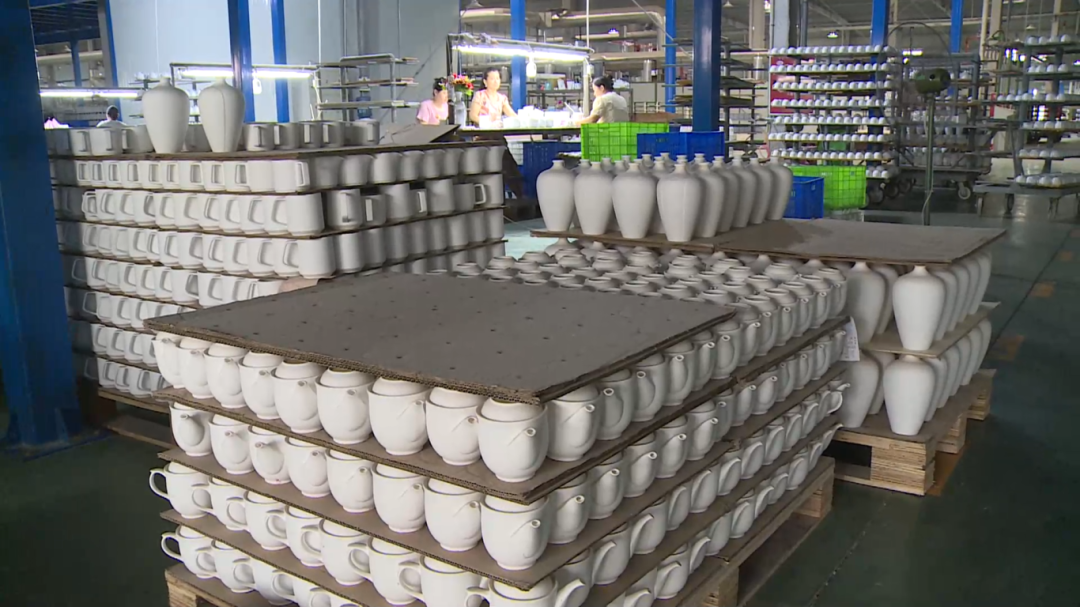
- Tier 1 manufacturers: Factories with 500+ staff, dedicated hotel accounts, in-house laboratory, exporters to major hotel chains. Can provide audit access, test reports with numerical values, and references from comparable hotel clients.
- Tier 2 manufacturers: Smaller production facilities, often specializing in a narrower product range. Legitimate manufacturers but with less documentation infrastructure.
- Trading companies: Not manufacturers. Place orders with Tier 1 or 2 factories and add margin. Can supply quality product but cannot provide factory audit access or customize lab reporting.
For hotel properties, the distinction matters because: (1) factory audit access enables direct quality control monitoring; (2) Tier 1 manufacturers can accommodate custom specification requirements that trading companies cannot; and (3) the pricing differential between a Tier 1 manufacturer direct relationship and a trading company on the same product is typically 15–25%.
Our guide to comparing porcelain dinnerware supplier quotes covers how to normalize quotes from these different supplier tiers to a valid comparison basis.
Documentation Standards: What to Request in 2026
The standard documentation package for a qualified hotel tableware supplier in 2026:
- Business license and export license (verifiable)
- ISO 6486-1 test report with report number (not just certificate)
- FDA 21 CFR or LFGB test report depending on destination market
- Factory audit access (video walkthrough minimum; physical audit preferred)
- References from two comparable hotel accounts (not retail or restaurant)
- Defect rate data from previous hotel orders
Suppliers who cannot provide items 1–4 should not be shortlisted for five-star hotel tableware accounts regardless of price. For a complete 12-point supplier evaluation framework, see our manufacturer vetting guide for B2B buyers.
FAQ
What are the biggest hotel tableware trends for 2026?
The five most significant trends shaping 2026 hotel tableware procurement are: (1) sustainability credentials becoming qualifying criteria rather than preferences, driven by EU Green Claims Directive requirements; (2) custom branding at lower MOQs—500-piece OEM orders are now standard; (3) aesthetic shift from all-white to textured, earthy, and regionally distinctive designs; (4) tighter durability standards with 500 commercial dishwasher cycles becoming the five-star qualification threshold; and (5) increased documentation requirements from suppliers, with test reports with numerical values replacing certificates alone.
Is bone china appropriate for high-volume hotel restaurant use?
Bone china is suitable for fine dining and suite service contexts where handling is careful and volume is moderate. For high-turnover banquet and all-day dining operations running 300+ covers per service with 3+ dishwasher cycles per day, vitrified porcelain is the operationally reliable choice. Bone china commands a 40–80% price premium over vitrified porcelain and is best reserved for contexts where its translucency and prestige signal are part of the guest experience proposition.
What minimum order quantity should hotels expect for custom-branded tableware?
For logo-print customization on existing catalog shapes, MOQ starts at 300 pieces at established manufacturers. For fully custom OEM pieces with new mold development, the standard is now 500 pieces at leading Chinese manufacturers—down from 1,000–2,000 pieces in 2020. Full custom shape development typically requires a 75–90 day lead time from approved specification to factory-ready shipment.
How do I verify a hotel tableware supplier’s sustainability credentials?
Request the actual lab test report—not just the certificate—and verify the report number with the issuing laboratory. The report should include specific numerical values for lead and cadmium leaching against ISO 6486-1 thresholds. For EU-destination properties, confirm LFGB compliance; for US-destination properties, confirm FDA 21 CFR compliance. Ask specifically about kiln energy source (coal vs. gas or electric) if your hotel group ESG policy covers supply chain emissions.
Custom Solutions Available
Our technical experts are always ready to assist you in finding the perfect customized solution for your dinnerware needs.